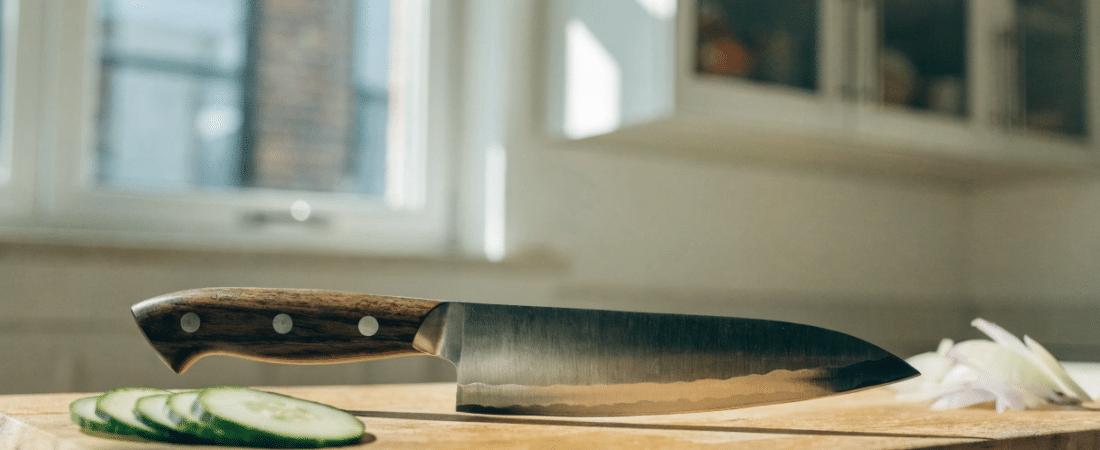
Welcome to my Japanese Knife Buyer’s Guide, where I’ll walk you through everything I wish someone had told me before I bought my first one. I still remember unwrapping that knife and feeling like I’d been cutting tomatoes with a spoon my whole life. These blades are sharp, beautiful, and built to last. In this guide, you’ll learn what makes them special, the main types, how to read a blade’s anatomy, how to pick the right one for your kitchen, and how to keep it in great shape for years.
TLDR Summary
Short on time? Here’s the quick version:
- Japanese knives are thinner, harder, and sharper than Western knives, which makes slicing feel almost effortless.
- The Gyuto and Santoku are the best all-around picks if you want one knife to do most jobs.
- Carbon steel gets sharper but needs babying. Stainless steel is easier to live with.
- Beginners do well with double-bevel blades and a friendly stainless steel like VG10.
- Budget brands like MAC and Global start around $50–$150. Premium names like Shun and Miyabi run $150 and up.
- Never put these knives in the dishwasher. Hand wash, dry right away, and sharpen with a whetstone.
Key Takeaways
- A Gyuto or Santoku covers most everyday cooking, so start there before buying specialty blades.
- Carbon steel offers the keenest edge but rusts without care, while stainless steel resists rust and asks for less attention.
- Japanese knives sit between 60 and 67+ on the Rockwell hardness scale, compared to 56–58 for most Western knives, which is why they hold a sharper edge.
- Handle choice (wa or yo) changes the weight and balance of your knife and comes down to personal feel.
- Proper care, including whetstone sharpening at a 15–16 degree angle and hand washing, keeps a good Japanese knife performing for decades.
What makes a Japanese knife worth buying?
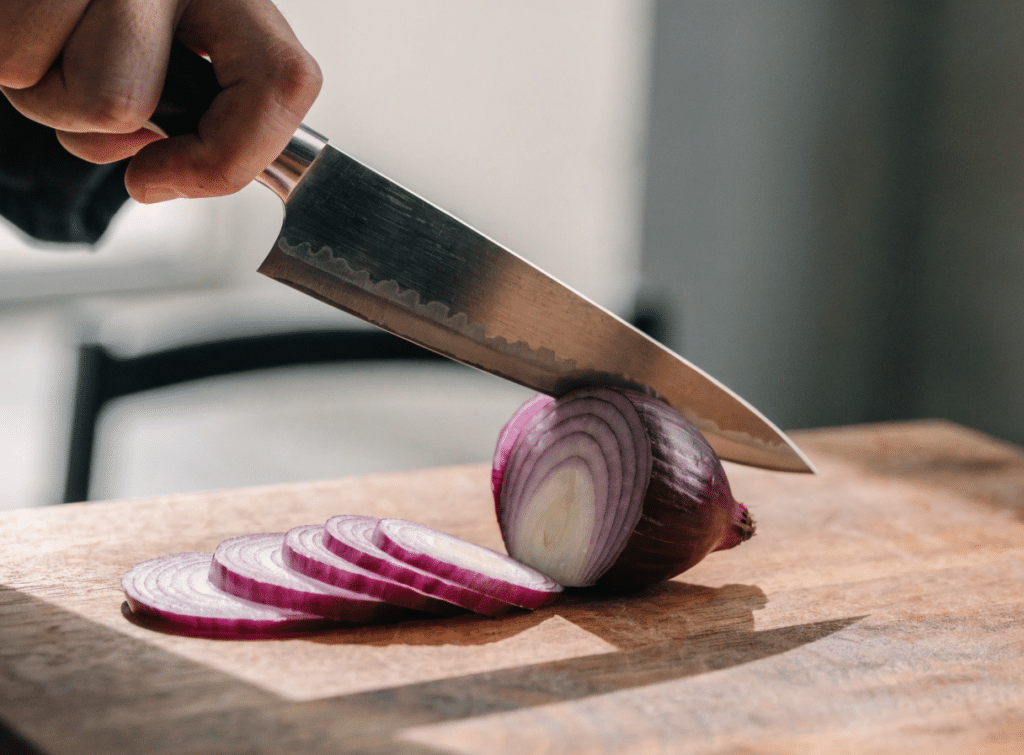
A Japanese knife is worth buying because it gives you a thinner, harder, sharper blade that cuts with less effort and lasts a very long time. The difference shows up the moment you slice an onion and it falls apart in clean ribbons instead of getting crushed.
The roots here go deep. Back in 1876, the Meiji government passed an edict banning swords in public. That move put thousands of sword makers out of work. Many of them turned their skills toward kitchen knives, and that centuries-old craft never left. Chef Masaharu Morimoto put it beautifully: “Our soul goes into our knives once we start using them.”
What sets these blades apart comes down to a few things:
- Harder steel. Japanese knives usually land between 60 and 67+ on the Rockwell hardness scale (HRC). Western knives sit at 56–58. Harder steel takes a finer edge and keeps it longer.
- Thinner blades. Less metal pushing through your food means cleaner cuts and less drag.
- Sharper angles. The edge is ground to a tighter angle, so the blade glides instead of bullies.
One trade-off worth knowing: harder steel can chip if you treat it roughly. So no cutting through bones or frozen food, and no glass cutting boards.
What are the main types of Japanese knives?
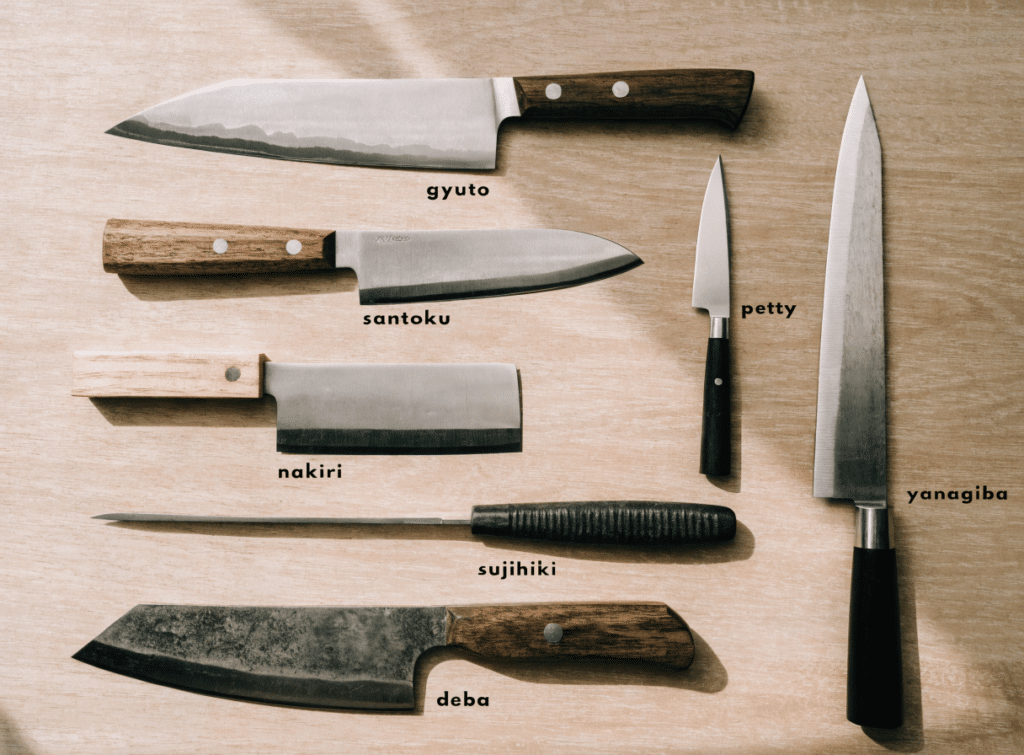
The main types of Japanese knives each serve a job, but a handful cover almost everything a home cook needs. Here’s a breakdown of the ones you’ll run into most:
| Knife | Blade Length | Best For |
|---|---|---|
| Gyuto (chef’s knife) | 210–270mm | All-purpose work: meat, fish, vegetables |
| Santoku (multipurpose) | 165–180mm | Everyday slicing, dicing, mincing |
| Petty (paring) | 120–150mm | Peeling, trimming, small prep |
| Nakiri (vegetable) | 165–180mm | Clean, straight vegetable cuts |
| Sujihiki (slicer) | 240–300mm | Carving roasts, slicing proteins |
| Yanagiba (sashimi) | 270–330mm | Slicing raw fish in one smooth motion |
| Deba (butchery) | 150–330mm | Filleting fish, breaking down poultry |
If you’re buying your first one, go with a Gyuto or Santoku. The Gyuto came about during the Meiji era as Japan’s answer to the Western chef’s knife. The Santoku means “three virtues,” named for its skill with fish, meat, and vegetables. Both handle the bulk of daily cooking, so you don’t need a drawer full of blades to get started.
How do you read the anatomy of a Japanese knife?
You read the anatomy of a Japanese knife by looking at three things: the blade material, the blade grind, and the handle. Each one shapes how the knife feels and how much fuss it needs.
Carbon steel or stainless steel: which should you pick?
Pick carbon steel if you want the sharpest possible edge and don’t mind extra care. Pick stainless steel if you want a low-maintenance knife that still performs.
Carbon steel is the traditional choice. It takes an incredibly keen edge and many cooks swear by how it feels. The catch? It reacts to moisture and acid, so it can rust if you ignore it. Over time it develops a dark patina, which is normal and actually helps protect the blade. Popular carbon steels include:
- White Steel (Shirogami): One of the purest carbon steels. Sharpens like a dream.
- Blue Steel (Aogami): Adds chromium and tungsten for better edge retention.
- Aogami Super: The top tier, reaching 67–68 HRC. A favorite among collectors.
Stainless steel has more chromium (13% or higher), which fights rust. You can set it down wet without panicking. The best stainless options today perform wonderfully:
- VG10: Hardens to 60–62 HRC. A great starting point and easy to maintain.
- R2/SG2: A premium powdered steel reaching 63–65 HRC. Holds a fine edge with little effort.
- ZDP-189: Extreme stuff, hitting 67–69 HRC. Amazing edge retention, but brittle and best left to experienced hands.
My honest take? If you’re new to this, start with VG10. It gives you a taste of Japanese sharpness without the worry of rust spots showing up overnight.
Double bevel or single bevel: what’s the difference?
A double-bevel knife is ground on both sides like a Western knife, while a single-bevel knife is ground on just one side for extreme sharpness.
Double-bevel blades work for righties and lefties alike, and they’re far more forgiving to learn on. Single-bevel knives (think Yanagiba or Deba) get scary sharp but take real skill to use and sharpen. For most people, double bevel is the way to go.
Wa handle or yo handle: how do they compare?
A wa handle is the traditional Japanese style, light and balanced toward the tip, while a yo handle is the Western style, heavier and balanced near the blade. As one knife shop nicely put it, “There is as much variability among handles as there is among blades!”
Here’s how they stack up:
| Feature | Wa (Japanese) | Yo (Western) |
|---|---|---|
| Tang | Hidden stick tang | Full tang with rivets |
| Weight | Lighter | Heavier |
| Balance | Toward the tip | Near the blade and handle joint |
| Material | Usually magnolia wood with a horn or wood ferrule | Plastic, pakka wood, or micarta |
| Repair | Easy to replace | Harder to replace |
Neither is better. A wa handle suits a delicate, pinch-grip style. A yo handle feels sturdy and familiar if you’re coming from Western knives. Try both if you can.
How do you pick the right Japanese knife for you?
You pick the right Japanese knife by matching it to your cooking habits, your budget, and where you plan to buy it. Start with how you actually cook, not with what looks coolest online.
What knife fits your cooking style?
Ask yourself what you chop most. If you cook a bit of everything, a Gyuto or Santoku has you covered. Plow through piles of vegetables every night? A Nakiri makes quick, clean work of it. Love sushi nights? A Yanagiba slices fish like nothing else. Think about your grip and motion too. Push-and-pull cuts suit Japanese blades better than the rocking motion you might be used to.
How much should you spend on a Japanese knife?
You should expect to spend between $50 and $300+ depending on the brand and quality. Here’s a quick guide to where popular brands land:
| Brand | Sharpness | Maintenance | Weight | Price |
|---|---|---|---|---|
| MAC | Very High | Low | Balanced | $ |
| Global | High | Low | Light | $ |
| Kasumi | Very High | Medium | Balanced | $ |
| Shun | High | Medium | Balanced | $$ |
| Miyabi | Very High | High | Balanced | $$ |
If you’re transitioning from Western knives, MAC is a smooth landing. It’s razor sharp but more forgiving than the hardest steels. Global brings a light, all-steel modern design. Want something with a touch of luxury and a gorgeous Damascus pattern? Shun and Miyabi deliver beauty and bite, though they cost more and Miyabi asks for a bit more upkeep.
Should you buy online or in a store?
Buy in a store if you want to hold the knife first, and buy online for the widest selection and best prices. Holding a knife tells you a lot about weight and balance that no photo can. That said, online shops like Chef Knives To Go, Chubo Knives, and Japanese Chef’s Knife carry a massive range. Just check the return policy. Many good shops let you send a knife back within 30 days if it isn’t your match.
How do you care for a Japanese knife?
You care for a Japanese knife by sharpening it properly, washing it by hand, and storing it safely. Treat it well and it’ll outlast most of your other kitchen gear.
How do you sharpen and hone a Japanese knife?
Sharpen a Japanese knife with a whetstone at a 15–16 degree angle, which is finer than the roughly 20 degrees used for Western knives. Skip the pull-through gadgets and electric grinders. They strip away too much metal and wreck the blade’s geometry. Between sharpening sessions, a honing rod keeps the edge straight and ready. Whetstone sharpening takes practice, but it’s a satisfying skill to pick up, and your knife will thank you.
How should you clean and store a Japanese knife?
Clean a Japanese knife by hand with mild soap and dry it right away, then store it where the edge won’t bang into other tools. A few rules I live by:
- No dishwasher, ever. The heat and harsh detergent damage both the blade and the handle.
- Dry immediately. This matters most for carbon steel. A light coat of food-safe camellia or mineral oil helps during storage.
- Use the right cutting board. Wood or plastic only. Glass, ceramic, and stone will dull a fine edge fast.
- Store it smart. A magnetic strip, a knife block, or a wooden saya (a blade sheath) keeps the edge safe. Tossing it loose in a drawer is asking for chips and nicks.
Ready to find your blade?
A good Japanese knife changes how you feel about cooking. Slicing stops being a chore and starts being kind of fun, which I never expected to say about prepping dinner. Start with a Gyuto or Santoku in a friendly stainless steel like VG10, learn to sharpen it on a whetstone, and treat it with a little respect. Do that, and one knife can serve you for decades. My advice? Hold a few before you buy, trust how they feel in your hand, and go with the one that makes you want to cook.
Frequently Asked Questions
What is the best Japanese knife for beginners?
The best Japanese knife for beginners is a Gyuto or Santoku made from stainless steel like VG10. Both are versatile, double-beveled, and easy to maintain, so you can handle most cooking tasks without worrying about rust or specialized technique.
How much does a good Japanese knife cost?
A good Japanese knife costs between $50 and $300 or more. Budget-friendly brands like MAC and Global start around $50–$150, while premium brands like Shun and Miyabi typically begin at $150 and climb higher based on materials and craftsmanship.
Is carbon steel or stainless steel better for a Japanese knife?
Carbon steel takes a sharper edge but rusts without careful drying and oiling. Stainless steel resists rust and needs less attention, though it may not get quite as sharp. New buyers usually do best with a quality stainless steel like VG10.
Can you put a Japanese knife in the dishwasher?
No, you should never put a Japanese knife in the dishwasher. The heat and harsh detergents damage both the blade and the handle. Wash it by hand with mild soap and dry it right away to protect the edge and prevent rust.
How often should you sharpen a Japanese knife?
How often you sharpen depends on use, but most home cooks sharpen every few months and hone more often. Use a whetstone at a 15–16 degree angle for sharpening, and a honing rod between sessions to keep the edge straight.
What is the difference between a wa and yo handle?
A wa handle is the traditional Japanese style with a hidden tang, lighter weight, and balance toward the tip. A yo handle is the Western style with a full tang, more weight, and balance near the blade. The choice comes down to personal comfort.
