The tanto point blade has earned a reputation as one of the toughest, most piercing-focused blade shapes in the knife world. Whether you’re opening reinforced packaging in a warehouse or carrying a tactical folder for duty use, understanding this distinctive geometry can help you decide if it belongs in your kit.
- Quick Answer: What Is a Tanto Point Blade?
- History of the Tanto: From Samurai Sidearm to Modern Tactical Point
- Tanto Blade Geometry Explained
- Pros of the Tanto Point Blade
- Cons and Limitations of Tanto Points
- When to Choose a Tanto Point Blade
- How to Sharpen a Tanto Point Blade
- Popular Uses and Example Tanto Point Knives
- FAQs About Tanto Point Blades
- Conclusion: Is the Tanto Point Right for You?
Quick Answer: What Is a Tanto Point Blade?
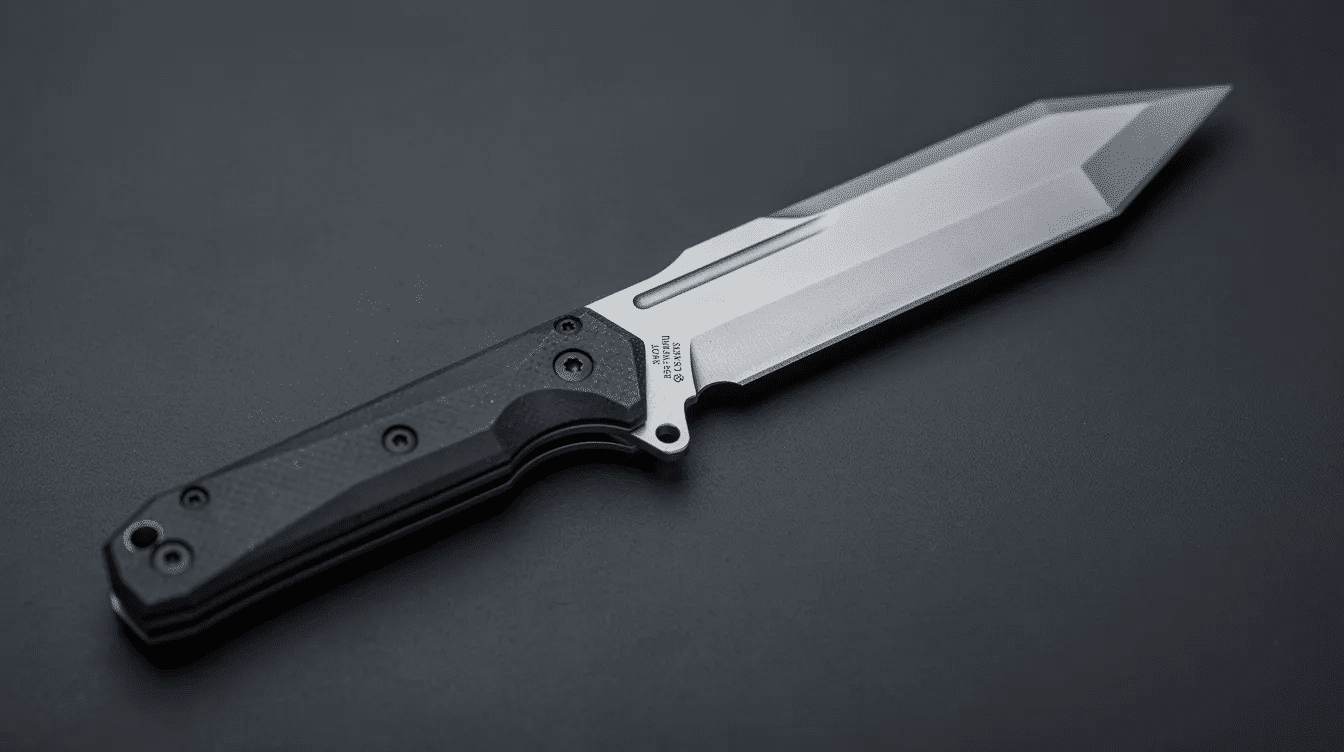
A tanto point blade is a blade shape defined by two straight edges—a primary cutting edge along the length and a shorter secondary edge at the tip—that meet at an abrupt, angular junction. This creates a pronounced secondary tip backed by a thick spine, delivering exceptional tip strength and piercing power far beyond more delicate blade profiles.
The design excels at piercing tough materials like thick plastics, light metals, leather, layered cardboard, and heavy zip ties. Modern tanto knives appear frequently on tactical knives, everyday carry folders, and survival tools from trusted brands like Cold Steel, Benchmade, and CRKT.
This article focuses on tanto point geometry, its real-world pros and cons, and practical guidance—not just ranking specific knife models.
Key benefits at a glance:
- Reinforced tip resists snapping and bending under lateral stress
- Superior piercing power through dense, hard surfaces
- Secondary working point doubles as a built-in scraper
- Edge durability handles heavy duty tasks without rapid dulling
History of the Tanto: From Samurai Sidearm to Modern Tactical Point
The tanto blade traces its origins to feudal Japan, roughly the 10th through 16th centuries, where it served as a samurai sidearm for close-quarters combat and piercing armor gaps.
Traditional Japanese tantos were short fixed blade weapons—typically 20–30 cm (8–12 inches)—crafted with more subtle curves and a continuous edge profile. These blades sometimes served ceremonial purposes, including ritual seppuku, and featured single- or double-edged designs optimized for slashing alongside stabbing, distinct from the refined Japanese kitchen knife types used in culinary applications.
The sharper angles we associate with the tanto today came later, through American adaptation.
Historical progression:
- Feudal Japan (10th–16th century): Tantos emerge as samurai sidearms, featuring curved profiles and continuous edges for armor-gap penetration
- 19th–20th century: Traditional tanto production declines as samurai culture fades
- 1980s revival: American companies, notably Cold Steel, popularize the “Americanized” tanto with exaggerated angular geometry and reinforced tips
- Present day: Tanto points appear across knife types—military field knives, law enforcement duty blades, EDC folders, and rescue tools
Tanto Blade Geometry Explained
What separates the tanto from a drop point or clip point isn’t marketing—it’s pure geometry. The angles, grinds, and thickness distribution at the tip create a fundamentally different tool.
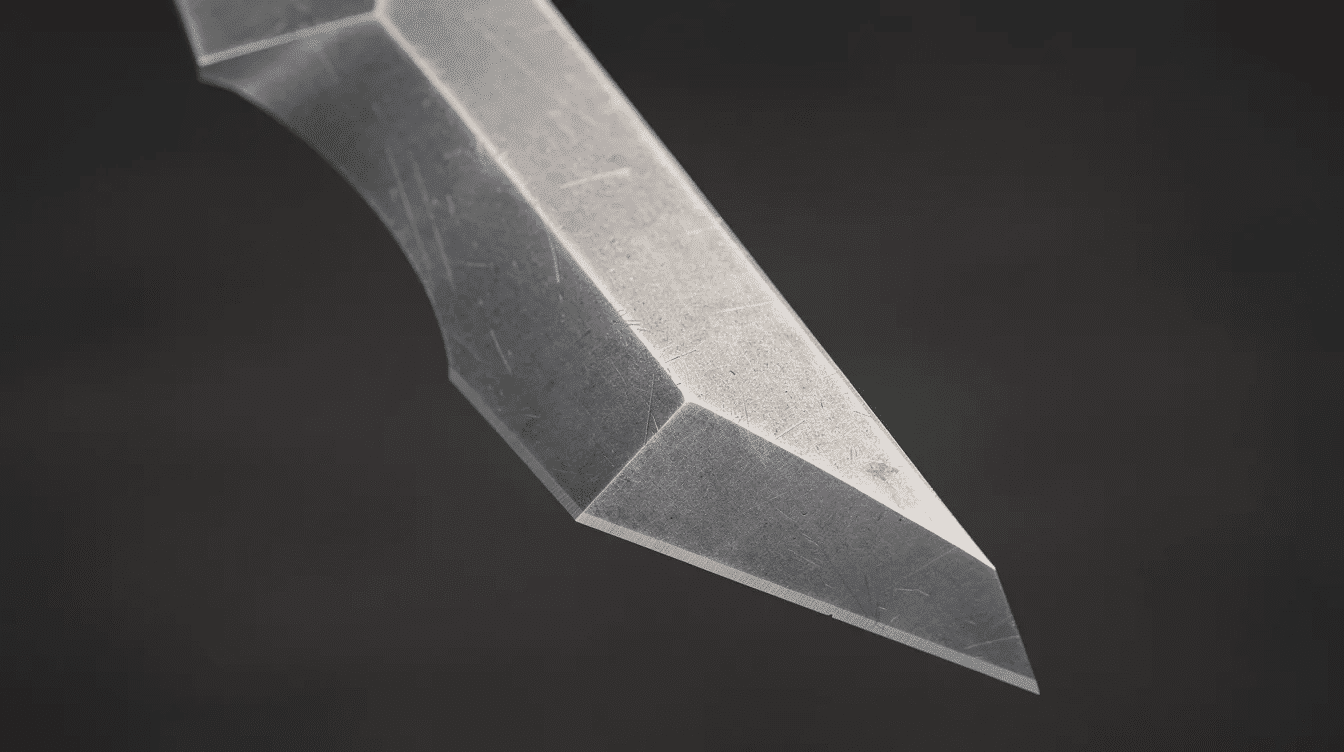
The defining feature is those two edges meeting at an abrupt angle rather than flowing into a curve. Think of the tip section like a miniature chisel: the flat grind and high point create a triangular shape that distributes force optimally during piercing.
Core geometric features:
- Secondary point: The angular junction where the main edge meets the tip edge creates a pronounced, reinforced point
- Thick spine: Extra material behind the tip increases resistance to snapping or bending under side loads
- Straight edge layout: Both edges run relatively straight, lacking the curved belly found on drop points
- Triangular tip cross-section: This engineering creates maximum durability where other knife types like needle-point or narrow clip point blades would snap
American vs. Japanese-Style Tanto Points
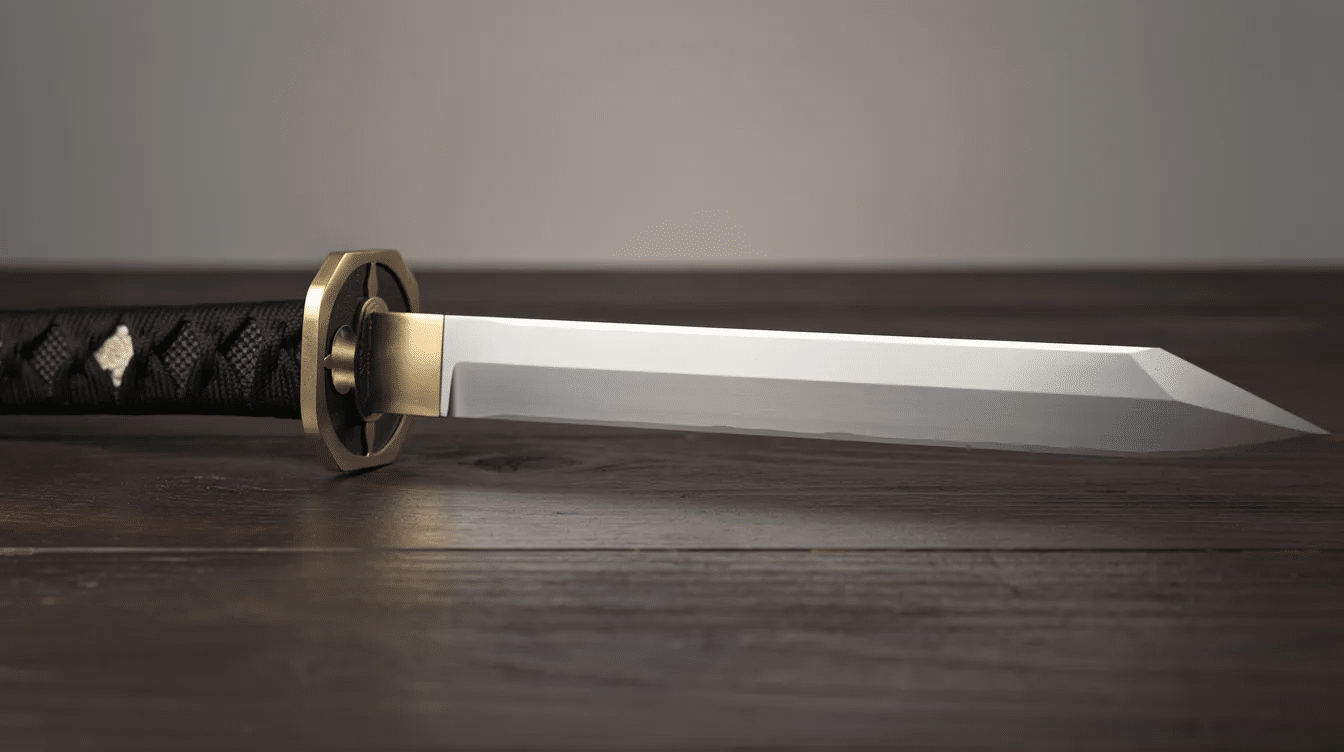
The term “tanto” now covers two distinct families, and knowing the difference matters when selecting your blade.
Japanese-style tantos retain characteristics of their historical roots: a longer, often slightly curved edge with a more continuous profile where the tip flows naturally from the main edge. Kwaiken-style blades exemplify this approach.
American-style tantos—the blade style most common today—feature a much sharper angular transition. The main edge meets the front edge at a clearly visible break, creating that distinctive secondary tip optimized for modern heavy duty piercing.
Quick comparison:
- Japanese-style: Subtle curves, continuous edge profile, balanced slashing and stabbing
- American tanto: Pronounced angular break, thicker tip material, optimized for piercing sheet metal, heavy plastic, and stacked cardboard
- Popular American examples: Cold Steel Recon Tanto, Benchmade Bailout
Common Grinds on Tanto Points
Grind choice dramatically affects how a tanto performs in slicing tasks versus strength-demanding work.
- Flat grind at the tip: Creates a stronger, thicker edge ideal for prying, scraping, and repeated stabs into tough materials
- Hollow grind on the main edge: Thinner behind the edge, improving slicing on cardboard, rope, and lighter cutting
- Compound grinds: Flat at the tip transitioning to hollow on the main edge—seen on many Cold Steel and Western tantos—balancing strength with cut performance
- Real-world application: Most tanto knives good for warehouse or tactical work use compound grinds for versatility
Pros of the Tanto Point Blade
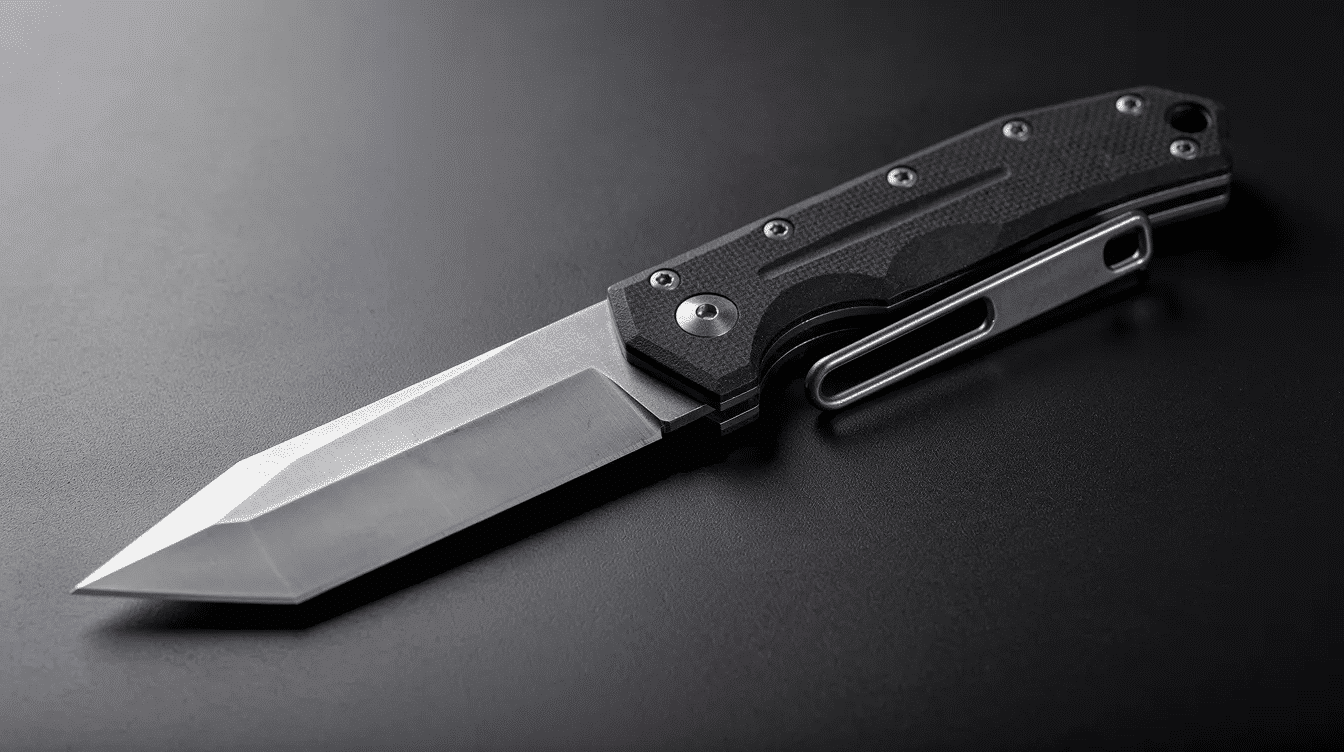
The tanto point is engineered around durability and piercing, making it a favorite for tactical applications and heavy use environments.
- Strong tip: The robust tip survives impacts and twisting that would snap a fine clip point. Users report punching through car door skin, thick plastic housings, and pallet strapping without tip damage.
- Superior piercing power: The acute, chisel-like point focuses force into a small area for powerful thrusts through dense or layered materials.
- Secondary working point: The angular tip where two edges meet creates a built-in scraper for tasks like stripping tape, scoring drywall, or removing stickers.
- Edge durability: The mostly straight edges and stout tip handle abusive cuts—heavy pallet straps, thick zip ties—without rapid dulling, contributing to excellent edge retention.
- Tactical presence: Knife enthusiasts in defensive roles value the aggressive, bulky profile. While actual performance depends on training and deployment, the angular geometry offers psychological deterrence.
- Push cuts efficiency: Straight edges perform controlled push cuts cleanly, ideal for precise cuts through packaging or rigid materials.
Cons and Limitations of Tanto Points
The same geometry that makes tantos a powerful tool also introduces trade-offs worth considering.
- Limited slicing ability: The lack of curved belly makes food prep, skinning game, whittling, and long draw cuts awkward and inefficient compared to curved blades.
- More complex sharpening: You must sharpen each edge separately. Careless strokes that sweep across the junction will round off the secondary point, ruining the profile.
- Bulkier tip profile: The thick, reinforced tip doesn’t penetrate soft materials as cleanly as a fine spear point. Precision work suffers.
- Niche optimization: Users primarily doing general EDC cutting—opening mail, light food prep, fine carving—often find a drop point more comfortable for daily slicing tasks.
- Perception issues: The surge of cheaply made “mall ninja” tanto knives in the late 1990s and early 2000s damaged the blade style’s reputation among purists, though premium examples have since redeemed it.
When to Choose a Tanto Point Blade
The tanto point excels when the priority is tip toughness and piercing, not delicate slicing. Match your blade to your real-world tasks.
- Tactical and duty carry: Law enforcement, security, and military personnel benefit from the tanto’s ability to pierce seat belts, light barriers, and reinforced packaging under stress.
- Outdoor and survival use: The reinforced tip handles prying tasks, scraping bark, and piercing tough synthetic gear—though it’s not a hunting or skinning specialist.
- Work and trade environments: Warehouse workers, delivery drivers, and construction trades use tantos for heavy plastic strapping, drywall scoring, and dense packaging with excellent control.
- Self defense context: Many choose tantos for the strong tip and intimidating profile. However, proper training, deployment speed, and legal awareness matter far more than blade shape for self defense scenarios.
- When not to choose: If you mainly slice food, carve wood, or need precise curved cuts, a drop point or clip point will feel more natural.
Slicing vs. Piercing: The Core Trade-Off
Every blade shape balances slicing performance against piercing and durability. Tanto points sit firmly on the piercing/durability end.
- Straight edges push cleanly through materials in a line but don’t “roll” through cuts like a curved belly does
- For cutting apples, trimming meat, or skinning game, drop point or trailing point blades feel more natural
- For punching through packing straps, opening reinforced boxes, or making controlled punctures in hard plastics, the tanto holds a clear advantage
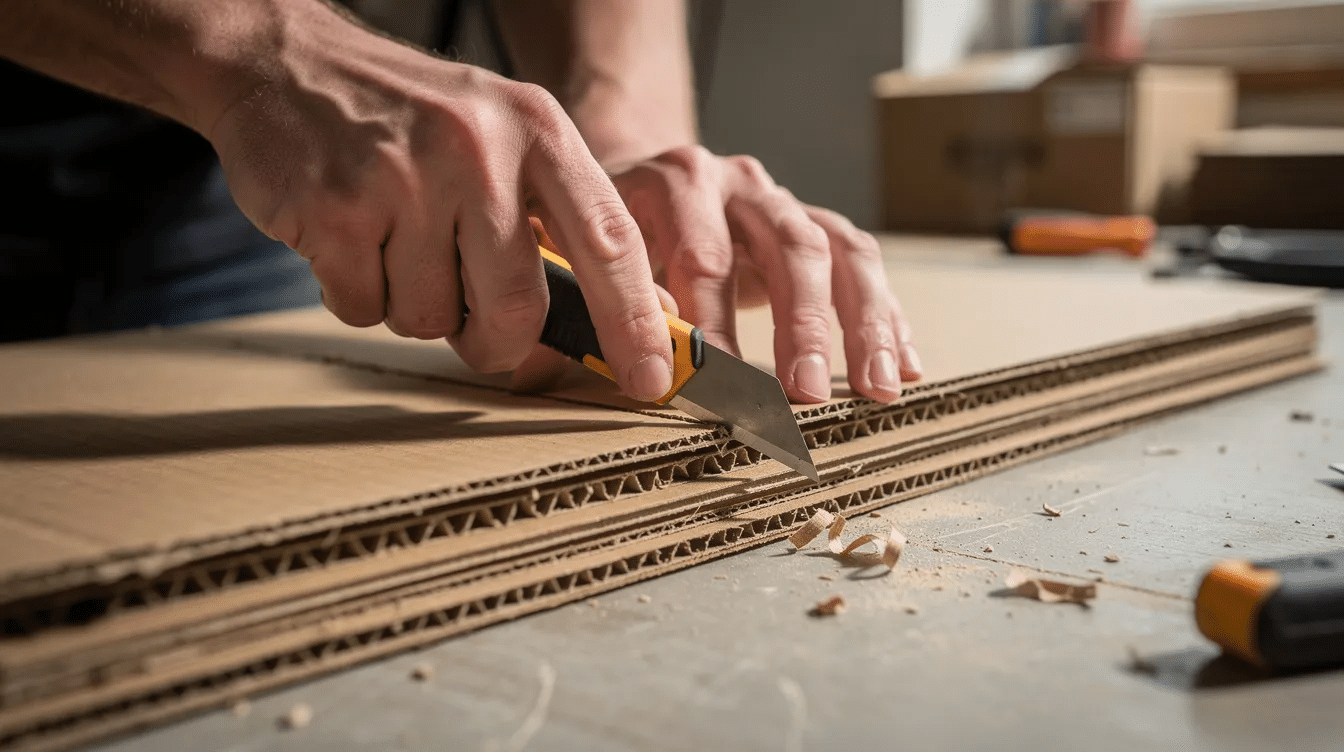
How to Sharpen a Tanto Point Blade
Sharpening a tanto is straightforward if you treat the blade as two edges instead of one continuous curve. The unique design demands care but delivers precision when maintained properly.
- Step 1 – Inspect geometry: Identify the main edge and the front tip edge, plus the angle where they meet. Understanding this layout prevents mistakes.
- Step 2 – Sharpen the main edge: Use a consistent angle (around 15–20° per side) on stones or guided systems. Stop your strokes before reaching the secondary point.
- Step 3 – Reset angle for the tip edge: Shift the blade so the front edge lies flat against the stone. Sharpen this section independently to maintain the crisp angular transition.
- Critical warning: Avoid long sweeping strokes that cross over the corner between edges—this rounds off the secondary point and ruins the tanto profile.
- Refinement tools: Ceramic rods and fine grit stones work well for refining the secondary tip without removing too much material.
- Finishing: Deburr and lightly strop each edge segment separately. This preserves sharp, well-defined geometry.
Proper sharpening maintains the demand strength and piercing capability that make tantos excel. With practice, the process becomes routine.
Maintenance & Care Tips for Tanto Blades
Proper care maximizes the tanto’s strengths over years of heavy use.
- Clean after cutting corrosive or dirty materials; follow with a light oil coat on carbon and tool steels
- Check the tip area frequently for chips or flat spots—this zone sees the most impact during piercing tasks
- For folding knives, lubricate pivot points and inspect locks (liner lock, frame lock, button lock) for debris
- Store fixed blade tantos in proper sheaths; ensure folders close fully to protect the angular tip from knocks and corrosion
- Good handle material and a secure grip extend blade life by reducing user fatigue and control slips
Popular Uses and Example Tanto Point Knives
While this isn’t a full “best of” list, naming well-known knives helps connect theory to real products you can evaluate.
- Cold Steel Recon Tanto: 7-inch SK-5 blade steel optimized for military and outdoor use; exemplifies heavy duty piercing and prying capability in a classic fixed blade format
- Benchmade Bailout: Around 3.38-inch CPM-M4 blade; lightweight EDC folder ideal for scraping, scoring, and package work with excellent handle material
- CRKT M16-series tanto: Budget-friendly folder offering tactical and warehouse versatility; proves that the tanto point delivers value at accessible price points
Each example demonstrates the perfect balance between the tanto’s engineering and practical application—whether for duty, daily carry, or demanding trade work.
FAQs About Tanto Point Blades
- What defines a tanto point blade? Two straight edges meeting at an angular secondary point, with a reinforced tip optimized for piercing—the unique design that separates tantos from other knife types.
- Are tanto knives good for everyday carry? Yes, if your EDC tasks involve heavy piercing, package opening, and scraping. Less ideal for food prep and long slicing cuts.
- Is a tanto better for self defense? The strong tip and aggressive profile offer advantages, but training, deployment speed, and legality matter more than blade shape alone.
- How hard is it to sharpen a tanto? Not difficult, but requires treating the main edge and tip section as separate blades. Careless sharpening damages the geometry.
- Should I choose a tanto or drop point? Choose tanto if you prioritize piercing strength, tip durability, and heavy duty tasks. Choose drop point if you prioritize versatile slicing and general-purpose cutting.
- What materials work best with tantos? Tantos excel at wood, thick cardboard, heavy plastics, pallet strapping, and synthetic materials requiring ability to pierce without tip damage.
Conclusion: Is the Tanto Point Right for You?
The tanto point blade delivers exceptional tip strength, aggressive piercing capability, and a useful secondary working point that doubles as a scraper for demanding tasks. It’s an excellent choice crafted for users who need reliability in tough conditions.
The trade-offs are real: reduced slicing performance compared to curved blades and slightly more involved sharpening to preserve that distinctive geometry. For general-purpose EDC slicing, other profiles may feel more natural.
Match your blade to your actual work. Heavy packaging, tactical and duty use, and rough industrial tasks favor the tanto. Daily slicing, food prep, and curved cuts favor drop points or similar profiles.
For users who demand strength, prioritize toughness, and value piercing ability above all else, the tanto point remains one of the most capable and distinctive blade shapes available. It’s a tool built for those who push their gear hard—and expect it to push back.
