

Knife styles from around the world show us how people everywhere have shaped simple tools to fit their lives. Whether it’s a curved blade or a tough fixed blade, knives tell stories about culture, survival, and everyday needs. Each knife tells a unique story, carrying the narrative, craftsmanship, and heritage of its origin. From survival knives to pocket knives, each style has a purpose and history that’s worth knowing. Knives are also cultural artifacts, reflecting the traditions and artistry of their regions. In many cultures, knives symbolize hospitality and generosity, often featuring intricate designs that celebrate their heritage.
- Introduction to Knives
- A Look Back: Historical Knives That Shaped the Knife World
- European Knives: Versatile and Built to Last
- American Knives: Rugged and Ready for Action
- Asian Knives: Precision and Unique Shapes
- Different Knife Types and What They Do
- Blade Types and Materials
- Knives in Cooking: Tools That Shape the Culinary Journey
- Everyday Carry: Knives for Daily Life
- Why Knives Matter Beyond Cutting
- Knife Collecting: A World of Passion and Rarity
- How to Take Care of Your Knives
- Staying Safe With Knives
- Knife Laws and Regulations Around the World
- Wrapping Up
Introduction to Knives
Knives have been dead useful throughout human history, going from basic stone tools to the cracking blades we’ve got today. Right across the knife world, these handy bits of kit have adapted to sort out the needs of different cultures and times, becoming way more than just a tool—they’re proper symbols of survival, top-notch craftsmanship, and who you are. From the brilliant survival knife thats used out in the wild to the legendary Swiss Army Knife that’s become a must-have for adventurers and everyday folk alike, knives show off the clever thinking and resourcefulness of the people who knock them up. Legendary blades like the Fairbairn-Sykes Fighting Knife, designed for close quarters combat, showcase the rich history and specialized uses that have shaped how knives have developed over the years. Whether you’re using them for daily jobs, ceremonial bits and bobs, or as proper formidable weapons, knives continue to hold a special place in our lives and stories—and thats no joke!
A Look Back: Historical Knives That Shaped the Knife World
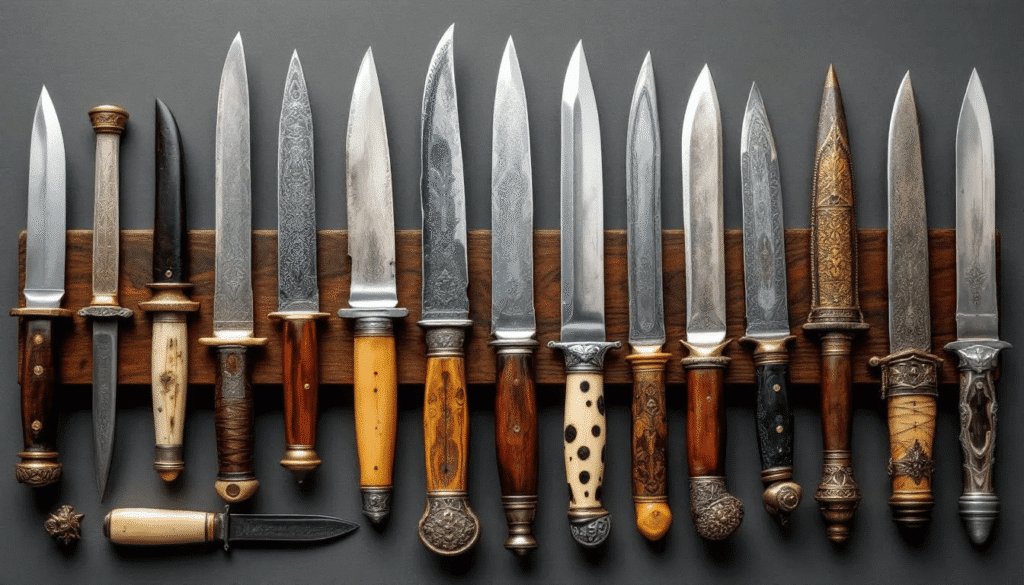
Some knives have a rich history that goes beyond just cutting. The Bowie knife, for example, became famous after Jim Bowie used such a knife in a fight in 1827. Its historical significance lies in how it influenced knife history and became a symbol of American frontier culture. Its clip point blade made it a favorite for close quarters combat and survival. Then there’s the Fairbairn-Sykes fighting knife, originally manufactured for British commandos during WWII. These are iconic knives that have shaped the knife world and are recognized for their lasting impact. It’s a slim, deadly blade designed for stealth and quick use. The evolution of knife design for specific purposes, such as combat or survival, is evident in these examples.
Damascus steel also plays a big part in knife history. These blades are known for their strength and unique wavy patterns. They were prized in the cutlery world for centuries and still inspire the modern version of many knives today, with current models updating traditional designs using advanced materials and techniques. Advances in knife production have further contributed to the spread and evolution of these knives, making them accessible and relevant in modern times.
European Knives: Versatile and Built to Last
European knives often focus on versatility. Take the Swiss Army knife, a classic example with its handy pocket clip and multiple tools. It’s more than just a knife; it’s a multi tool that fits in your pocket and helps with many tasks.
The chef’s knife, especially in Europe, usually has a broad blade and is made for preparing food with precision and control. The chef’s knife is fundamental in both European and Middle Eastern cuisines, valued for its versatility and ability to perform a variety of cutting methods. These knives reflect the region’s rich heritage and traditional craftsmanship. In the Middle East, chef’s knives and other traditional blades play a significant role in culinary techniques and cultural symbolism. Achieving precise cuts is essential in both European and Middle Eastern food preparation, highlighting the importance of accuracy and skill. Many knives from France and Germany have been passed down through generations, showing their cultural identity. Japanese knives, renowned for their precision, are made from harder steel that maintains a very sharp edge, further emphasizing the importance of craftsmanship in culinary traditions.
American Knives: Rugged and Ready for Action
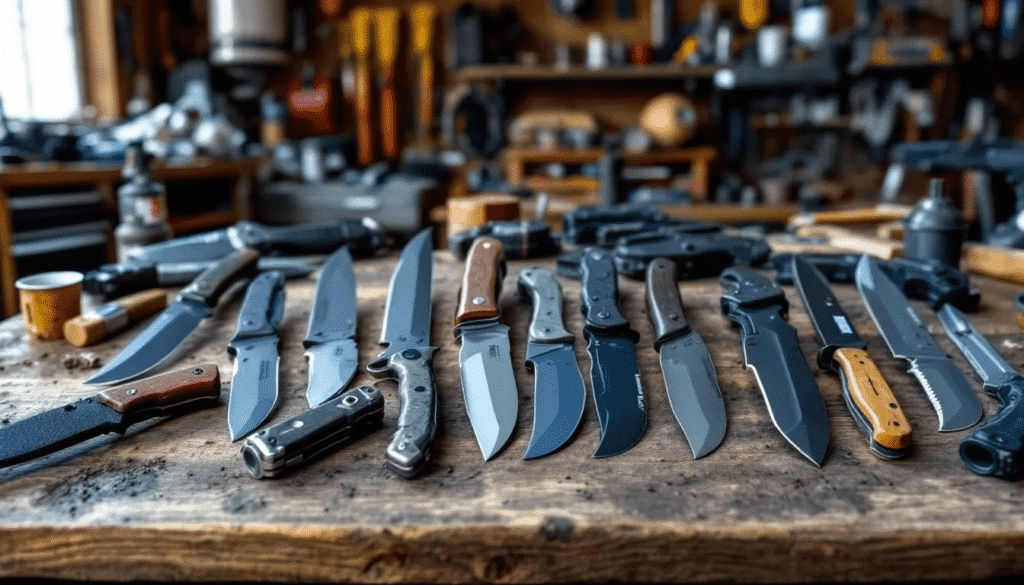
American knife styles often focus on practicality. The Buck 110 folding hunter is a prime example, known for its sturdy lockback and clip point blade. As a classic style knife, the Buck 110 set trends in American knife design and became an icon in the industry. The rise of the production knife in America made quality knives like the Buck 110 more accessible to the public. It changed how people thought about folding knives for hunting and outdoor use. Many knives from the U.S. are designed for skinning game and survival skills.
The KA-BAR is another iconic American knife. Originally made for Marines in WWII, it’s a fixed blade knife built for tough use. Its design has influenced many other knives in the survival and combat categories. Combat knives, developed in the U.S., are specialized military and tactical tools with historical and functional significance. The Ka-Bar Marine Knife was officially designed for the U.S. Marine Corps in 1942, cementing its place as a reliable tool for military personnel.
Asian Knives: Precision and Unique Shapes
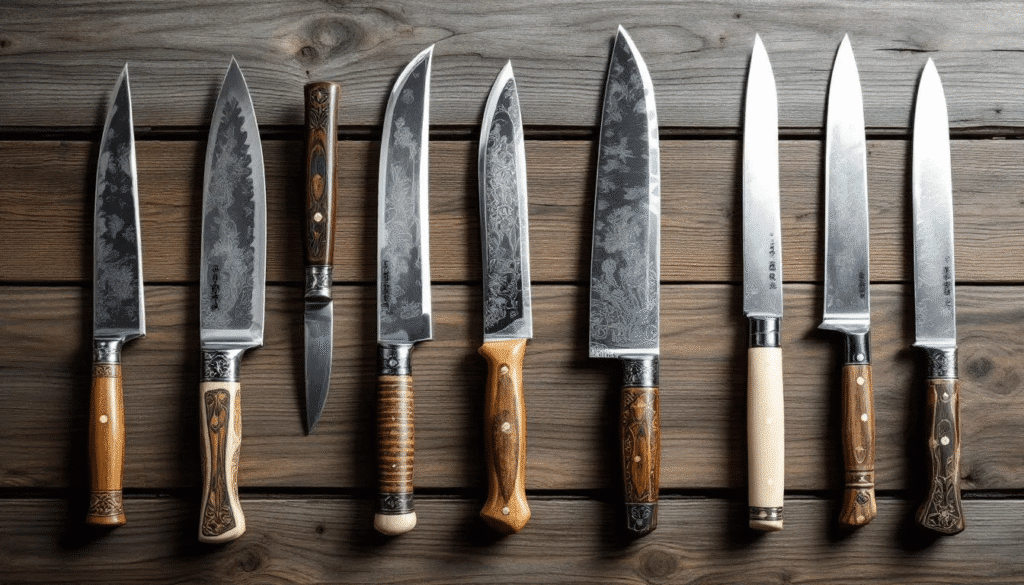
Asian knives bring a different style to the table. The Japanese tanto, with its curved blade, is both a utility knife and a weapon. Samurai carried it for self-defense and daily tasks. Its design has a rich heritage tied to honor and tradition. The tanto is regarded as a formidable weapon in both historical and modern contexts. Japanese knives are also known for their precision and elegance, particularly in culinary practices, where they are highly valued for their ability to create refined cuts.
The karambit, from Southeast Asia, is a curved blade with a ring handle. It’s used by martial artists for self-defense and cutting. The unique shape allows for both cutting and trapping moves, making it a versatile tool. Some karambits also incorporate additional tools, such as bottle openers, further highlighting their multifunctionality.
Different Knife Types and What They Do
Knives come in many forms: fixed blade knives, pocket knives, utility knives, and more. Fixed blade knives are strong and reliable for hard tasks. Pocket knives offer convenience and portability. Utility knives are all-rounders for everyday jobs. When choosing one knife as the best for a particular need, factors like blade material, handle design, and intended use are crucial in determining its suitability.
Some knives are designed specifically for survival, with features like broad blades and strong handles. Others focus on precision, like chef’s knives made for preparing food with fine cuts. Beyond their basic function, knives are also valued for their practical use in cultural traditions, symbolism, and artistic expression.
Blade Types and Materials
The performance and versatility of a knife often comes down to its blade type and the materials used in putting it together, and its dead brilliant once you get your head around it all. A clip point blade, for instance, is a cracking choice for its sharp, controllable tip – making it spot on for piercing tasks and detailed work that needs a bit of finesse. In contrast, a broad blade is the business when it comes to heavy duty tasks like chopping and slicing – you just cant beat it for getting the job done. The knife industry has been mucking about with materials for ages to boost durability and sharpness, and Damascus steel really stands out as something special with its strength, resistance to corrosion, and those intricate patterns that make each blade a proper one-off. From the curved blade of a Japanese tanto (which is absolutely prized for its cutting power and elegance) to the straight-edged European designs that are more your traditional style, the diversity of blade types and materials really shows off the creativity and know-how you’ll find throughout the knife world. High quality knives are the result of centuries of having a go at innovation, blending traditional craftsmanship with modern tech to sort out the needs of knife users everywhere – and its quite something to see how far they’ve come.
Knives in Cooking: Tools That Shape the Culinary Journey
Chef’s knives and paring knives are essential in kitchens worldwide. They often have broad blades and sharp edges for chopping and slicing. High-quality knives, sometimes made with Damascus steel, offer both durability and beauty.
Different cultures have their own styles of cooking knives. For example, the mora knife is a Scandinavian fixed-blade knife known for its simplicity and effectiveness in both cooking and outdoor tasks. European chef’s knives tend to be heavier, while Japanese knives focus on sharpness and precision. Both styles show how knives are more than tools—they’re part of culinary traditions.
Everyday Carry: Knives for Daily Life
For loads of people, carrying a knife is all about being dead simple prepared for whatever the day throws at you. Everyday carry knives, whether its a compact Swiss Army Knife or a sturdy fixed blade, are cracking practical tools for a whole range of jobs—prepping food, opening packages, or even self defence if things get a bit dodgy. Pocket knives are super popular because theyre dead convenient and versatile, easily fitting into your pocket or bag so you can get to them in no time. The key to picking the right everyday carry knife is finding a proper balance between size, what it can do, and how comfortable it feels in your hand. With loads of options out there, from classic designs to modern bits of kit, theres a knife to suit every lifestyle and whatever you need it for. In the world of knife enthusiasts, collecting and using these knives isnt just about getting the job done—its about appreciating the cracking craftsmanship and history behind each blade.
Why Knives Matter Beyond Cutting
Knives are often family heirlooms, passed down through generations. They hold cultural significance and sometimes ceremonial importance. For example, some knives feature intricate patterns that celebrate heritage. Traditional machetes from South America are a prime example, valued for their cultural importance and widespread use as both farming tools and weapons throughout the region. Similarly, the Naga Knife, used by Naga tribes in Northeast India, features a unique shape and is frequently decorated with ornate carvings, showcasing its cultural and artistic significance.
In many places, knives are symbols of identity and tradition. They can represent survival skills, craftsmanship, or even a rite of passage. The variety of blade shapes—such as drop-point, semi-skinner, and utility blades—reflects the diversity and symbolism found in different knife traditions. This makes knives more than just practical tools—they’re part of who people are.
Knife Collecting: A World of Passion and Rarity
Knife collecting is more than just a hobby—its a brilliant journey through history, art, and top-notch innovation. Collectors get into the amazing world of knives for loads of reasons, whether its the appeal of rare production knives, the beauty of ceremonial pieces, or the fantastic story behind iconic blades like the Bowie knife. Each knife in your collection tells a cracking story, from the traditional techniques of knife making to the cultural significance of its design. Some collectors focus on limited-edition pieces, while others hunt down historical bits or modern masterpieces that are absolutely spot-on. The buzz from spotting a unique knife, learning about where it came from, and keeping it safe for future generations is what makes knife collecting such a rewarding pursuit. For loads of people, its a dead simple way to connect with the amazing heritage and craftsmanship that make the knife world so brilliant.
How to Take Care of Your Knives
Keeping knives sharp and clean is key for their performance. Regular sharpening with whetstones or steels helps maintain the edge. Storing knives properly, like in sheaths or cases, prevents damage and keeps them safe.
Simple cleaning and drying after use prevent rust and wear. Taking care of knives means they’ll last longer and work better, whether it’s a fixed blade or a pocket knife.
Staying Safe With Knives
Using knives safely is important to avoid accidents. Always cut away from yourself and use a cutting board. Wearing gloves can help in some cases. Proper storage also keeps knives out of reach from kids or anyone who shouldn’t handle them.
When carrying knives, be aware of local laws. Some places have rules about blade length or types of knives allowed.
Knife Laws and Regulations Around the World
Getting your head round knife laws is dead important if you’re into owning, carrying, or collecting knives – its a right minefield out there! The rules can be all over the shop from one country to the next, and even between different bits of the same country, covering everything from how long your blade can be to what types of knives you’re allowed to have. Some places are proper strict about carrying fixed blade knives or certain styles like switchblades, while others might put the kibosh on using knives for self defence or make you get permits for specific blade types. In loads of areas, the law makes a cracking distinction between practical tools and weapons, with exceptions for ceremonial knives or those you’d use for food prep – which is good old common sense really! Staying clued up about your local regulations helps knife enthusiasts dodge legal trouble and keeps your passion for knives a safe and enjoyable pursuit that won’t land you in hot water. As the knife industry keeps moving forward, so do the laws that govern these brilliant and iconic tools right around the world – so its worth keeping an eye on things!
Wrapping Up
Knife styles from around the world show how people have used simple tools in many ways. From the survival knife to the chef’s knife, each blade has a story. Whether it’s the rich heritage of the Bowie knife or the practicality of the Swiss Army knife, knives connect us to history and culture.
Next time you pick up a knife, think about its purpose and where it might have come from. It’s not just a blade—it’s a piece of human ingenuity and tradition.
