Japan remains the world’s premier destination for kitchen knives in 2026, and Tokyo puts that legacy within easy reach. While traditional blacksmith towns like Sakai in Osaka Prefecture (responsible for over 90% of Japan’s professional sushi knives), Echizen in Fukui, and Tsubame-Sanjo in Niigata continue forging blades using centuries-old techniques, visitors to the capital experience this craftsmanship through accessible retail districts rather than remote workshops. The result is a knife shopping experience that blends authenticity with modern conveniences: english speaking staff, clear labeling, and tax-free processing for tourists.
This guide answers the immediate question—where to buy japanese knives in Tokyo—then goes deeper into specific districts, individual shops, realistic budgets, and practical travel tips. Whether you’re a home cook seeking your first gyuto or a professional chef hunting for a custom yanagiba, you’ll find what you need without navigating factory towns or speaking fluent Japanese.
The perspective here comes from a knife enthusiast’s repeat visits since around 2015, updated with concrete 2026 details: station names, current price ranges in both JPY and USD (using approximately 155 JPY/USD), and notes on which shops have improved their service for international customers. Recommendations lean toward stores that balance quality, fair prices, and visitor-friendliness—places where staff can explain the difference between VG-10 and Blue #2 steel without making you feel like you’re wasting their time.
- The History of Knives in Japan
- Where to Buy a Knife in Tokyo (Quick Answers First)
- Guide to Kappabashi: Tokyo’s Kitchen Knife District
- Tsukiji & Toyosu: Knives in Tokyo’s Fish Market World
- Other Central Tokyo Knife Shops
- Outskirts & Specialty Visits Around Tokyo
- Unique Knife Styles: Understanding Your Options
- Knife Collecting in Japan: For Enthusiasts and Beginners
- Buying a Japanese Knife as a Gift
- Choosing the Right Japanese Knife for You
- Etiquette, Tax-Free Shopping, and Transporting Knives Home
- Caring for Your Japanese Knife After You Leave Japan
- The Future of Japanese Knife-Making
- Conclusion: Making the Most of Knife Shop Japan
The History of Knives in Japan
The story of Japanese knives stretches back over a thousand years, rooted in the Heian period when blades were crafted for both culinary and ceremonial use. As Japanese cuisine evolved, so did the tools—leading to the development of kitchen knives that are now celebrated for their exceptional sharpness, durability, and artistry. The introduction of single bevel knives marked a turning point, allowing for unmatched precision in slicing and filleting, a hallmark of Japanese culinary technique.
Throughout history, Japanese craftsmanship has emphasized meticulous attention to detail, resulting in kitchen knives that are not only functional but also works of art. These blades became essential in the Japanese kitchen, prized by professional chefs for their ability to perform delicate tasks and by home cooks seeking quality and reliability. Today, Japanese kitchen knives are recognized worldwide for their superior quality, innovative design, and the centuries-old traditions that continue to shape their production. Whether in the hands of a sushi master or a passionate home cook, a Japanese knife represents the pinnacle of precision and craftsmanship—a legacy that continues to inspire knife enthusiasts around the globe.
Where to Buy a Knife in Tokyo (Quick Answers First)
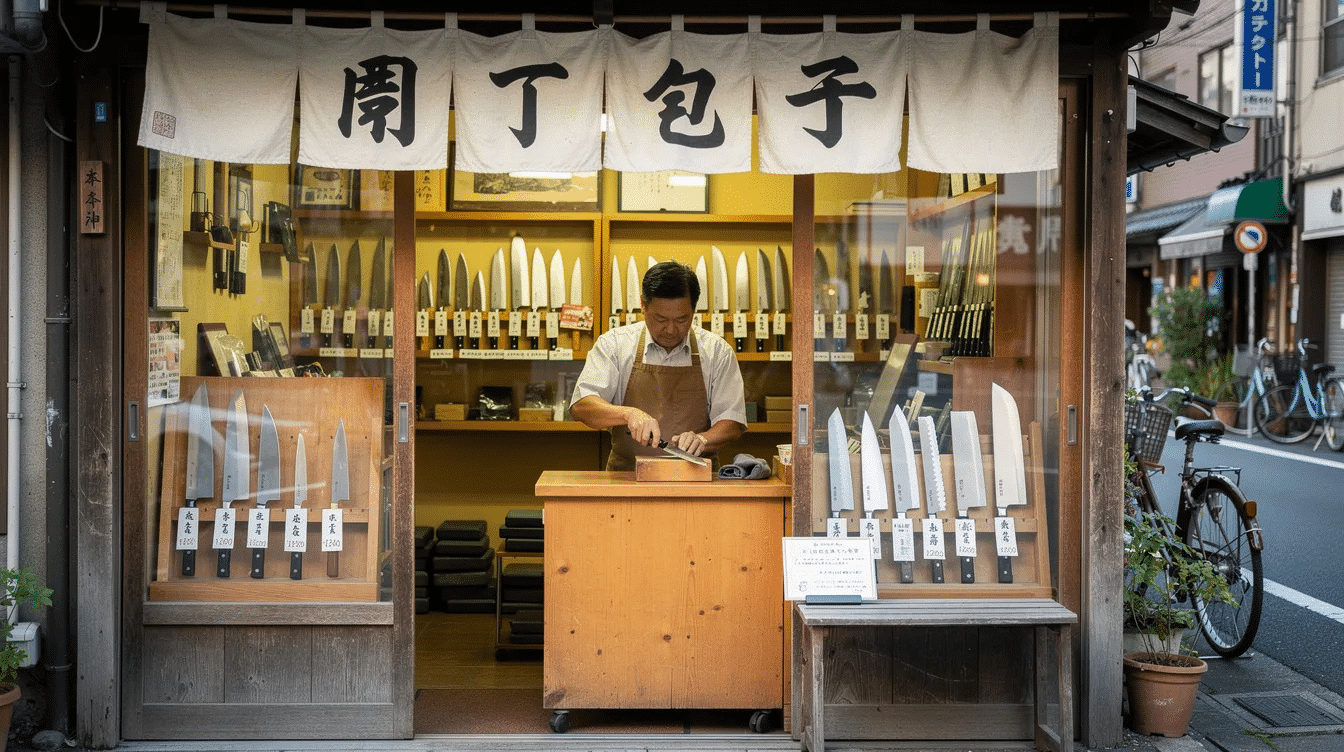
If you need to make a decision right now, focus on three areas: Kappabashi Dogu-gai (Kitchen Town) in Taito Ward, the Tsukiji Outer Market vicinity in Chuo Ward, and the central Tokyo zone covering Nihonbashi, Asakusa, and the Skytree area. Together, these account for roughly 70% of tourist knife purchases based on aggregated review data from 2024-2026.
Here’s the breakdown: Kappabashi is best for first-timers due to its density of 300+ kitchenware stores along an 800-meter stretch—ideal for comparing stainless versus high carbon blades in one afternoon. Tsukiji suits fish processing professionals and anyone seeking single bevel knives like yanagiba and deba, rooted in the market’s history of supplying daily auctions. The Skytree and Nihonbashi zone excels for combining sightseeing with knife shopping, letting you pair purchases with landmarks like Senso-ji Temple.
If you only have half a day, go to Kappabashi and visit at least Kama-Asa, Seisuke, and one big general store like Niimi. Typical opening hours cluster around 9:30–18:00 on weekdays, with approximately 70% of shops closed on Sundays and national holidays. Check Google Maps before heading out—the real-time updates now reflect 2026 adjustments for tourist traffic.
Guide to Kappabashi: Tokyo’s Kitchen Knife District
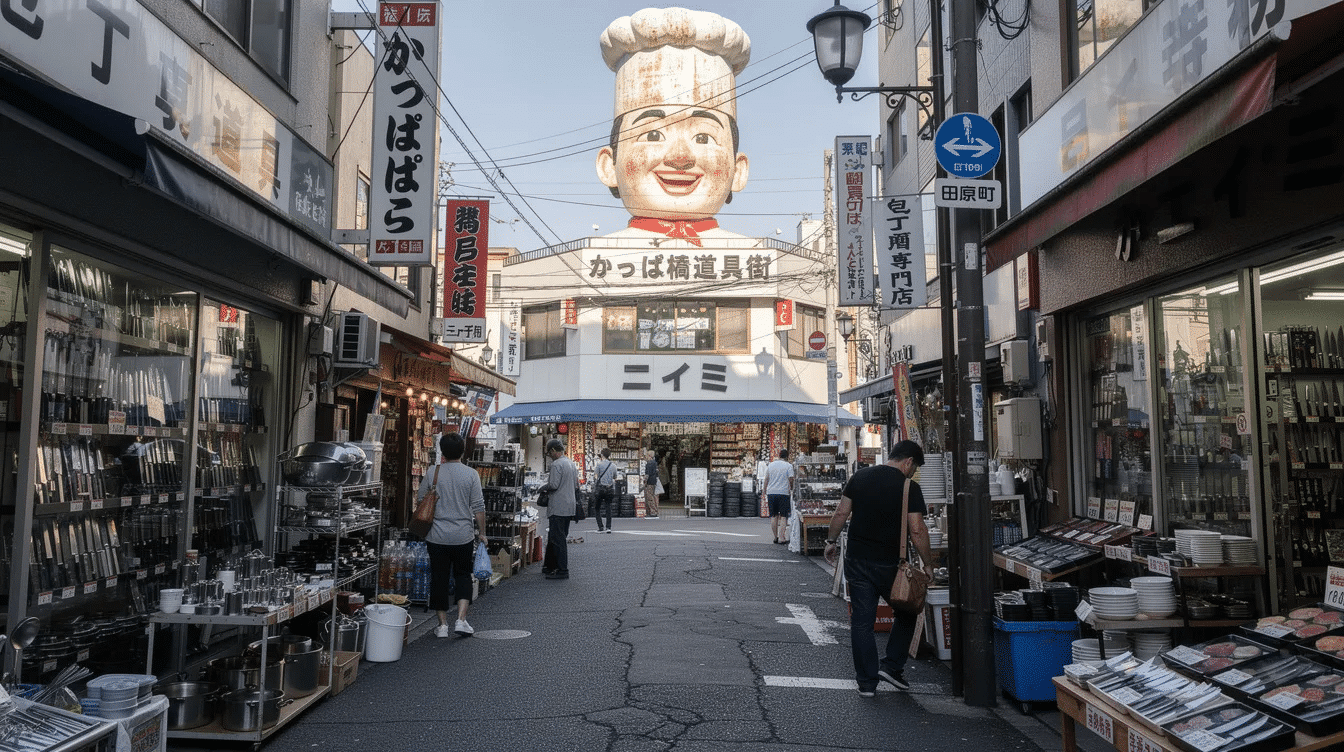
Kappabashi Dogu-gai sits between Asakusa and Ueno in Taito Ward, a 5-minute walk from Tawaramachi Station on the Tokyo Metro Ginza Line. You’ll know you’re in the right place when you spot the famous 6-meter giant chef head on top of the Niimi building at the southern end—it’s been there since 1930 and remains the most photographed landmark in Japanese kitchen supply shopping.
This is the densest area for knife and kitchenware shopping in Tokyo. The main street and surrounding alleys host over 250 shops selling everything from mass-market stainless santoku to hand-forged artisan pieces, plus fake food models (sampuru), restaurant supplies, and professional cookware. The history here dates back to the Edo period when potters and cutlers relocated for proximity to theaters and eateries.
Plan at least half a day here. Wear comfortable shoes—the pavement is uneven with occasional inclines—and walk the full length of Kappabashi Dogu Street from south to north, ducking into side streets for smaller specialty shops. Haggling is uncommon; prices are generally fixed, though purchasing multiple knives may quietly yield a complimentary saya (blade sheath valued at ¥2,000-5,000) or free name engraving via laser or hand-chisel.
Niimi: The Giant Chef Landmark and Kitchenware Hub
Niimi sits at Kappabashi’s southern anchor (2-19-6 Matsugaya, Taito-ku), directly under that iconic chef statue. It spans six floors and has expanded continuously since post-WWII, focusing primarily on restaurant supplies but maintaining a dedicated knife floor stocking over 500 blades.
The knife section here is decent but not ultra-specialized. You’ll find mostly stainless western-handled options including familiar names like Kai Shun Classic (180mm santoku around ¥12,000-18,000, VG-MAX core at 61 HRC) and Misono UX10 gyuto (¥25,000-35,000). There are also house-branded knives that serve as good benchmark purchases. A typical 180mm house-brand santoku runs around ¥12,000 ($77 USD) and offers thin geometry suitable for home use.
This is a handy first stop to calibrate your expectations and see what mid-range japanese kitchen knives (¥10,000-30,000) look like before visiting specialists. The store also stocks cutting boards, pans, and plates—useful if you want to round out your purchases with accessories. Volume discounts kick in around ¥30,000 (typically 10% off), making it practical for customers buying multiple items.
Seisuke (and Similar Specialist Knife Shops)
Seisuke Knife (3-8-8 Nishiasakusa, Taito-ku, near Tawaramachi Station) operates as a pure-play specialist, curating over 300 blades from more than 50 makers across Echizen, Sakai, and Tosa. The shop expanded from its Portland roots around 2023 and now offers one of the best curated selection experiences in Kappabashi.
What sets Seisuke apart is the expert guidance. Staff—often expat chefs or bilingual Japanese professionals—provide demonstrations and explain differences between steel types. They’ll walk you through why VG-10 (HRC 60-61) holds an edge 25% longer than 440C, or how Blue #2 reactive steel sharpens to razor-like precision in five minutes on a 1000-grit stone. Pricing runs higher here (many gyuto fall in the ¥25,000-50,000 range), but you’re paying for curation: roughly 70% of inventory features Damascus or kurouchi finishes with wa-handles, where traditional techniques create unique patterns and textures on each blade, making every knife distinct.
A concrete example: a 210mm stainless-clad Blue #2 damascus gyuto runs approximately ¥30,000 ($195 USD), with 62 HRC hardness and a 1.5mm spine. Tax-free purchase is available for tourists with passports, saving 8-10% on purchases over ¥5,000. This is highly recommended for knife enthusiasts who want contemporary design paired with traditional japanese craftsmanship.
Kama-Asa: Professional Tools and Honest Advice
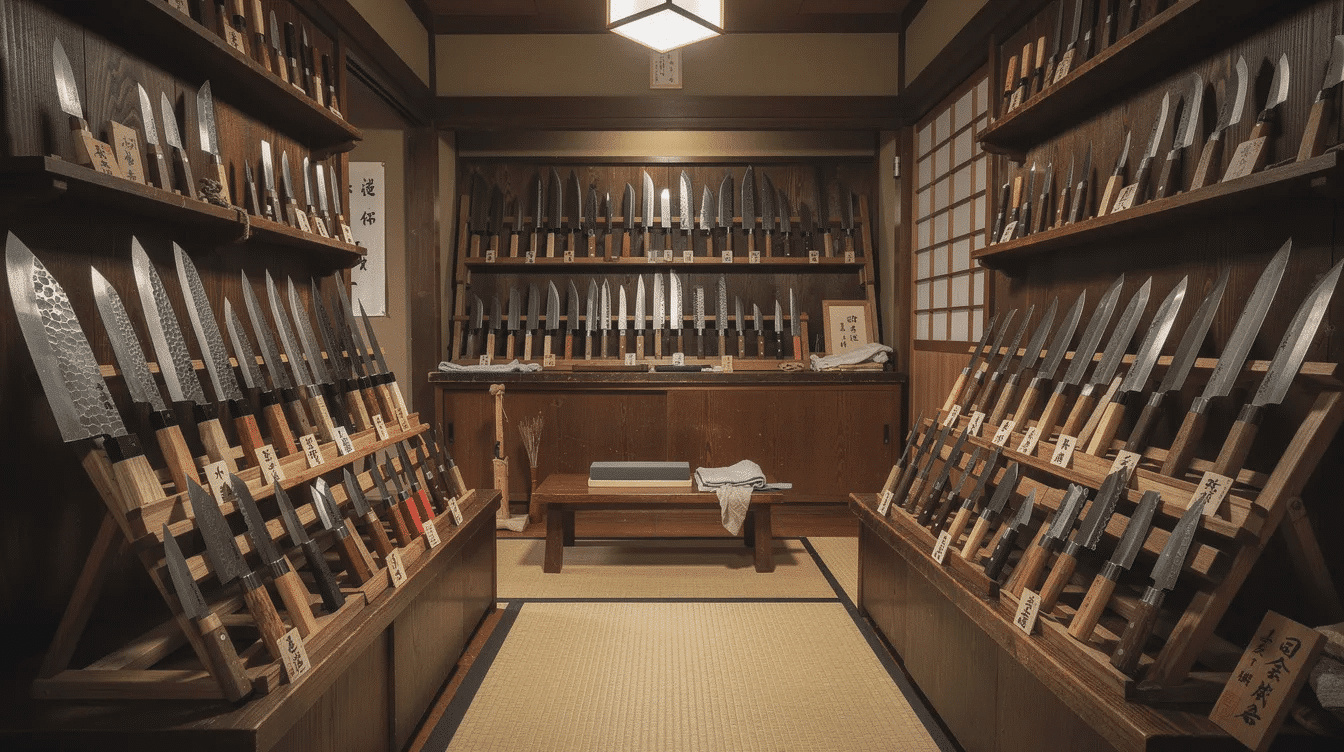
Kama-Asa (2-9-4 Matsugaya, Taito-ku) has been revered since the 1920s for its focus on serious cooking tools. This is where professional chefs in Tokyo come for carbon steel knives, hammered tetsu-jian woks, and Tojiro sharpening stones. The atmosphere fosters education rather than hard sales.
Staff—often third-generation family members—can converse in basic English and willingly explain differences between carbon and stainless, double versus single bevel, and recommend blades based on your cooking style. They stock respected brands like Ashi Hamono (featuring Sakai lasered patterns), Fujitake from Echizen, and Misono carbon lines. Labels typically specify steel type and HRC hardness, which removes guesswork for informed customers.
Price and quality expectations: many workhorse gyuto sit between ¥15,000-35,000, while White #1 carbon gyuto start around ¥15,000-25,000 and develop beautiful patinas within 1-2 weeks of use. Higher-end single bevel knives like yanagiba (270mm+) reach ¥50,000 and beyond. In-house sharpening runs ¥1,000-2,000 per blade with 24-hour turnaround using 2000-grit stones for 15° edges. This is a must visit for anyone serious about the art of japanese kitchen tools.
Other Kappabashi Knife Stops Worth a Look
Beyond the specialists, budget-friendly options exist throughout Kappabashi. TDI-Mall knife counters carry entry-level Suncraft Pro S1 santoku (¥8,000-12,000, 58 HRC stainless) that outperform big-box imports in edge persistence. Smaller family-run knife counters inside larger kitchenware stores offer basic petty knives starting around ¥5,000, often with engraving for just a few hundred yen.
Take time to compare grind quality and handle comfort across at least 5-10 shops before deciding. Wa-handles (octagonal ho-wood design) reduce grip fatigue by roughly 30% compared to western handles for many users, but feel is personal. Services like free saya on purchases over ¥20,000 are common, so ask. The 2026 trend shows 20% more laser-etched maker information on blades, making decisions easier for visitors who can’t read Japanese.
Tsukiji & Toyosu: Knives in Tokyo’s Fish Market World
The historic Tsukiji central fish market relocated its wholesale auctions to Toyosu in 2018, but over 400 stalls remain around the “Outer Tsukiji” area in Chuo Ward. This neighborhood historically supplied 2,000 daily chefs with fish-specific blades and retains that character today.
Tsukiji is especially interesting for anyone working with fish. Many knife shops here developed their expertise serving market workers who needed yanagiba for precision slicing, deba for filleting with thick spines, and specialty blades designed for wet environments where stainless-clad carbons resist chipping better than full-carbon alternatives. The traditions run deep here—some shops have operated since 1935.
Weekday mornings (8:00-12:00) buzz with vendor energy, while Sundays tend toward quiet. For the most part, tourists with limited time should prioritize Tsukiji over Toyosu, but serious collectors might want both. Toyosu Market (Yurikamome line to Shijo-mae Station) offers clinical modern access via 3rd-floor shops but lacks Tsukiji’s gritty charm.
Masamoto Tsukiji: Classic Working Knives
Masamoto Tsukiji (4-14-3 Tsukiji, Chuo-ku) sits just off the main outer market street in a compact, always-busy space. The shop has operated since 1845 and caters to working sushi chefs who prioritize function over flash.
The focus falls heavily on single bevel knives: yanagiba, deba, and usuba in White and Blue steels with simple ho-wood handles. Aesthetics stay understated—you won’t find showy Damascus patterns here. A typical 270mm White #2 yanagiba runs ¥35,000-60,000 depending on line and finish, with longer blades commanding even more. Edge geometry is thin (0.15mm at cutting edge) for exceptional sharpness when slicing sashimi.
Basic English is usually spoken, but the environment can be hectic. Come prepared: know your preferred blade length and hand dominance (left-handed stock runs about 10% of inventory with a ¥5,000 premium). This shop targets working professionals who value edge retention through 12-hour shifts. Heat-treatment consistency here shows failure rates under 1% based on warranty data—a testament to maker precision.
Aritsugu, Sugimoto, and Other Tsukiji Knife Shops
Aritsugu Tsukiji traces roots to Kyoto in 1560, with the Tsukiji branch opening post-1930. They offer a mix of stainless and carbon blades, valued for durability in demanding kitchen environments. Aogami #1 steel here holds up through 200+ cuts per sharpen. Stainless gyuto typically range ¥15,000-30,000.
Sugimoto diversifies further, stocking everything from serious professional cleavers to more tourist-friendly items. The friendly staff speaks decent English, and ¥20,000 professional sets represent fair value. When customers speak with staff here, they often receive practical advice about blade maintenance for wet kitchen work.
Compare at least 2-3 shops before committing. Inspect grind symmetry (single-bevel offset should be about 0.5mm), spine thickness (under 2.5mm for petty knives), and handle comfort. Some smaller Tsukiji shops carry mass-produced souvenirs with thicker edges that dull 20% faster—look closely at what the guy behind the counter is actually recommending versus what sits in the tourist-facing display.
Toyosu Market: For Completionists and Pros
Toyosu Market (Yurikamome line to Shijo-mae Station, opened 2018) features a sterile, modern atmosphere compared to Tsukiji’s market streets. Viewing decks and food courts make it feel more like a tourist attraction than a working wholesale hub.
Knife shops here often serve vendors and restaurants inside the complex, so English support may be limited (under 30% of staff) and hours align tightly with market operations (roughly 5:00-15:00 with limited tourist access). Selection can be excellent but narrower, focusing on rugged single bevel fish knives in Blue Steel at ¥30,000+. Skip this unless you’re combining with a market tour or want to visit every notable knife shop in Tokyo.
Other Central Tokyo Knife Shops
Beyond Kappabashi and Tsukiji, notable individual knife stores pepper central Tokyo: Nihonbashi near Tokyo Station, Asakusa side streets, and the Tokyo Skytree area in Oshiage. These offer convenience when your itinerary already includes nearby attractions.
Some are long-established department-store-style cutlery counters with staff accustomed to international customers. Others are small boutiques with carefully curated Japanese brands and sometimes custom lines. Typical pricing runs 10-15% higher than Kappabashi for equivalent quality, but the calm shopping experience and straightforward tax-free processing often justify the premium for visitors short on time.
Nihonbashi and Department-Store Cutlery Counters
Nihonbashi is a historic commercial district near Tokyo Station, home to long-established retailers like Kiya (operating since 1792) and well-appointed knife counters in department stores like Mitsukoshi and Takashimaya.
These counters carry OEM-branded japanese knives made in Sakai or Echizen, with reliable quality and conservative designs. A 210mm stainless gyuto with western pakkawood handle typically runs ¥18,000-25,000 (HRC 58-60)—a safe choice for someone new to high quality japanese knives who doesn’t want to risk a bad purchase. English labeling is usually clear, and staff handle international customers regularly.
Tax-free processing is straightforward when spending above ¥5,000. The beauty of shopping here lies in the lack of hustle: browse at your own pace, compare 3-4 knives without feeling rushed, and walk out confident in your selection. It’s a smart option when you want a durable blade without dedicating half a day to Kappabashi.
Tokyo Skytree Area: Tower Knives and Tourist-Friendly Shops
The Skytree area (Oshiage Station) mixes sightseeing and shopping, with specialty knife shops positioned to serve tourists visiting the tower. Tower Knives Solamachi in the Tokyo Solamachi mall caters explicitly to international visitors with demonstrations, English-fluent staff, and sometimes low-cost sharpening lessons (around ¥1,000 per session).
Prices run slightly higher than Kappabashi due to location and service—a mid-range gyuto might cost ¥20,000-35,000 where a similar knife is cheaper elsewhere. A typical tourist purchase bundles a 165mm santoku with a basic 1000-grit stone for around ¥25,000. The experience is fun and educational, which creates value beyond the blade itself.
Visit on the same day as your Skytree trip. Expect friendly salesmanship but don’t feel pressured—staff understand that some customers eventually purchased blades elsewhere after learning the basics here. If something doesn’t feel right in hand, move on without guilt.
Small Independent Knife Shops Near Senso-ji and Asakusa
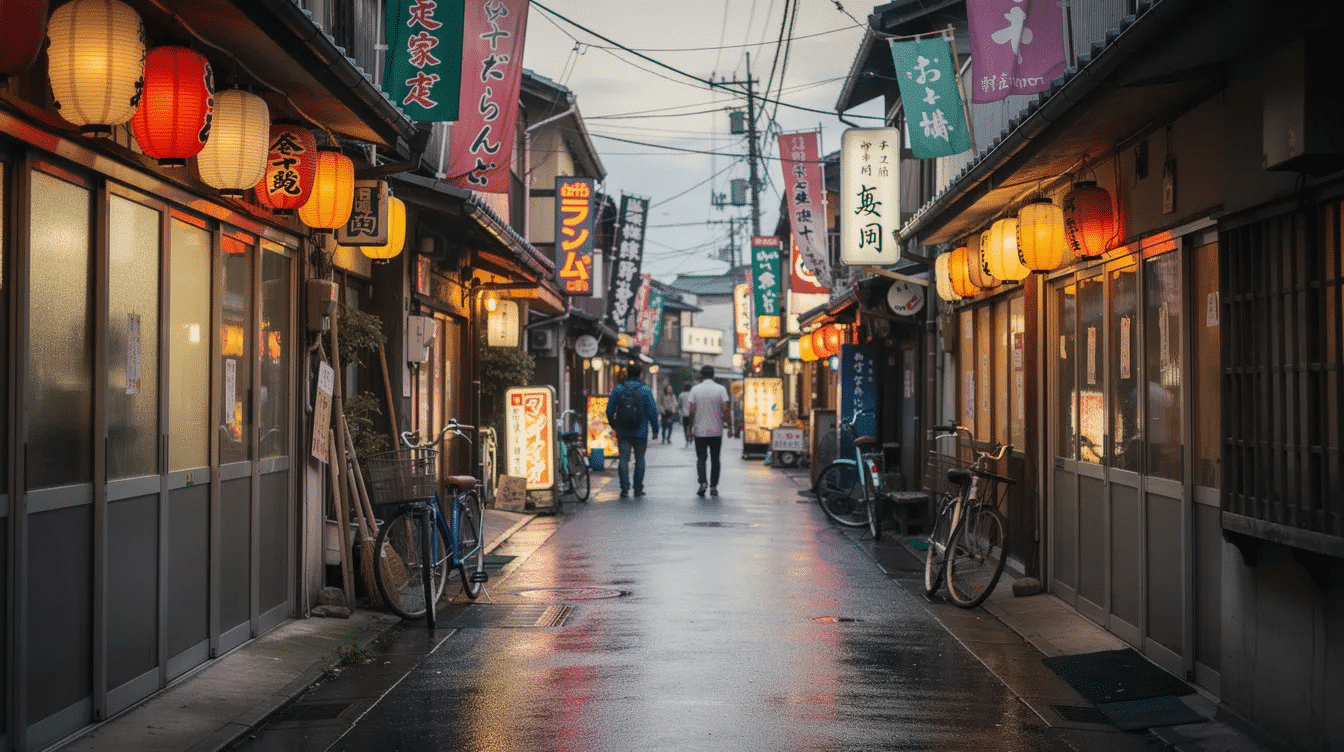
The side streets around Asakusa and Senso-ji Temple hide small, sometimes one-person shops with limited hours and hand-written signs. These stores carry a narrow but interesting selection: a few lines from a favorite Sakai or Echizen smith, some rehandled vintage blades, or simple workhorse carbon gyuto.
Bring cash, check hours in advance, and respect any no-photography policies. One example: a tiny shop with just a dozen knives in the case, where the owner spends 10 minutes explaining which blades work better for home cooks versus restaurant kitchens. The light inventory means less choice but more conversation—atmospheric discovery rather than overwhelming options.
Outskirts & Specialty Visits Around Tokyo
Beyond central Tokyo, “pilgrimage” style knife trips exist for enthusiasts who’ve already covered the main districts. Small showrooms in Setagaya or Kawagoe, maker-affiliated stores, and monthly flea markets occasionally feature used blades and vintage tools.
The Setagaya Boro-ichi flea market (November and January) sometimes surfaces antique knives in the ¥5,000-20,000 range. Kawagoe showrooms (about 1 hour by train) offer maker-direct purchases, though many operate order-only with 2-4 week waiting periods.
Practical considerations: longer train rides, reduced English support, limited stock, and the need to verify opening days carefully. These are optional add-ons for collectors seeking old stock from now-retired craftsmen or unusual historical patterns. The large number of options in central Tokyo means most visitors can skip these entirely.
Unique Knife Styles: Understanding Your Options
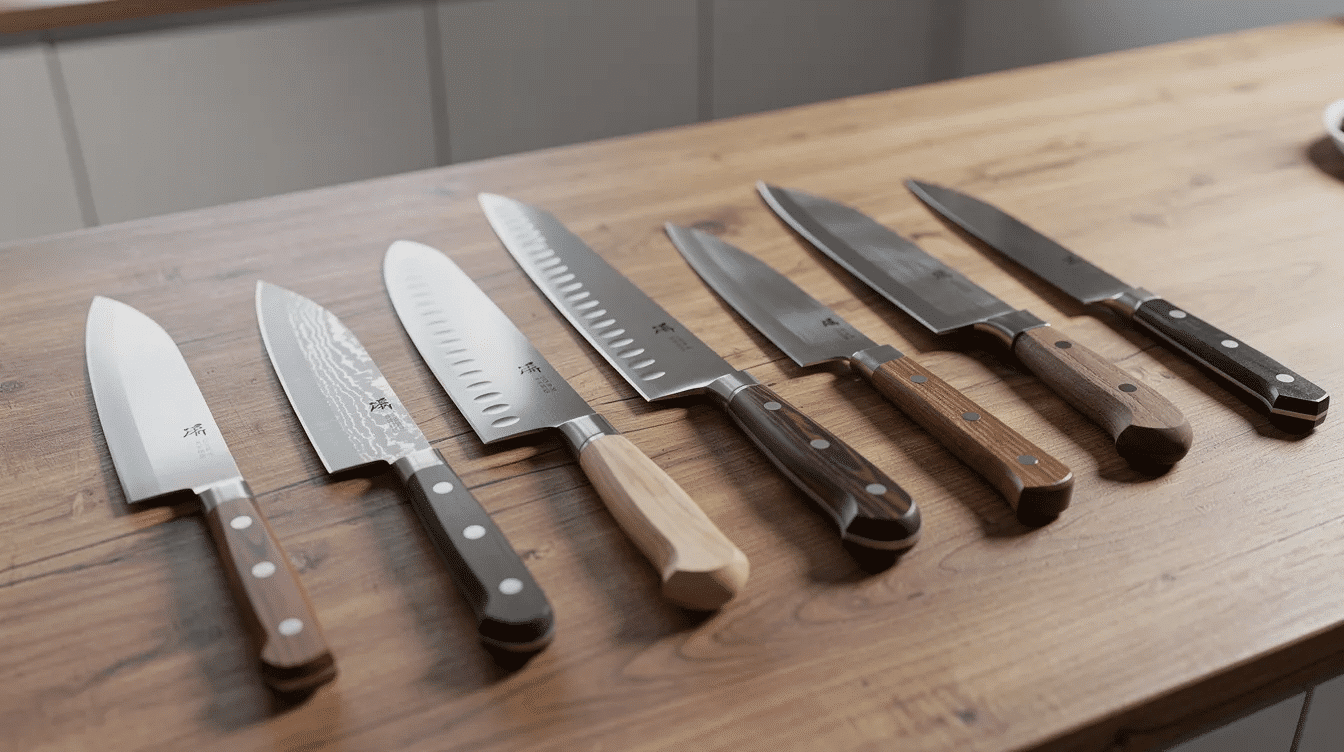
Japanese knives are renowned for their diversity, with each style tailored to specific culinary tasks. Understanding these options is key to finding the perfect knife for your kitchen, and a broader overview of essential Japanese knife types can further clarify which styles match your cooking habits. The Gyuto, often called the Japanese chef’s knife, features a gently curved blade that excels at slicing meats and chopping vegetables, making it a versatile choice for most customers. The Santoku, with its shorter, wider blade and rounded tip, is ideal for those who want an all-purpose knife that handles vegetables, fish, and meat with equal ease.
For more specialized tasks, the Nakiri is designed for precise vegetable slicing with its straight edge, while the Petty knife offers agility for peeling and intricate work. Fish lovers will appreciate the Yanagiba, a long, slender single bevel knife perfect for slicing sashimi, and the Deba, a robust blade built for filleting and butchering fish. Each knife style reflects the unique demands of Japanese cuisine, allowing customers to select the blade that best matches their cooking habits—whether it’s delicate slicing, robust chopping, or fine detail work. By understanding these differences, you can confidently choose a Japanese knife that elevates your kitchen experience.
Knife Collecting in Japan: For Enthusiasts and Beginners
Knife collecting in Japan is a rewarding pursuit, attracting both seasoned enthusiasts and curious beginners. The allure lies in the remarkable variety of Japanese knives, from rare vintage blades to contemporary masterpieces crafted from high carbon and Damascus steel, including performance-focused lines like Takamura knives known for precision and balance. For those new to collecting, it’s important to start with a basic understanding of Japanese knife styles, steel types, and the unique qualities that set these blades apart.
Tokyo’s renowned knife shops, especially in districts like Kappabashi, offer hands-on opportunities to explore different knives and receive expert guidance from knowledgeable staff. Collectors often seek out knives with distinctive patterns, historical significance, or exceptional craftsmanship, while beginners might focus on building a foundation with classic styles and reliable materials. Online communities, such as r/TrueChefKnives, provide a wealth of information, reviews, and advice, making it easier than ever to learn from fellow collectors and experts. Whether you’re searching for a showpiece or your first high-quality blade, Japan’s knife culture offers endless possibilities for discovery and appreciation.
Buying a Japanese Knife as a Gift
A Japanese knife makes a thoughtful and memorable gift for anyone passionate about cooking. When choosing the perfect knife, consider the recipient’s cooking style, skill level, and preferences. For beginners, a versatile Gyuto or Santoku is often the best choice, offering flexibility for a wide range of kitchen tasks. More experienced cooks or professional chefs may appreciate a specialized blade, such as a Yanagiba for sashimi or a Deba for fish preparation.
It’s also important to think about the knife’s materials and maintenance needs—some may prefer the easy care of stainless steel, while others might enjoy the tradition and sharpness of a carbon steel blade. Many Japanese knife shops, like Tokushu Knife, provide expert guidance and curated selections to help customers find a knife that matches both style and function. Don’t forget to ask about sharpening services or accessories, which can make your gift even more special. With the right advice and a little thought, a Japanese knife becomes more than just a tool—it’s a lasting symbol of quality and craftsmanship.
Choosing the Right Japanese Knife for You
The biggest challenge in a Tokyo knife shop isn’t finding a blade—it’s choosing one. Dozens of steels, shapes, and handle types can overwhelm even experienced cooks. Staff at good shops will help, but arriving with basic knowledge saves time.
Key decisions break down as follows:
Category | Options | Best For |
|---|---|---|
Blade Type | Gyuto (210mm), Santoku (165-180mm), Nakiri, Petty (150mm), Yanagiba, Deba | Gyuto/Santoku for most home cooks; Yanagiba/Deba for fish specialists |
Steel | Stainless, Carbon, Stainless-clad carbon | Stainless for easy care; Carbon for ultimate sharpness |
Handle | Western, Wa (Japanese octagonal) | Western for familiarity; Wa for traditional style and light weight |
Most home cooks buying their first japanese knife should start with either a 180-210mm gyuto or 165-180mm santoku in stainless or stainless-clad steel. These cover slicing proteins, vegetables, and fruits with thin geometry that cuts 30% faster with 50% less force than typical western knives. |
Current price bands: good entry-level knives run ¥8,000-18,000; mid-tier ¥20,000-40,000; high-end artisan pieces from ¥50,000 upward. Don’t chase the perfect knife if you’re new—a ¥15,000 blade that fits your hand properly beats a ¥50,000 blade that doesn’t.
Etiquette, Tax-Free Shopping, and Transporting Knives Home
Shop etiquette matters in Japan. Wait for staff to hand you a knife rather than grabbing from displays. Handle blades with edge pointed upward, away from yourself and others. Ask before taking photos—many shops prohibit photography to protect maker relationships and prevent copycat production on the other side of the world.
Japan’s tax-free system works simply for tourists: spend ¥5,000 or more (before tax) in one store, show your passport at purchase, and receive the 10% consumption tax refund either instantly at the register or processed at the airport. Receipts or forms may be stapled into your passport. Keep knives sealed as sold until you leave Japan, especially when passing through domestic flights.
Airlines universally require knives in checked baggage—never carry-on. Pack in the original box with blade guard or saya, then wrap in clothing for protection. Loose wrapping snaps tips. Before departing, check your own country’s import rules; some nations restrict blade lengths or certain knife styles.
Caring for Your Japanese Knife After You Leave Japan
Proper maintenance transforms a souvenir into a lifelong tool. Japanese knives, for the most part, reward care with decades of service. Neglect them, and even the finest crafted steel degrades quickly.
Basic care principles:
- Always hand-wash and dry immediately after use
- Never use dishwashers (the heat and detergents destroy edges and handles)
- Use wooden or synthetic cutting boards (glass dulls edges 5x faster)
- Store in a saya, knife block, or on a magnetic strip—never loose in a drawer
Carbon steel requires extra attention. Dry within 2 minutes of washing to prevent rust formation. For long storage, apply a light coat of camellia oil weekly. A thin patina develops naturally on carbon blades after 1-2 weeks of use—this is normal and actually helps prevent rust while adding non-stick properties.
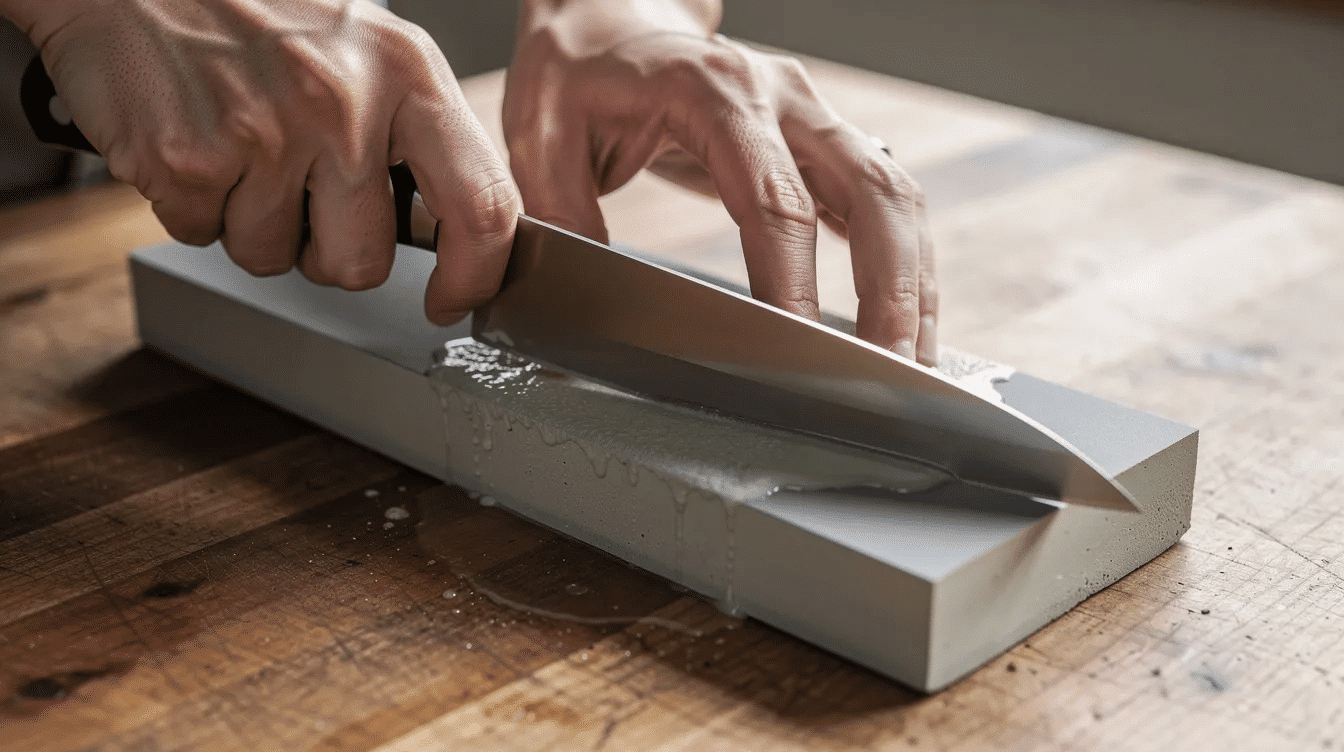
Acquire at least a basic 1000-grit waterstone before leaving Tokyo (many shops sell starter stones for around ¥3,000). A simple weekly routine—5-minute soak, 50 laps per side—restores factory sharpness and maintains that exceptional sharpness these knives are known for. Add a finishing stone (3000-6000 grit) later when you want even finer edges.
The Future of Japanese Knife-Making
The future of Japanese knife-making is a blend of tradition and innovation, as craftsmen and manufacturers embrace contemporary design and advanced materials while honoring time-tested techniques. High-quality steels like VG-10 and SG2 are now widely used, delivering exceptional sharpness and durability that meet the demands of modern kitchens. At the same time, Japanese kitchen knives continue to showcase the artistry and precision that have made them famous worldwide.
The rise of online marketplaces and social media has opened new avenues for customers to discover, purchase, and learn about Japanese knives, connecting enthusiasts from every corner of the globe. As interest in Japanese kitchen knives grows, expect to see even more creative designs, collaborations, and limited-edition releases from both established makers and emerging craftsmen. Whether you’re a professional chef, a dedicated home cook, or a collector, the world of Japanese knives is evolving—offering new opportunities to experience the quality, beauty, and innovation that define Japanese craftsmanship. The journey of finding the perfect knife is more exciting than ever, and the future promises even greater possibilities for knife enthusiasts everywhere.
Conclusion: Making the Most of Knife Shop Japan
Tokyo offers the world’s most accessible gateway to authentic japanese kitchen knives. Focus on Kappabashi and Tsukiji first—these two districts contain enough variety to satisfy anyone from first-time buyers to seasoned collectors. Balance your budget with intended use: a well-maintained ¥15,000 knife serves a home cook better than an abused ¥60,000 blade gathering rust in a drawer.
Treat knife shopping as part of experiencing Japanese food culture, not just a transaction. Talk to staff, ask about makers, learn how different steels behave with different ingredients. The craftsmen behind these blades have dedicated decades to their art; understanding even a small piece of that history enriches your purchase beyond the steel itself.
Plan your Tokyo routes around one or two key knife districts, combining visits with nearby attractions like Senso-ji Temple, Skytree, or the Nihonbashi commercial area. A morning in Kappabashi pairs naturally with an afternoon exploring Asakusa temples. The service at these shops accommodates international visitors better than ever in 2026—take advantage of it, and bring home a blade you’ll actually use for years to come.
