The kaiken knife stands as one of Japan’s most culturally significant small weapons. The kaiken is a Japanese knife that typically measures 20 to 25 centimeters long and is usually single-edged. It is distinct from larger swords like the katana and wakizashi, and is designed primarily for concealment and self-defense. This article explores the history, design, and enduring legacy of the kaiken knife, offering insights for collectors, martial artists, and anyone interested in Japanese culture. Understanding the kaiken’s role provides a window into the traditions and values of samurai society, as well as its influence on modern craftsmanship.
Unlike the katana or wakizashi carried openly by samurai men, the kaiken was built for concealment. Samurai women tucked these daggers within kimono sleeves or secured them in their obi belt. The design features a straight, single-edged blade with plain lacquered saya and minimal ornamentation—a weapon meant to remain hidden until needed.
Weapon | Blade Length | Primary Carrier | Main Role |
|---|---|---|---|
Katana | 60-80 cm | Samurai men | Battlefield combat |
Wakizashi | 30-60 cm | Samurai men | Secondary weapon |
Kaiken | 20-25 cm | Samurai women | Concealed self defense |
Today, traditional kaiken are regulated under Japan’s 1958 Firearms and Swords Control Law. However, modern kwaiken-style knives and replicas have moved into global markets for collectors and martial arts practitioners. |
Origins and Historical Development of the Kaiken
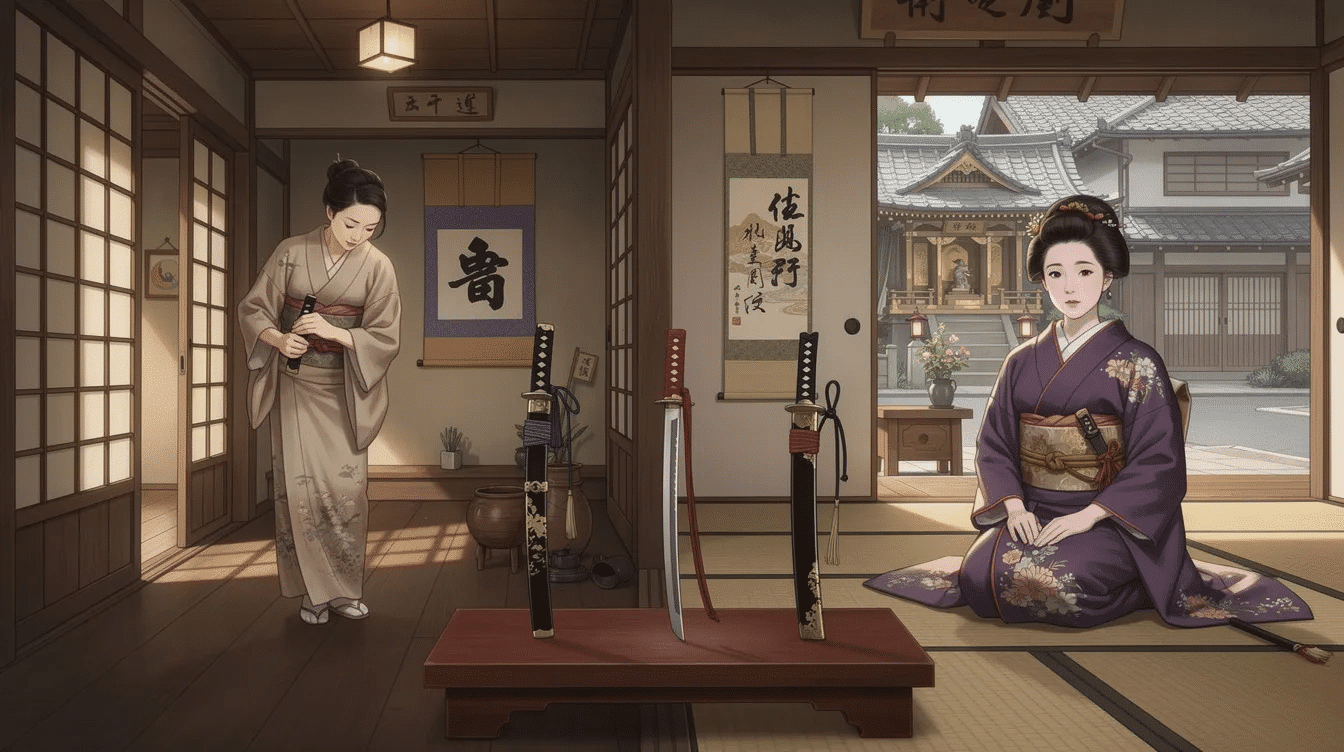
The kaiken emerged between 1185 and 1333, during the transition from Heian to Kamakura periods. Its evolution reflected practical needs within samurai households—castle interiors, palaces, and narrow corridors where long weapons proved impractical.
By the Edo period (1603-1867), the kaiken had transformed from a simple defense tool into a symbolically charged object. It represented protection, family honor, and personal resolve. Regional variations developed, with Kyoto and Edo schools producing slightly different blade profiles and mounting styles that stood as markers of local craftsmanship traditions.
Design Features of the Kaiken Dagger
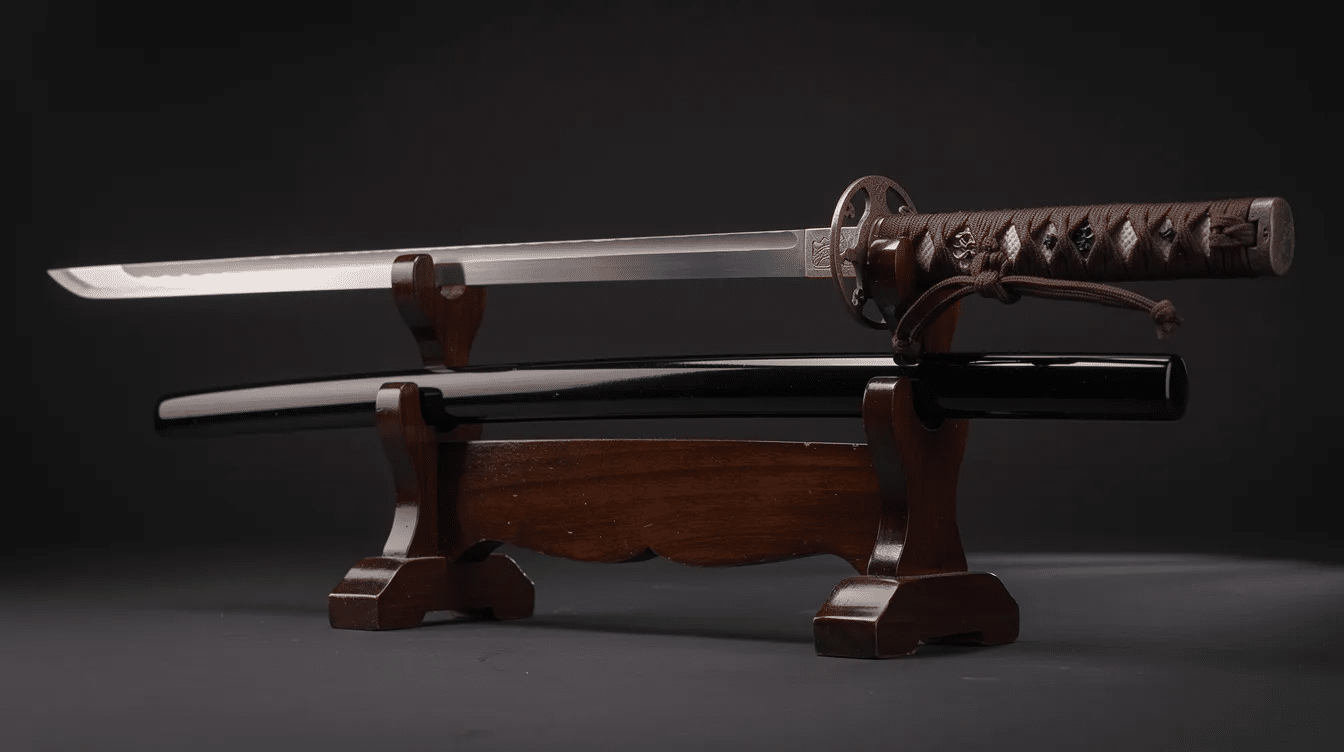
The kaiken’s construction prioritized function over ornamentation. Smiths forged blades from tamahagane steel using techniques similar to larger nihonto, including differential hardening that produced visible hamon on quality pieces.
Typical design elements include:
- Straight blade optimized for thrusting
- Simple wooden saya with black urushi lacquer
- Handle wrapped for secure grip, lacking tsuba
- Weight distributed for quick, controlled deployment
Blade Proportions, Balance, and Handling
Smiths aimed for neutral or slightly handle-heavy balance, allowing rapid thrusts at close range. The blade’s cross-section features a stout spine and narrow width—hard enough to penetrate layers of clothing without damage.
Compared to tanto, the kaiken handles differently: lighter, quicker to draw, and easy to conceal. Many historical examples were left unornamented on the blade surface, making maintenance simple and emphasizing pure utility.
Mountings and Materials
Common materials included honoki wood cores with samegawa panels on refined pieces. Metal fittings—fuchi, kashira, kojiri—were typically iron or brass with minimal decoration. Women’s kaikens especially avoided conspicuous ornamentation; even high-ranking households preferred understated mounts that fit the weapon’s concealed purpose.
Women, Samurai Culture, and the Kaiken
By the Edo period, the kaiken had become particularly associated with samurai women. Wives and daughters of retainers carried these daggers as protection against intruders and for safeguarding children during travel.
The weapon also served a darker symbolic function in ritual suicide (jigai). When a young woman married into a samurai household, she received a kaiken as part of her trousseau—symbolizing readiness for the responsibilities of samurai life and her duty to protect family honor.
Training and Self-Defense Practices
Formal dojo instruction was rare. Instead, women learned close-quarters techniques within family circles from fathers, brothers, or female instructors. Training focused on surprise thrusts targeting vulnerable areas—pragmatic methods suited to layered kimono and restricted movement.
In 1714, a shop owner’s wife in Osaka successfully used her kaiken to fight off robbers, demonstrating these weapons provided genuine defensive capability, not merely ceremonial significance.
Marriage, Heirlooms, and Family Symbolism
Mothers gave these small hidden knives to daughters before weddings, placing them within multiple layers of wedding robes. Some households inscribed dates or dedications inside scabbards, marking the time when tradition moved from one generation to the next.
These heirloom kaikens often survived even after the Meiji Restoration abolished the samurai class. Families who received them as wedding gifts preserved these objects as treasured connections to their husband’s family legacy and centuries of culture.
Kaiken in Historical Records and Anecdotes
Edo-period chronicles reference women wearing kaikens during special events at Edo Castle. These references confirm the weapon’s integration into formal samurai customs—not hidden from view but accepted as part of proper dress.
Kabuki plays and literature frequently feature kaikens as props associated with tragic heroines, reinforcing their cultural image as symbols of loyalty and resolve.
Craftsmanship, Preservation, and Collecting
Traditional kaiken blades were made by regional smiths, often as side work alongside tanto production. Collectors today value tight grain patterns, subtle hamon, and honest mounts.
Preservation requires controlled humidity, regular light oiling, and avoiding polishing by non-specialists—amateur cleaning causes permanent damage to historically significant surfaces.
Modern Kaiken-Style Knives and Reinterpretations
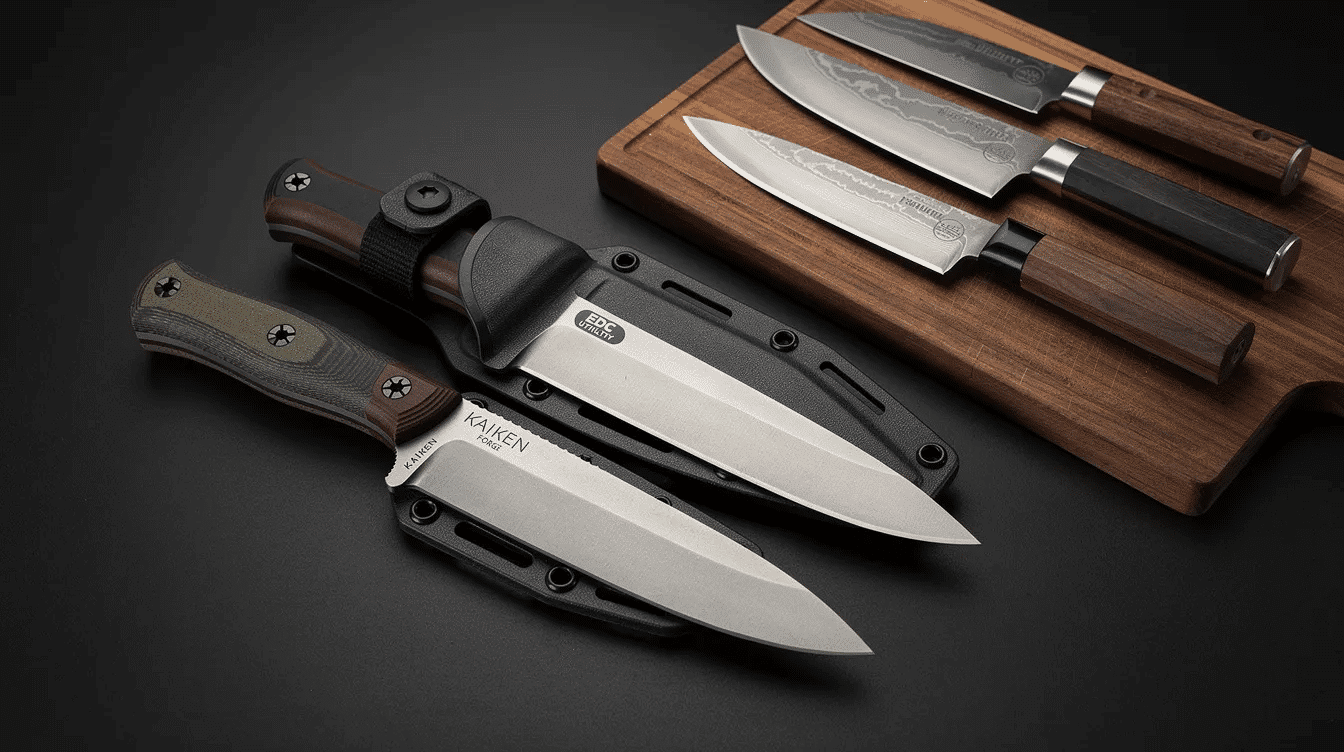
Contemporary knifemakers worldwide produce kwaiken-style fixed blades using modern materials: VG-10 or CPM steels, G10 or Micarta handle scales, and Kydex sheaths with friction fit retention. For the kitchen, traditional Japanese culinary knife types offer a different application of similar craftsmanship principles. These parts serve everyday carry and utility purposes rather than ceremonial roles.
Legal Status and Role in Modern Japan
Japan’s Firearms and Swords Control Law restricts carrying traditional kaiken in public. However, sumo gyōji (referees) still wear ceremonial daggers as part of formal attire, representing their responsibility to accept blame for serious errors.
In popular media—films, dramas, manga—the kaiken appears as shorthand for a woman’s resolve or tragic decision, keeping these weapons visible in cultural consciousness.
Frequently Asked Questions About the Kaiken
What’s the difference between kaiken and tanto? The kaiken is technically a category of tanto but shorter (typically under 25 cm) and specifically designed for concealment by women.
Were commoner women allowed to carry them? Historical evidence shows kaiken ownership concentrated among samurai-class women. No substantial documentation exists of commoners routinely carrying them.
Why do some sources spell it “kwaiken”? Both spellings refer to the same blade. “Kwaiken” reflects older romanization methods; “kaiken” is the modern standard.
What should I do if I find an old dagger? Consult qualified appraisers or local museums. Never attempt cleaning or polishing without expert guidance.
Conclusion
The kaiken evolved from a discreet household weapon into a powerful cultural symbol representing duty, protection, and personal agency—especially for samurai women. Its compact, concealable design served needs that larger swords could never address.
Today, collectors, martial arts practitioners, and craftsmen continue exploring the kaiken’s clean lines and rich history. Understanding the social stories behind these weapons matters as much as appreciating their craftsmanship—they represent centuries of tradition that deserve careful preservation.
