

If you’ve ever found your chef’s knife too bulky for slicing strawberries or your paring knife too small for dicing shallots, you’ve identified the exact gap a Japanese utility knife fills. This essential blade has earned permanent counter space in kitchens across Japan and beyond—and for good reason. In this guide, you’ll find everything needed to choose, use, and care for one of the most versatile knives you can own.
- What Is a Japanese Utility Knife (Petty Knife)?
- Japanese Utility Knife vs Western Utility & Paring Knives
- What a Japanese Utility Knife Is Best Used For
- Key Design Features of Japanese Utility Knives
- Types of Japanese Utility Knives by Steel & Finish
- Choosing the Right Japanese Utility Knife for Your Kitchen
- How to Use a Japanese Utility Knife Safely and Effectively
- Sharpening and Caring for a Japanese Utility Knife
- Japanese Utility Knives for Everyday and Outdoor Use
- Frequently Asked Questions About Japanese Utility Knives
What Is a Japanese Utility Knife (Petty Knife)?
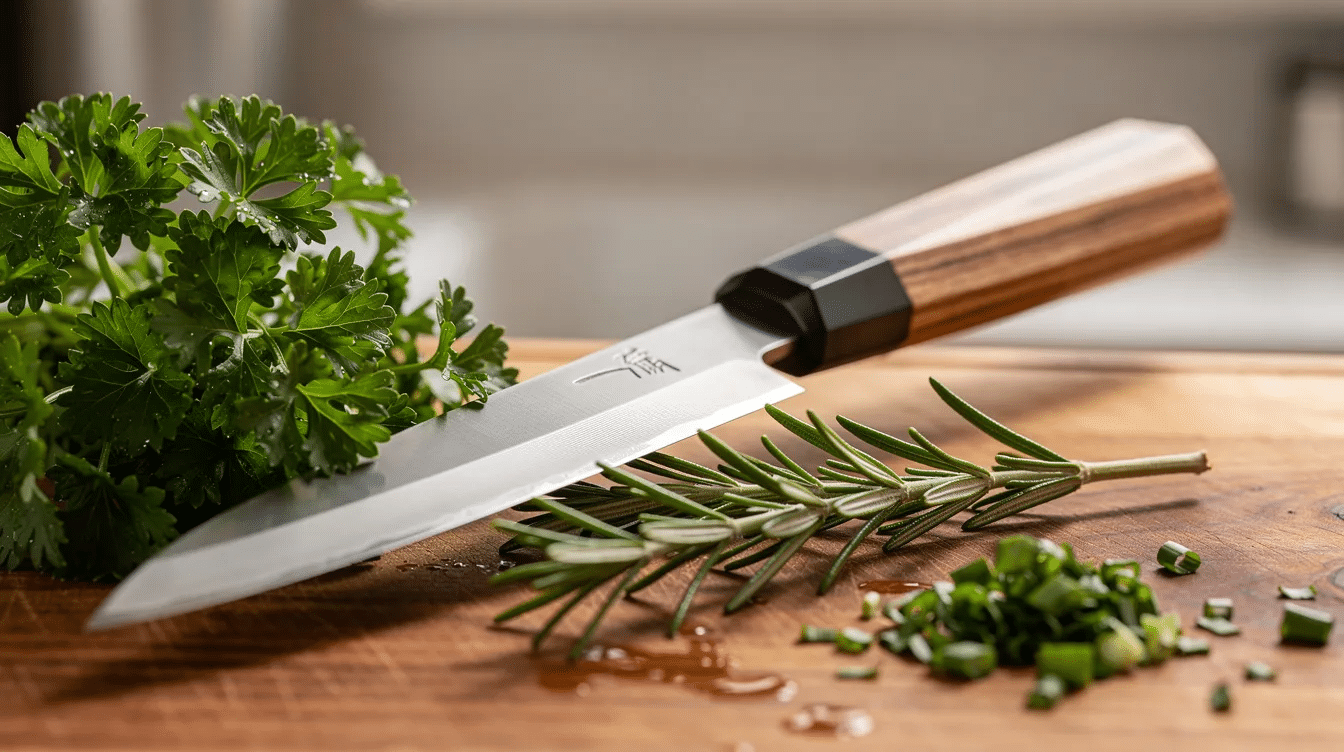
A Japanese utility knife, called a petty knife in Japan, sits precisely between a paring knife and a full-sized chef’s knife. With blade lengths typically spanning 4.5 to 6 inches, these knives handle tasks too big for a paring blade yet too small to warrant reaching for your gyuto. The name “petty” derives from the French word “petit,” meaning small—a fitting description for this compact workhorse.
The petty knife originated in Japan during the early to mid-20th century as a home-kitchen companion to larger knives like the gyuto and santoku. Japanese craftsmen refined Western utility knife concepts through their own lens, creating blades that emphasize thin, hard steel construction within a broader family of essential Japanese knife types. Many feature a slightly curved, triangular profile designed for agile slicing and gentle rock-chopping motions.
You’ll reach for this knife constantly: peeling fruit, trimming vegetables, coring peppers, mincing herbs, and preparing small portions of meat or poultry. The ichigo ichie philosophy—treasuring each unrepeatable moment—applies here. Every cut becomes more intentional with the right tool.
- Typical blade length: 3–6 inches (most common: 4.5–6”)
- Common steels: VG-10, AUS-8, White #2 (Shirogami)
- Handle types: Traditional wa-handle (octagonal or D-shaped wood) vs Western full-tang
Japanese Utility Knife vs Western Utility & Paring Knives
The Japanese petty emerged as a reinterpretation of Western utility knives but evolved into something distinct. Western utility knives typically feature longer blades (6–8 inches) with straighter profiles and pointed tips optimized for extended slicing motions rather than rocking.
Japanese petty knives take a different approach. Their more triangular blade shape includes a gentle belly curve that facilitates rocking chops similar to a miniature chef’s knife. This offers superior control when working curved surfaces like onions or garlic.
Paring knives remain shorter—usually 3–4 inches—with narrower blades tailored for in-hand work like peeling apples. However, they lack the length and versatility for larger vegetables or board work.
- Length: Petty (4.5–6”) bridges the gap; Western utility runs longer (6–8”); paring stays short (3–4”)
- Blade profile: Petty has curved belly for rocking; Western utility favors straight slicing; paring is narrow and straight
- Typical tasks: Petty excels at both board and in-hand work; Western utility for longer slices; paring for ultra-fine detail
- Control: Petty’s thin geometry enhances precision but punishes lateral stress
- Versatility: A 5–6” Japanese petty can replace a Western utility and absorb many paring duties
What a Japanese Utility Knife Is Best Used For
The Japanese utility knife shines in precise, everyday prep work—those moments when a chef’s knife feels like overkill. Chefs value it for high-precision, low-drama repetition on smaller canvases, handling tasks that larger knives accomplish only clumsily.
- Vegetable prep: Dicing shallots, mincing garlic, coring tomatoes, slicing strawberries, trimming broccoli stems, segmenting citrus
- Protein work: Deveining shrimp, butterflying chicken breasts, trimming silver skin from meats, portioning small steak cuts
- Herb tasks: Chiffonade basil, finely chopping parsley, mincing chives
- Fine and decorative work: Garnishes, scoring vegetables, small cuts for bento presentations, slicing cheese for platters
- Everyday ease: Quick fruit prep, bagel slicing, food portioning for one or two people
The petty knife is not ideal for breaking down poultry bones, hacking through squash, or heavy butchery. Reserve those tasks for heavier knives that can handle the resistance without blade stress.
Many professionals keep their petty knife magnetic-stripped at the board for 80% of small jobs day after day.
Key Design Features of Japanese Utility Knives
Performance in a Japanese utility knife comes from the balance of blade geometry, steel hardness, handle ergonomics, and weight distribution. Understanding these features helps you find your favorite option.
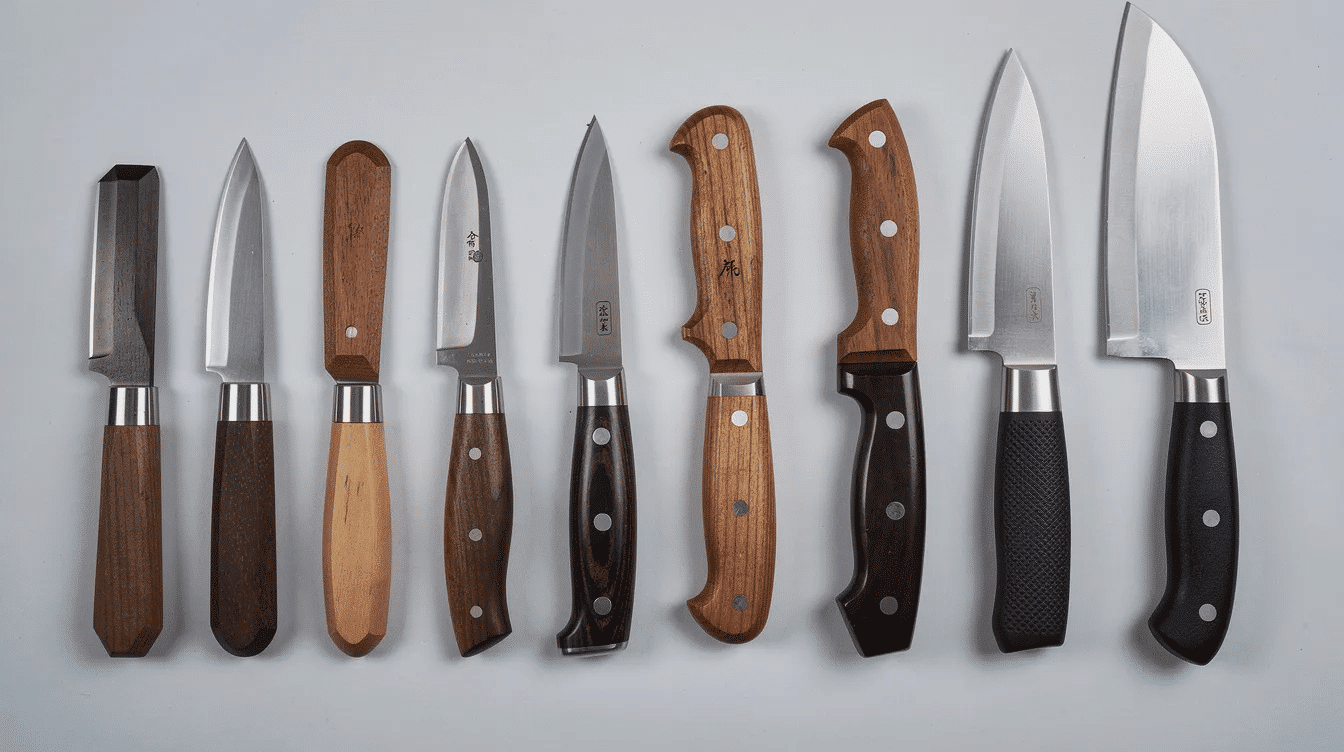
- Blade length: 120 mm (4.7”) suits fine-detail work and small hands; 150 mm (5.9”) offers all-purpose confidence without fatigue
- Blade profile: Triangular with curved belly for rocking chops; straighter edge excels in push-cuts on garlic or mushrooms
- Edge bevel: Double-bevel at roughly 50/50 (12–16 degrees per side) suits most users and simplifies sharpening; single bevel options exist for advanced users seeking maximum sharpness on one side
- Spine thickness: Thin, laser-like blades deliver ultra-precise cuts with minimal resistance; slightly thicker spines add durability for busier kitchens
- Tip shape: Pointed tips pierce tomatoes and devein shrimp with ease; some Japanese designs feature kiritsuke-style or wharncliffe-like tips for controlled detail
- Handle styles: Traditional wa-handles (octagonal or D-shaped wood) create blade-forward balance for nimble cuts; Western full-tang handles offer comfortable grip for extended use
Types of Japanese Utility Knives by Steel & Finish
Steel choice and blade finish directly affect sharpness, edge retention, maintenance demands, and the knife’s beauty. Understanding your options means making smarter decisions at the shop.
- High-carbon steels (Shirogami #2, Aogami/Blue): Extremely sharp with excellent edge retention; prone to rust without diligent care; often paired with kurouchi (black-forged) finishes that reduce reactivity and foster attractive patina
- Stainless and semi-stainless steels (VG-10, AUS-8, molybdenum vanadium): Easier maintenance with strong sharpness; popular across professional and home kitchens; excellent for people who wanted low-maintenance performance
- Multi-layer/Damascus constructions: Harder core steel (often VG-10 or similar) clad in softer stainless steel layers for toughness and corrosion resistance; visible patterns add visual appeal
- Common finishes: Satin-polished for clean reflectivity; hammered tsuchime to reduce food sticking via air pockets; kurouchi rustic finishes for traditional aesthetics
Choosing the Right Japanese Utility Knife for Your Kitchen
The “best” petty knife depends on your hand size, cutting style, and typical ingredients. What works for one user may feel awkward for another. Consider these selection criteria before adding one to your cart.
- Blade length: 130–150 mm (5–6”) works as an all-purpose recommendation; 120 mm suits very small hands or primarily fine-detail work
- Handle comfort: Check ergonomic fit, weight, and whether you prefer a pinch grip or hammer grip; many Japanese petty knives balance slightly blade-forward for nimble cuts
- Bevel type: Beginners should choose double-bevel knives for ease of sharpening and steering-free cuts; single-bevel options reward advanced users seeking mastery of precise slicing
- Steel choice: Stainless or semi-stainless suits busy kitchens with low-maintenance needs; high-carbon appeals to enthusiasts willing to manage patina and avoid rust
- Budget considerations: Entry-level stainless petty knives run $30–$60; mid-range Japanese-made options sit around $80–$150; premium handcrafted pieces command higher price points
We recommend trying a petty if you regularly prep for 1–4 people and find a full chef’s knife unnecessarily bulky. The end result is often a streamlined two-knife core of gyuto plus petty.
How to Use a Japanese Utility Knife Safely and Effectively
Proper grip and technique unlock the full precision of a petty knife while reducing fatigue over time. These thin blades reward deliberate, controlled movements.
- Grips: The pinch grip (thumb and index finger on the blade near the bolster) delivers maximum control for detail work; the hammer grip (full hand on handle) provides power for slicing through denser materials
- Cutting motions: Use rocking chops with curved-belly petty blades; push-cutting works well with straighter profiles; gentle pull cuts handle delicate foods like ripe tomatoes without crushing
- Board work: Dice onions with controlled, repeatable motions; core and slice bell peppers efficiently; mince herbs using the curved belly
- In-hand work: Peel apples or segment citrus while keeping the blade moving away from fingers; maintain a stable grip throughout
- Safety tips: Always cut on stable wood or plastic boards; avoid twisting the thin blade in hard foods; store in a sheath or on a magnetic strip to protect the sharp edge
Sharpening and Caring for a Japanese Utility Knife
Sharpness equals safety with thin Japanese blades. A dull knife forces you to apply pressure, increasing the risk of slipping. Proper maintenance extends your knife’s life for years—even decades.
- Sharpening tools: Prioritize water stones (whetstones); 1000 grit handles basic sharpening, 3000–6000 grit polishes the edge; ceramic honing rods work for gentle maintenance between sessions
- Frequency: Home cooks using the knife several times per week should sharpen every few months; professional kitchens require more frequent attention; regular light honing extends time between full sharpenings
- Technique basics: Maintain consistent angle (12–16 degrees per side for most double-bevel Japanese petty knives); sharpen evenly on both sides to avoid steering
- Single-bevel note: These must be sharpened primarily on the beveled side with minimal passes on the flat side; they’re handed (right or left), so account for this when making your purchase
- Cleaning: Hand-wash with mild soap, dry immediately, never use dishwashers—heat and chemicals damage both the blade’s heat treatment and handle materials
- Storage: Edge guards, wooden saya sheaths, or knife blocks protect the edge; avoid tossing knives into drawers where they chip against other tools
Japanese Utility Knives for Everyday and Outdoor Use
Compact Japanese utility knives extend beyond restaurant kitchens. They suit small home kitchens and outdoor cooking situations where a lot of knife isn’t needed, and premium makers like Takamura offer compact blades that excel at this kind of precise everyday work.
- Everyday kitchen use: Quick breakfast prep (slicing fruit, bagels, soft cheese), weeknight dinners, and small cutting boards in tight apartment kitchens
- Meal prep for small households: A petty knife handles most tasks for 1–2 people without reaching for a large chef’s knife every time
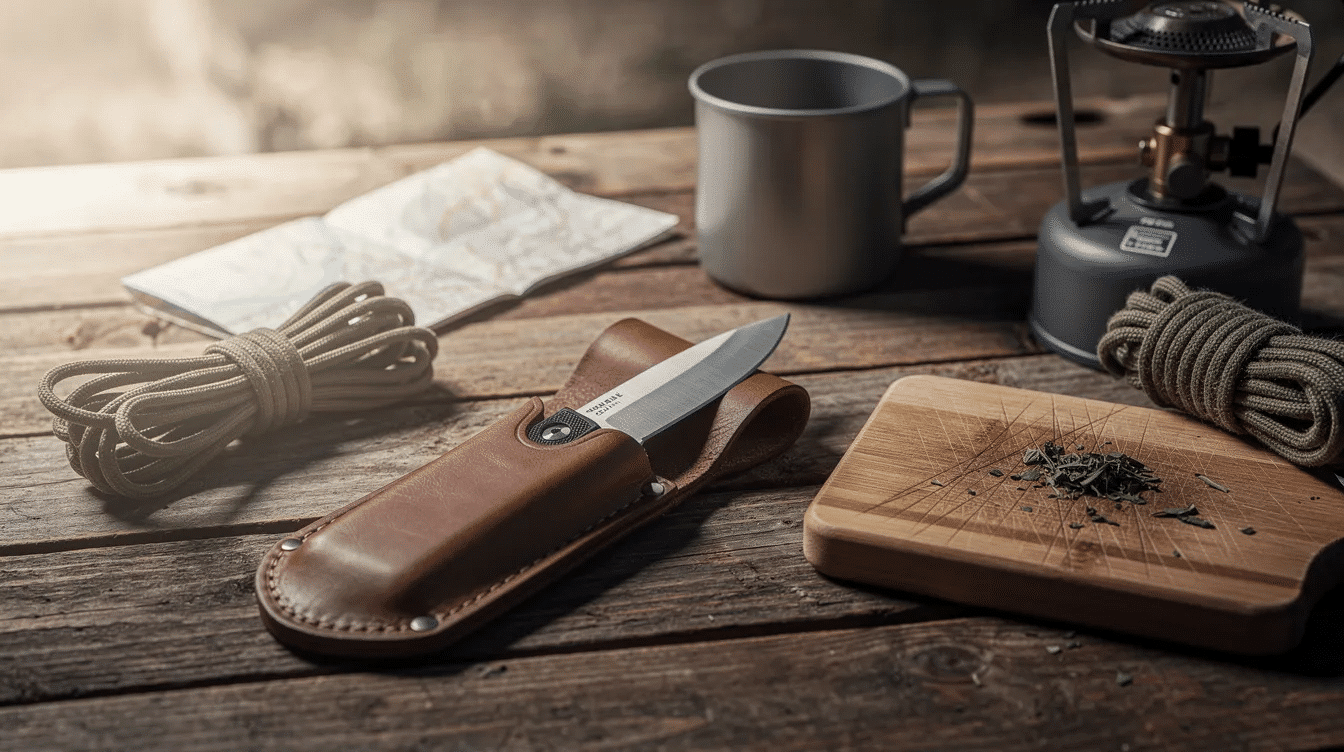
- Outdoor and camping use: Pack a compact 4–5” Japanese utility knife in a protective sheath for slicing charcuterie, trimming vegetables, and general camp cooking; safe transport remains essential
- Aesthetic appeal: Many Japanese utility knives combine excellent performance with distinctive designs—kurouchi finishes, patterned Damascus blades, or unique profiles that make them enjoyable daily tools and conversation pieces
Frequently Asked Questions About Japanese Utility Knives
What size Japanese utility knife should I buy first? For most people, a 5–6 inch (130–150 mm) blade length offers the best versatility. It’s long enough for onions and small proteins yet nimble enough for detail work. Review your typical prep tasks, but this range covers the majority of home cooking scenarios.
Can a Japanese utility knife replace my paring knife? Largely, yes. A petty knife handles most tasks a paring knife would—plus broader work like dicing vegetables. However, for ultra-fine in-hand peeling or intricate garnish work, a true 3–4” paring knife still earns its stock in the drawer.
Is a Japanese petty knife good for beginners? Absolutely. Double-bevel petty knives with stainless steel blades are beginner-friendly with basic knife safety knowledge. They’re easy to sharpen and don’t require the specialized technique that single-bevel knives demand.
Do I need a special cutting board for Japanese knives? Wood or high-quality plastic boards are essential. Glass, stone, or ceramic surfaces will rapidly dull or chip your blade’s edge. This applies to all knives, but thin Japanese edges suffer particularly.
How long will a Japanese utility knife last? With proper sharpening and care, a quality Japanese utility knife can last many years—even decades. The materials and construction determine longevity, but maintenance matters most. Email yourself a calendar reminder to sharpen quarterly, and your knife will reward you.
