When you hear “Japanese square knife,” the conversation almost always centers on two rectangular-bladed specialists: the nakiri and the usuba. These vegetable knives represent centuries of Japanese culinary refinement, designed for one purpose—turning produce into precise, uniform cuts with minimal effort.
The history runs deeper than modern kitchen trends suggest. During the Edo period (1603–1868), kaiseki cuisine in Tokyo and Osaka demanded meticulous vegetable preparation. Chefs developed techniques like katsuramuki, a rotary peeling method that transforms daikon radishes into paper-thin sheets, and these traditional japanese knife designs evolved to enable such precision cuts. The usuba became the professional’s tool of choice, while the nakiri emerged as the home cook’s essential.
These japanese knives gained serious traction outside Japan during the 2000s–2010s, riding the wave of interest in harder steels and lighter blades, as cooks became more aware of essential Japanese knife types and their specialized roles. Despite their resemblance to a meat cleaver, square Japanese knives are anything but bone-choppers. The thin blade geometry and razor-sharp edge are optimized for delicate slicing, not heavy duty tasks.
- Straight to the Point: Is a Japanese Square Knife Right for You?
- What Is a Japanese Square Knife? (Nakiri & Usuba Explained)
- Key Design Features of Japanese Square Knives
- How to Use a Japanese Square Knife
- Japanese Square Knife vs Other Popular Japanese Blades
- How to Choose a Japanese Square Knife
- Caring for Your Japanese Square Knife
- Frequently Asked Questions About Japanese Square Knives
Straight to the Point: Is a Japanese Square Knife Right for You?
Before diving into specifications, let’s address the fundamental question: should you actually buy one?
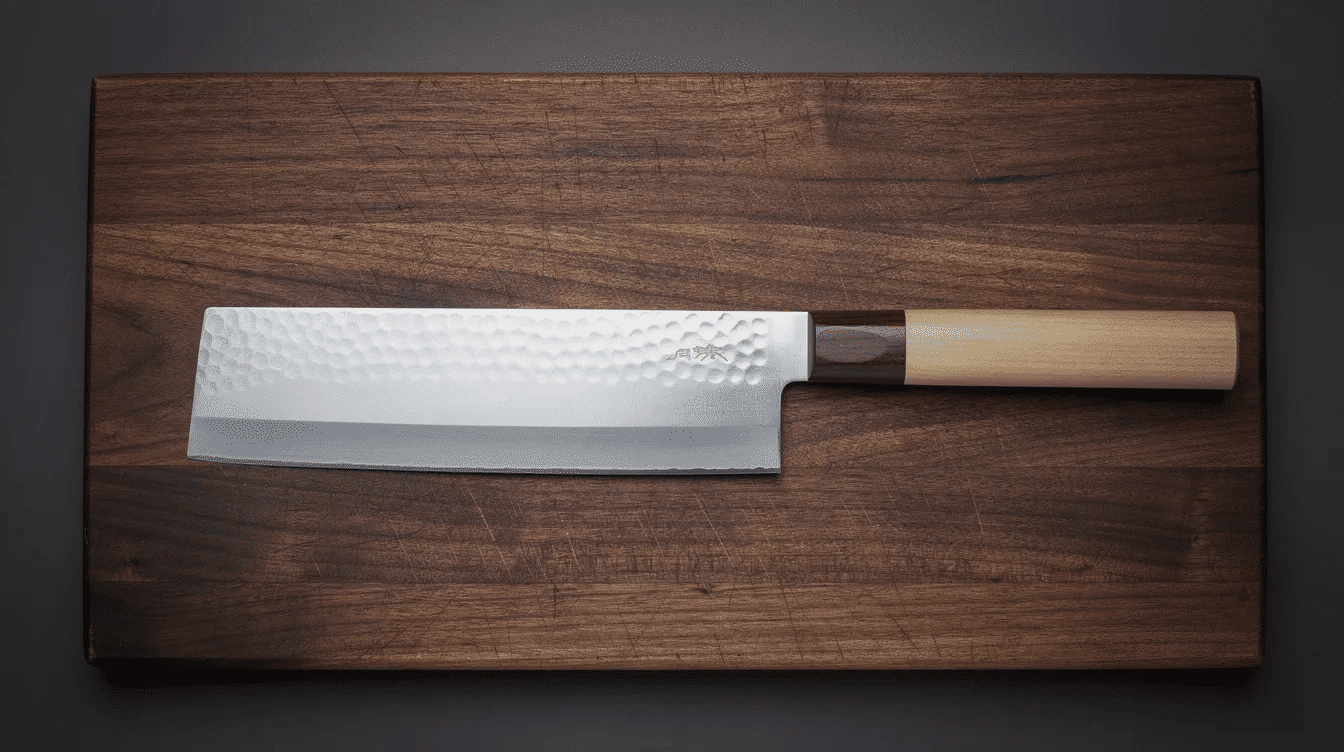
A Japanese square knife is ideal for anyone who spends significant time slicing vegetables and mincing herbs. If your weekly routine includes batch-cooking stir-fries, preparing salads, or meal-prepping containers of uniform vegetable cubes, this knife delivers tangible benefits:
- Fast vegetable prep: The flat edge makes full contact with your cutting board, so every stroke cuts completely through carrots, scallions, and cucumbers—no connected pieces left behind
- Clean, straight cuts: Push cutting produces 20–30% faster results on high-volume tasks like dicing onions into perfect 1/4-inch cubes
- Safer for beginners: Straight downward chops reduce the lateral sliding that causes accidents with curved blades
- Better herb handling: Tap-chopping with a nakiri knife preserves volatile oils better than the crushing action of rocking motion
How does this compare to a western chef’s knife? The core difference is blade profile. A gyuto knife or western style chef’s knife features a curved edge designed for rocking motion, typically weighing 200–250g with thicker geometry (2–3mm behind the edge). A nakiri, by contrast, weighs 140–200g with edge thickness under 2mm, demanding push cutting rather than rocking. If you’re accustomed to heel-tip motion on proteins, the square knife will feel different—blade-heavy, precise, but less versatile for all-purpose tasks.
What Is a Japanese Square Knife? (Nakiri & Usuba Explained)
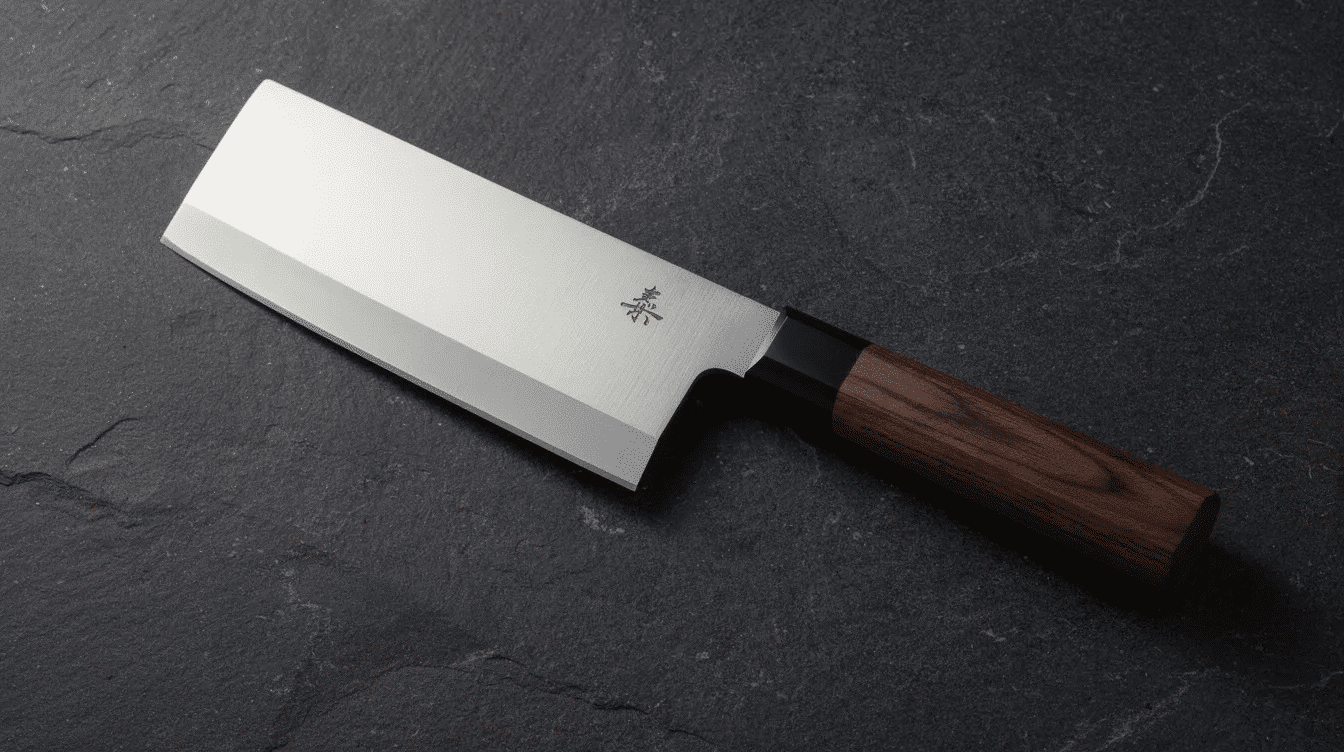
The term covers two distinct types of japanese knives, both featuring rectangular blade shape profiles with straight edge geometry and tall blades for knuckle clearance.
The nakiri knife is the double bevel home cook standard, typically 165–180mm long with a flat edge running from heel to near the tip. The usuba is its single bevel knives counterpart, longer at 210–240mm, with a thicker spine for stability in professional vegetable work. Both share that distinctive squared or near-squared front that resembles a mini cleaver, but their applications and skill requirements differ significantly.
Understanding which serves your needs requires looking at each in detail.
Nakiri: The Everyday Square Vegetable Knife
The nakiri knife is the vegetable knife most home cooks should consider. Standard blade length runs 165mm for smaller hands or compact kitchens, with 180mm serving as the universal size for most adults. Weight typically falls between 5–7 oz (140–200g), making it extremely lightweight compared to western style knives.
That perfectly flat edge is the defining characteristic. When you bring the blade down on a cucumber or scallion, 100% of the cutting edge contacts the board simultaneously. No partial cuts, no tapered ends on root vegetables—just complete separation in a single stroke.
Because it’s double bevel (ground symmetrically at about 15° per side), the nakiri works equally well for right- and left-handed users. This also simplifies sharpening considerably compared to single bevel knives, which require specific technique for each side.
Modern nakiri often feature stainless steel options like VG-10 (60 HRC) or AUS-10, providing rust resistance and easy maintenance for home kitchens. These steels hold edges through 50–100 lbs of produce before requiring attention—far outperforming softer western steels at 56–58 HRC.
Usuba: The Professional Square Knife for Specialists
The usuba occupies different territory entirely. This is a traditional japanese knife designed for professional chefs and specialists who demand unmatched precision in vegetable preparation.
Single-bevel construction (10–15° on the faced side only) creates an edge geometry that slices through fibers with minimal resistance—essential for techniques like katsuramuki, where sushi chefs and kaiseki masters peel daikon radically into continuous sheets just 0.5–1mm thick. This knife is right-handed by default; left-handed versions require special ordering and typically cost 20–50% more due to limited production.
Two regional variants dominate:
Style | Origin | Tip Shape | Best For |
|---|---|---|---|
Kanto | Tokyo area | Square tip | Broad straight chops, general vegetable work |
Kamagata | Osaka/Kansai | Pointed, sickle-like front | Contouring vegetables, decorative cuts |
The usuba demands skill. Mishandling chips the sub-millimeter thin edge, and the single-bevel grind requires whetstone mastery to maintain properly. Professional chefs oil blades after every use to prevent patina on reactive carbon steel varieties. For beginners, it’s overkill—start with a nakiri. |
Key Design Features of Japanese Square Knives
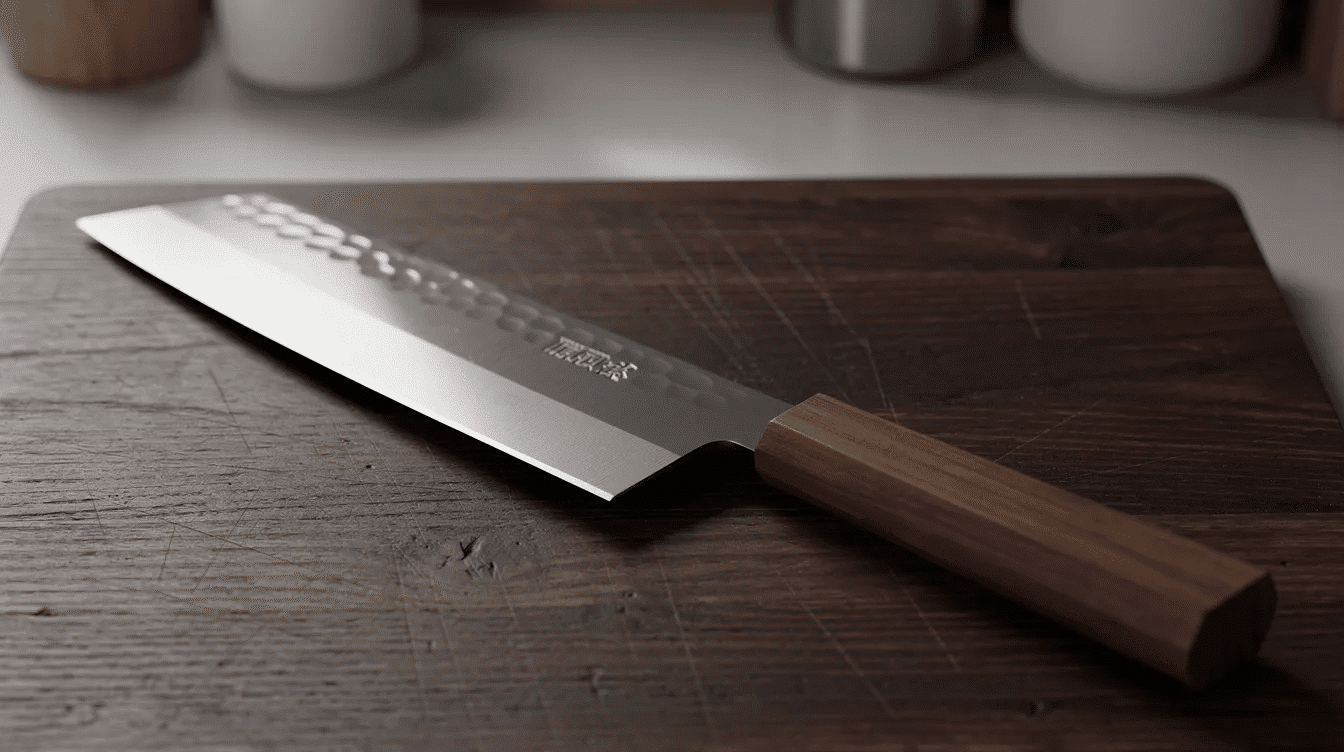
A knife’s performance emerges from the interplay of steel, grind, thickness, and handle—not blade shape alone.
Blade material falls into two camps. Traditional carbon steel knives like White #2 (shirogami) or Blue #2 (aogami) reach 61–64 HRC, enabling edges under 10° inclination that feel frighteningly sharp. The tradeoff: they react with acids, developing blue-gray patina if not dried instantly. Modern stainless alternatives like VG-10 (60 HRC) or SG2 powdered steel (62–63 HRC) balance sharpness with low maintenance, requiring edge attention every 3–6 months in home use.
Geometry sets these apart from western cuisine knives. Japanese square knives run thinner behind the edge (0.2–0.5mm versus 1–2mm on western blades), creating less wedging resistance in dense carrots and sweet potatoes. The flat bevel extends to the tip, with moderate 2–3mm spine thickness tapering 20–30% toward the front for agility.
Handle choice affects balance and feel significantly, covered in detail below.
Blade Shape and Edge Profile
The totally straight edge enforces specific technique. Push cutting tracks the blade linearly through produce—forward 1–2mm descent slices fibers perpendicularly, reducing cell damage. This preserves 15–20% more volatile compounds in onions compared to the crushing action of rocking motion on curved blades.
Blade height (50–60mm typical) provides two advantages. First, enhanced control through knuckle clearance—your fingers stay 2–3cm above the board surface. Second, the tall blade functions as a scoop, allowing one-handed transfers of diced vegetables to pans or bowls.
Some modern nakiri incorporate a slightly rounded pointed tip (1–2mm radius) to prevent chipping and enable micro-rocking on herbs. This hybrid approach works for most home cooks. However, avoid overly thick “vegetable cleaver” versions with spines exceeding 4mm—these bind in soft produce and lack the fine cuts capability of proper Japanese geometry.
Handle Styles: Wa vs Yo on Square Knives
Handle selection influences grip, balance, and long-session comfort.
Wa handles (japanese style handle) feature octagonal or D-shaped profiles, typically crafted from ho wood, magnolia, or walnut with buffalo horn ferrules. Weight runs 50–70g, shifting balance blade forward (roughly 60/40). This creates momentum during chops and enhances feedback in pinch grip positions. The lighter weight reduces fatigue during rhythmic 100–200 chop sessions.
Yo handles (western style handle) use full or partial tang construction with riveted materials like pakkawood or Micarta. Weight increases to 80–100g, distributing balance more evenly (50/50). These feel familiar to cooks transitioning from western style knives but may seem less “alive” in the hand during extended prep work.
For beginners accustomed to western style chef’s knife designs, a yo-handled nakiri provides easier transition. Enthusiasts seeking immersive feedback often prefer wa handles that feel like extensions of the wrist.
How to Use a Japanese Square Knife
Technique matters as much as sharpness when working with straight-edged blades. The geometry rewards specific motions and punishes others.
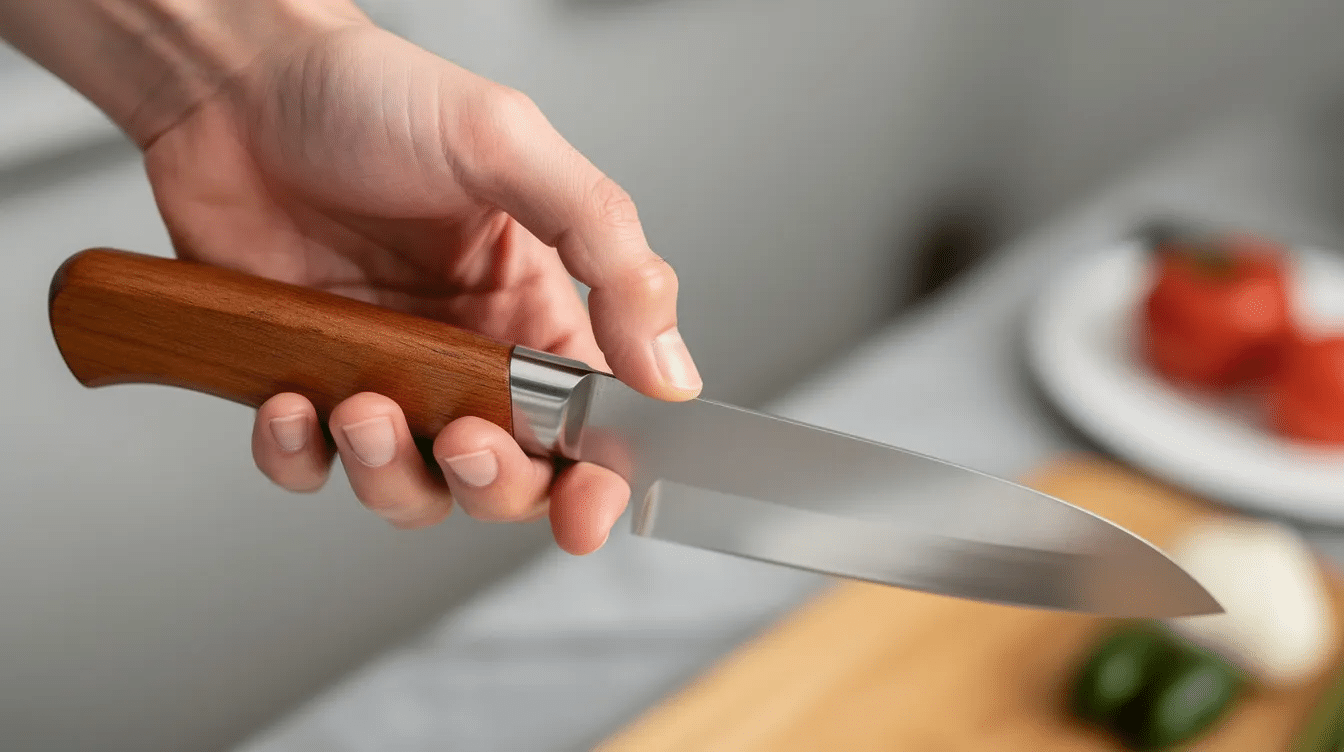
Push cutting is the primary technique. Move the blade slightly forward and down, slice through the ingredient, then lift back and up. The edge tracks in a straight line rather than arcing like a western chef’s knife rocking motion. This delivers cutting thin slices with minimal fiber damage.
Tap-chopping handles speed work. Vertical up-and-down chops with minimal forward motion excel for herbs and thin vegetables. Lift the blade 1–2 inches, bring it straight down. Repeat at 60–80 bpm for efficient basil chiffonade or scallion rounds.
Avoid heavy rocking motions. The flat profile makes rocking feel awkward, and lateral torque stresses the hard (60+ HRC) edge, causing micro-chips over time. You’ll dull the knife 20% faster using improper technique.
Basic Cutting Techniques for Vegetables
Practical applications demonstrate the nakiri’s advantages in chopping vegetables:
Even rounds: Slice cucumbers and zucchini by positioning produce perpendicular to the blade, then pushing down and forward. The flat edge produces uniform 1/8-inch medallions without the tapered ends common with curved blades.
Uniform cubes: Dice onions using straight downward cuts. First halve the onion, then make horizontal slices, then vertical cuts. The flat edge ensures complete separation at every stage—no connected pieces.
Matchstick julienne: Cut carrots and daikon into matchsticks for stir-fries and garnishes. Stack thin slices, then cut lengthwise into uniform strips. The tall blade provides clearance for your knuckles throughout.
Knuckle-guided cutting keeps you safe. Curl fingertips under, using middle finger joints as a 1/4-inch fence. The tall blade naturally guides against these joints, maintaining consistent slice thickness while protecting fingers.
For large prep sessions—Sunday meal prep, party cooking—develop smooth, rhythmic motion. Consistent tempo reduces fatigue across 5 lbs of vegetable julienne. Always use a stable wooden or soft plastic cutting board to protect the hard, thin edge.
What Not to Do with a Japanese Square Knife
The thin blade geometry that enables precision cuts also creates vulnerabilities. Specific kitchen tasks will damage these knives:
Avoid | Why |
|---|---|
Chopping through bones | Edge chips at 50–100 psi lateral force |
Frozen foods | Brittle fracture risk on hard, cold surfaces |
Twisting in hard squash | Bevel delamination from lateral stress |
Prying lids | Thin edge bends or snaps |
Glass or stone surfaces | Abrades 0.01mm per pass |
The nakiri handles firm produce like sweet potatoes when approached properly—straight downward cuts without twisting. But forcing through thick, rock-hard gourds risks snapping the 1.5–2mm spine. |
Keep a separate heavy-duty knife or meat cleaver for bones and dense foods. The deba knife handles filleting fish with soft bones in Japanese tradition, while Chinese cleavers manage heavier tasks. Your nakiri’s sharp blade stays reserved for its specialty: precise work with vegetables.
Japanese Square Knife vs Other Popular Japanese Blades
Many cooks already own a gyuto or santoku knife and wonder whether adding a square knife makes sense. Understanding how these blades compare helps clarify whether the nakiri adds genuine value to your collection.
The nakiri/usuba excels in one dimension: precision cuts on vegetables. It trades versatility with proteins for speed and accuracy on produce. Traditional Japanese knife sets often pair a vegetable knife with a gyuto knife for all-around work and a deba knife for filleting fish—each tool optimized for specific tasks rather than serving as a multipurpose knife.
Let’s examine specific comparisons.
Nakiri vs Santoku
Both knives serve home cooks well, but their design philosophies differ.
The santoku knife (“three virtues”) emerged in Japanese homes after WWII as a highly versatile all purpose knife for slicing vegetables, meat, and fish. Its slightly curved edge allows gentle rocking motion, while the sheepsfoot pointed tip handles detail work. Standard blade length runs 165–180mm—similar to nakiri—but the profile enables broader application.
The nakiri predates the santoku with deeper roots as a vegetable specialist. Its dead-flat edge triples throughput on produce-heavy prep but sacrifices protein versatility. You can’t rock a tenderloin on a nakiri the way you can with santoku.
Scenario guidance:
- Weeknight cook making sheet-pan chicken with mixed vegetables → santoku handles both proteins and produce
- Plant-forward cook preparing large vegetarian stir-fries → nakiri excels at high-volume vegetable work
If you cook meat daily, the santoku’s versatility wins. If vegetables dominate your cooking skills application, the nakiri delivers enough heft for serious prep work with superior results.
Nakiri vs Gyuto (Japanese Chef’s Knife)
The gyuto knife—sometimes called the japanese version of western cuisine’s chef knife—serves as the primary all-purpose knife in many Japanese-influenced kitchens. At 210–240mm with a curved profile, it handles 90% of kitchen tasks: slicing proteins, carving roasts, and chopping vegetables.
Where does nakiri fit? It excels in the remaining 10% focused on speed and precision with produce. The shorter, taller nakiri (165–180mm) offers enhanced control for smaller hands and feels nimble in compact spaces. It processes 5 lbs of vegetables faster than a gyuto while delivering more uniform results.
The common path: start with a gyuto knife as your great knife for general work, then add a nakiri later as a specialized blade for vegetable-heavy sessions. The combination covers virtually all home cooking needs.
Nakiri vs Chinese Vegetable Cleaver
At first glance, these knives share rectangular silhouettes. The differences run deeper.
Feature | Nakiri | Chinese Cleaver |
|---|---|---|
Length | 165–180mm | 200–250mm |
Weight | 140–200g | 300–500g |
Spine thickness | 1.5–2mm | 5–6mm |
Edge angle | ~12° | ~15° |
Multi-purpose | No | Yes (scooping, light bones) |
The Chinese cleaver functions as a utility knife, petty knife, and light cleaver combined. It scoops, crushes garlic, and handles soft bones through sheer mass. This makes it ideal for wok cooking where one blade does everything. |
The nakiri’s lighter weight and thinner edge deliver precision that the cleaver cannot match. Thin slices come easier, julienne cuts more uniform. But it requires less wrist strength and feels more nimble—the trade is specialization over versatility.
How to Choose a Japanese Square Knife
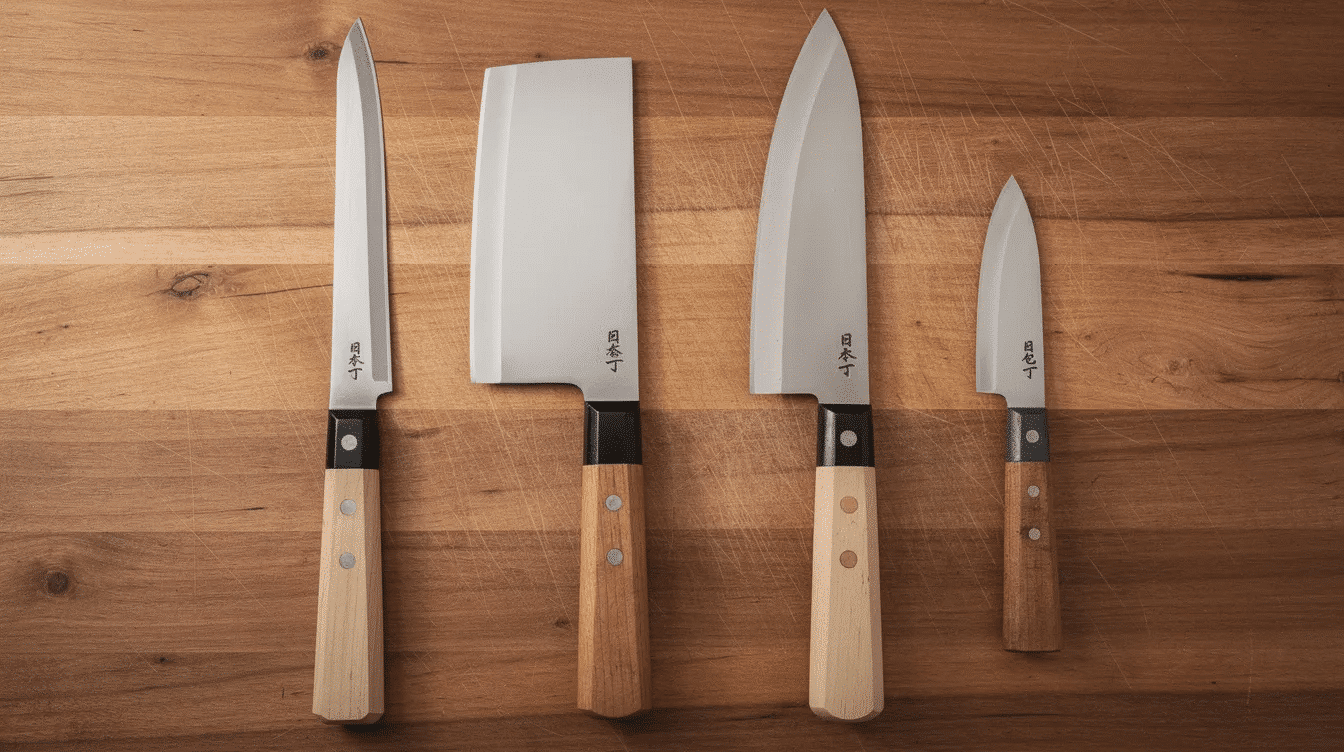
The ideal nakiri or usuba depends on three factors: budget, skill level, and how much you cook vegetables.
Size guidance:
- 165mm: Smaller hands, compact kitchens, or those who prefer lighter tools
- 180mm: Universal size for most adults and general prep
- 210mm+ usuba: Professional use, serious enthusiasts only
Price tiers:
Level | Price Range | Typical Features |
|---|---|---|
Entry | $50–$120 | AUS-8 stainless nakiri, 58 HRC, good for 6–12 months heavy use |
Mid-range | $120–$300 | VG-10 or better, hand-finished edges, 60 HRC |
High-end | $300+ | Single-bevel usuba, White #2 carbon, artisan-made, 62+ HRC |
Prioritize comfortable handle material, balanced feel, and reputable heat treatment over damascus steel patterns or purely decorative features. A tested nakiri knives approach—handling the knife before buying or reading detailed user reviews—beats aesthetic impulse purchases. |
Steel and Maintenance Considerations
Your steel choice affects daily workflow more than edge retention numbers suggest.
Stainless steel (VG-10, AUS-8, AUS-10): Resists rust even in 80% humidity environments. Ideal for busy home cooks who can’t immediately dry blades. Dulls 10–20% faster than carbon but still holds edges through weeks of typical use.
Carbon steel (White #2, Blue #2): Takes a “screaming” sharp blade that outperforms stainless in raw cutting performance. Develops patina when exposed to acids—charming to enthusiasts, alarming to beginners. Requires immediate drying and occasional oiling.
Powdered steels (SG2/R2): Blend carbon-like sharpness with stainless-like maintenance. Premium pricing reflects superior metallurgy.
For beginners: start with stainless or semi-stainless. The learning curve on carbon steel knives adds friction to knife ownership without proportional benefit until your technique and care habits mature. Harder steels chip more easily if misused—technique and proper cutting board choice become part of the ownership “cost.”
Fit, Finish, and Ergonomics
Beyond steel, physical attributes affect daily comfort:
Spine and choil rounding: Check areas that contact your fingers during pinch grip. Sharp edges create hotspots during extended sessions. Quality makers round these surfaces.
Blade height: Taller blades (55mm+) provide better knuckle clearance but may feel unwieldy for small hands. Test before committing.
Weight distribution: Does the knife feel blade-heavy (wa handle) or balanced (yo handle)? Neither is wrong—but one will suit your preferences.
Handle thickness: Thin handles suit smaller hands; thick handles provide stability for larger grips.
If buying online, read user reviews describing the knife’s performance in actual cooking scenarios. When possible, test grip with mock chopping motions in-store. The best knife feels like an extension of your hand rather than a tool you’re operating.
Caring for Your Japanese Square Knife
Proper care dramatically extends edge life. Japanese blades—hard, thin, and precise—reward attention and punish neglect.
Daily care essentials:
- Hand wash only with mild soap
- Dry immediately with a clean towel (never air dry)
- Never soak in water
- Store in a saya (wooden sheath), edge guard, or slotted block
Avoid dishwashers entirely. The combination of heat, harsh detergents, and jostling against other items causes micro-chipping, corrosion, and handle damage. A single dishwasher cycle can undo months of careful maintenance.
During long prep sessions with acidic ingredients like tomatoes or citrus, wipe the blade periodically. Acids accelerate patina formation on carbon steel and can even affect some stainless alloys over extended contact.
Sharpening and Honing a Square Japanese Knife
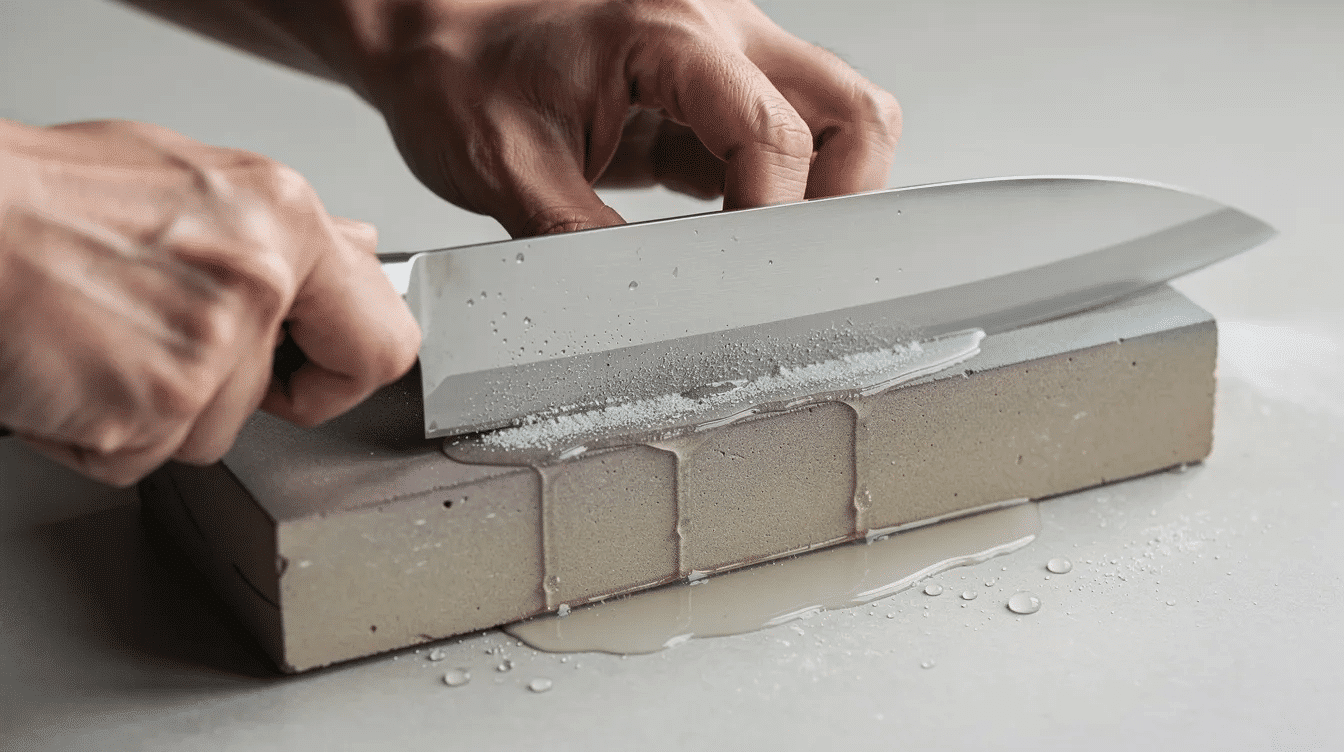
Whetstone sharpening is the primary method for maintaining Japanese square knives. The hard steel (60+ HRC) responds poorly to pull-through sharpeners and can chip on western-style honing rods.
Recommended grit progression:
Grit | Purpose |
|---|---|
800–1200 | Establishing or restoring the edge |
3000–4000 | Refining stainless steel edges |
4000–8000 | Polishing carbon steel to mirror finish |
For double-bevel nakiri, sharpen both sides equally at the original angle (typically 10–15° per side). For single-bevel usuba, the process differs: sharpen 90% on the bevel side, then lightly deburr the flat side while maintaining its near-flat angle. This asymmetry is critical to the knife’s performance. |
New owners should practice on an inexpensive knife before sharpening premium blades. Alternatively, professional sharpening services offer annual tune-ups that maintain factory geometry while you develop your own technique.
Storage and Long-Term Maintenance
The tall rectangular profile of square knives demands specific storage solutions:
- Wooden saya: Traditional sheaths protect edge and blade during storage or transport
- Plastic edge guards: Budget-friendly protection for drawer storage
- Slotted blocks: Ensure slots accommodate the tall blade height
For carbon steel blades in humid climates, apply a light coat of food-safe mineral oil before extended storage. This prevents moisture-induced rust spots that require aggressive stone work to remove.
Inspect the edge weekly for tiny chips. Addressing micro-damage early with a medium-grit stone prevents escalation into major edge restoration projects. A well-made Japanese square knife, properly maintained, provides a decade or more of regular home use.
Frequently Asked Questions About Japanese Square Knives
Is a nakiri good for beginners? Yes, if you focus on vegetables and learn proper push cutting technique. The straight edge actually offers safer operation than curved blades for many users, since there’s no rocking motion to cause slips. The double bevel design also simplifies sharpening compared to professional single-bevel options.
Can I use a Japanese square knife on meat? Boneless, tender cuts work fine—think slicing chicken breast thin slices for stir-fry. However, the nakiri isn’t a primary meat knife. Avoid anything with bones, and don’t attempt carving roasts or heavy protein work. Keep a gyuto or santoku for those tasks.
Do I need both a nakiri and a santoku? Not necessarily. If you cook significant amounts of meat alongside vegetables, a santoku covers both adequately. However, chefs and home cooks who focus heavily on vegetables—plant-forward dieters, meal preppers, raw fish and vegetable-focused cuisines—appreciate the nakiri’s specialization. It’s not redundancy; it’s optimization.
How often should I sharpen a nakiri? For typical home cooking, a few times per year on stones maintains working sharpness. Heavy users processing 5+ lbs of vegetables weekly may need monthly touch-ups on fine grit stones. The distal taper and thin geometry of quality nakiri hold edges remarkably well between sessions.
What does “square knife” actually mean? The term refers to the rectangular blade shape with squared or near-squared tip—the defining visual characteristic of nakiri and usuba designs. Most reputable makers label these specifically as “nakiri” or “usuba” rather than using the general term. If you see “Japanese square knife” or “vegetable cleaver” in marketing, check specifications to confirm it’s true Japanese geometry rather than a thick Chinese-style design.
Is sashimi preparation possible with a nakiri? While you can slice raw fish with a sharp nakiri, it’s not ideal. Sashimi preparation benefits from the longer, thinner blades of yanagiba designs. The nakiri’s height and flat profile suit vegetables better than the delicate, pulling cuts required for pristine sashimi.
The right knife matches your cooking habits. Treat the Japanese square knife as a tool for more enjoyable, efficient vegetable prep—not as a replacement for your entire knife collection. For those who spend significant time slicing vegetables, few tools deliver comparable satisfaction.
