A Japanese hunting knife delivers what mass-produced alternatives cannot: exceptional sharpness, superior edge retention, and blade geometry refined through centuries of craftsmanship. This guide is for hunters, outdoor enthusiasts, and collectors seeking the best in traditional Japanese blade craftsmanship for field use. Whether you’re field dressing small game, processing elk at a remote camp, or relying on a single blade for wilderness survival, these knives combine traditional forging methods with steel compositions designed for demanding outdoor activities.
Our collection features over 30 types of premium Japanese outdoor knives, from compact makiri-style blades to robust ken-nata designs, reflecting the same diversity and specialization found in essential Japanese kitchen knife types. Each knife represents the culmination of Japan’s metalworking history—the same techniques that once produced legendary swords now create tools built for modern hunting challenges.
- Key Terms: Japanese Hunting Knife Definitions
- Japanese Hunting Knives for Every Game Type
- Choose the Right Japanese Hunting Knife for Your Hunting Style
- Premium Japanese Steel Materials That Perform
- How to Use Your Japanese Hunting Knife
- Handcrafted Japanese Hunting Knives: Tradition and Quality
- Shop Japanese Hunting Knives Online
Key Terms: Japanese Hunting Knife Definitions
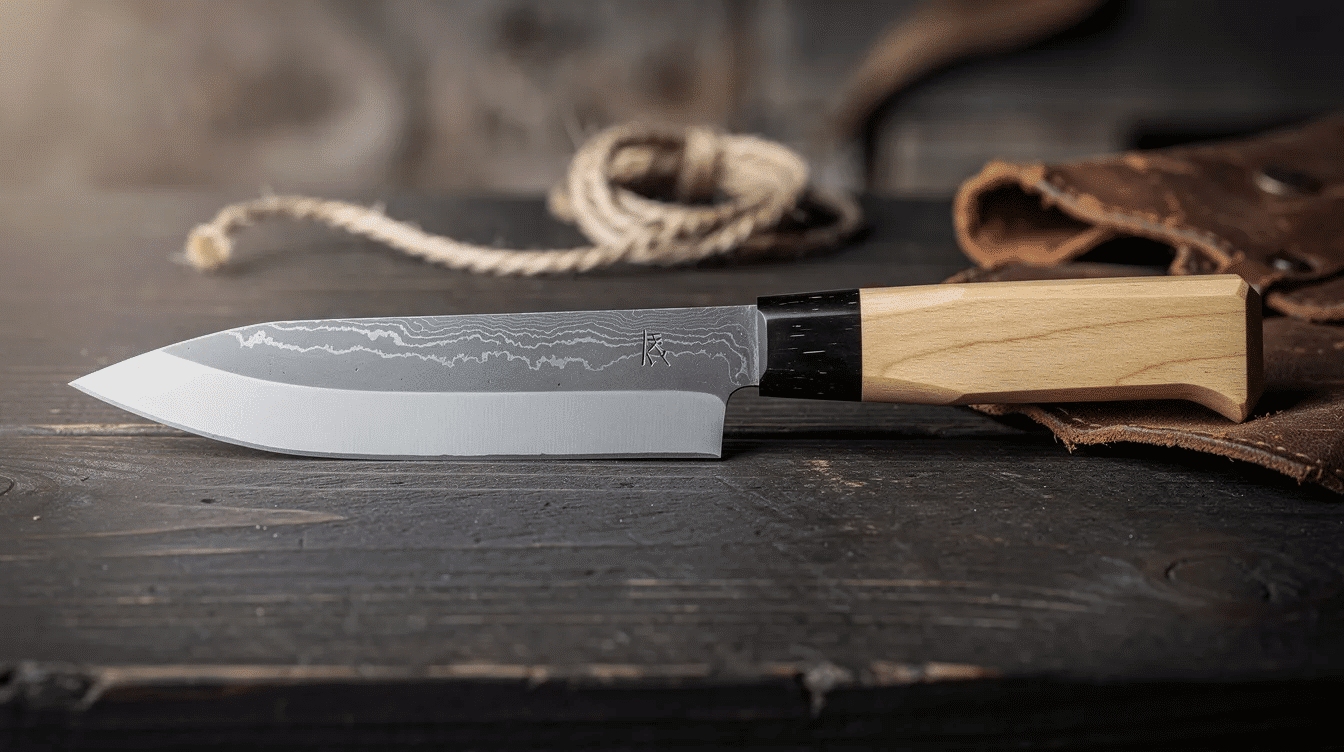
- Makiri: Makiri knives have a strong maritime history and are used for various tasks including butchering fish, cutting ropes, and are particularly well-suited for fishing and game preparation.
- Ken-nata: Traditional Japanese hunting knives are also referred to as “hunting nata” or general-purpose outdoor knives, known for their robust construction and versatility in outdoor tasks.
- Matagi Nagasa: Known as the “bear hunter’s knife,” the Matagi Nagasa features a hollow steel handle that can be mounted onto a wooden pole, making it a unique and specialized tool in Japanese hunting culture.
Japanese Hunting Knives for Every Game Type
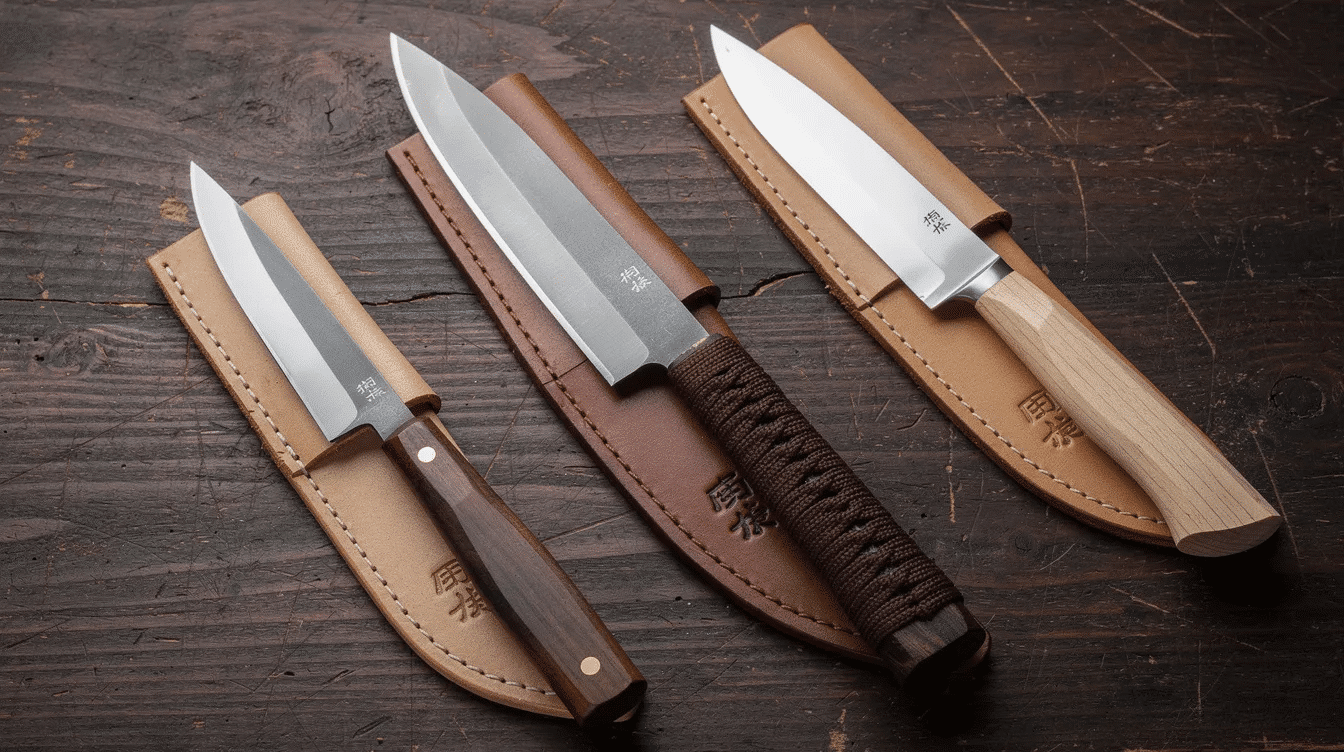
The versatility of Japanese hunting knives comes from understanding that different game requires different blade characteristics. A knife perfect for processing rabbits would struggle with elk quarters, while a heavy butchering blade becomes cumbersome during delicate skinning work. Japanese bladesmiths address this by offering specialized designs for each hunting scenario.
Versatility Beyond Hunting
Japanese hunting knives are versatile and can be used for various outdoor activities such as hunting, butchering, and cooking. Whether you are preparing game in the field, slicing meat at camp, or handling food preparation tasks, these knives excel in multiple roles. Japanese hunting knives prioritize high-carbon steel for edge retention or stainless steel for rust resistance, ensuring they perform reliably in diverse environments and activities.
Small Game Hunting Knives
Compact makiri and utility knives excel at processing rabbits, birds, and other small animals where precision matters more than blade mass. These knives typically feature 140mm Blue #2 carbon steel blades ground to acute angles, allowing the cutting edge to glide between hide and flesh with minimal resistance.
The selection of smaller Japanese hunting knives emphasizes portability without sacrificing quality. Leather sheaths with secure belt loop attachments keep these blades accessible during active hunts, while their lightweight construction—often under 120g—ensures they won’t interfere with movement through dense brush. For hunters pursuing upland birds or small mammals, these knives handle the detail work of field dressing with surgical accuracy.
Big Game Hunting Knives
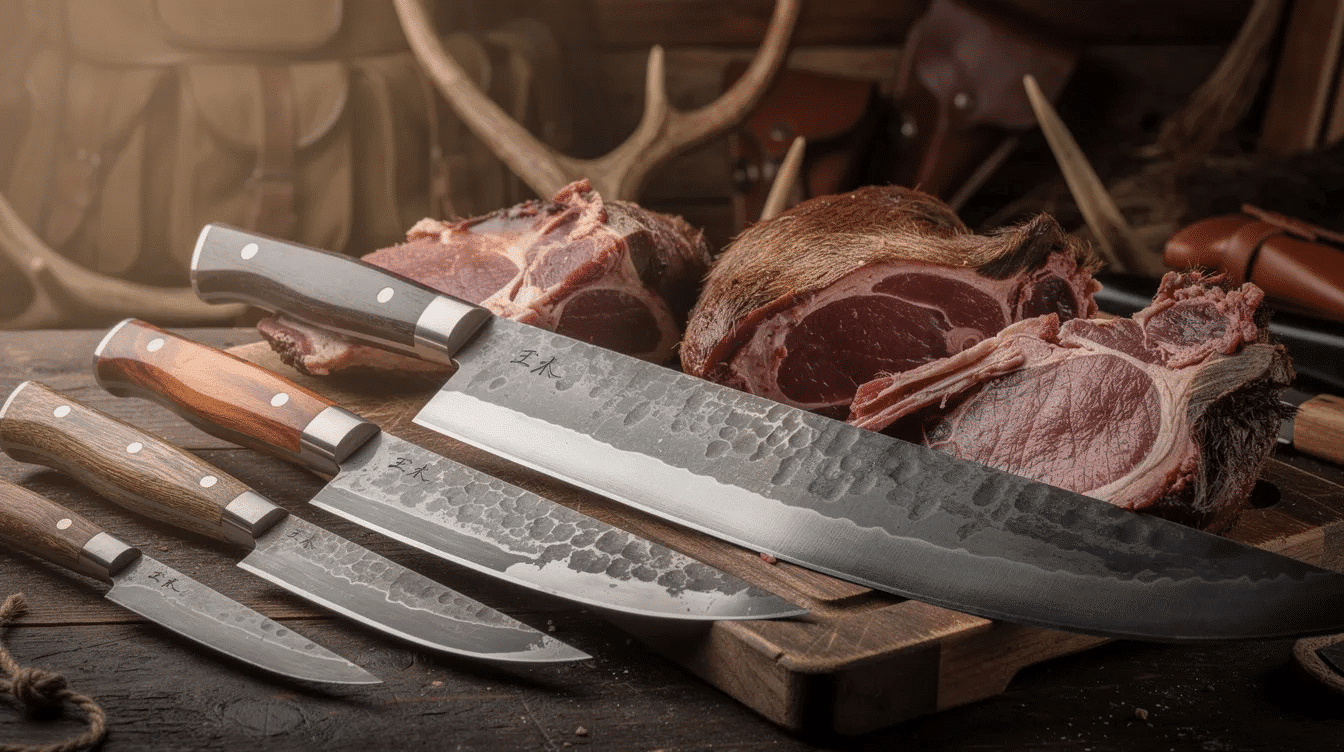
Larger ken-nata and outdoor knives address the demands of deer, elk, wild boar, and other substantial game. These blades range from 210mm to 240mm in length, with thicker spines and more robust construction to withstand the rigors of heavy-duty butchering.
Traditional Japanese forging techniques create blades capable of maintaining their edge through extended processing sessions. A quality ken-nata using Aogami steel can quarter an elk while retaining enough sharpness to handle the finer work of trimming and portioning. The weight of these knives—often 400-500g—provides the momentum needed for cutting through joints and connective tissue, making the process of game breakdown more efficient.
Survival and Bushcraft Knives
Multi-purpose Japanese outdoor knives serve hunters who need a single blade capable of handling camping tasks alongside game processing. These designs often incorporate fire-starting capabilities through magnesium flint stick attachments included with the sheath, transforming a hunting knife into a complete survival tool.
The durable kurouchi finish—a black forge-scale coating retained from the hammering process—provides natural protection against moisture and corrosion in extreme conditions. Full-tang construction ensures these knives can withstand batoning wood, making feather sticks, or any other hard usage where lesser blades might fail. For extended backcountry hunts where weight considerations limit gear selection, these versatile designs prove ideal.
Choose the Right Japanese Hunting Knife for Your Hunting Style
Different hunting approaches demand specific knife characteristics. The silent stalker has different needs than the rifle hunter processing game at a base camp. Understanding these distinctions helps match each hunter with their perfect blade.
For Traditional Bow Hunters
Lightweight single-bevel makiri knives complement the bow hunter’s emphasis on stealth and mobility. These blades—typically under 150g—won’t interfere with movement during the stalk or create noise that might alert game.
Quiet leather sheaths with secure belt loop locking mechanisms keep the knife accessible without rattling or shifting. The compact 140mm blade length provides everything needed for quick, silent field processing while maintaining the low profile essential to successful archery hunting. People who pursue game with traditional methods appreciate knives designed with the same philosophy of refined simplicity.
For Rifle Hunters
Versatile double-bevel knives handle both the precision cuts of skinning and the heavier work of breaking down quarters. For rifle hunters who may need to process game at considerable distance from their vehicle, this versatility proves invaluable.
The 210mm ken-nata blade length offers efficiency for game breakdown at hunting camps without becoming unwieldy. Stainless clad options—featuring a hard carbon steel core protected by corrosion-resistant outer layers—reduce maintenance requirements in field conditions. These knives continue performing hunt after hunt with minimal care between outings.
For Professional Guides and Outfitters
Premium Blue #2 steel blades deliver the exceptional edge retention professional guides need for daily use throughout hunting season. When your knife sees constant work processing multiple animals, steel quality becomes the difference between efficiency and frustration.
Multiple knife sets including masakari axes and mokuba-ono splitting tools address the variety of tasks required at professional hunting camps. Hand-engraved options showcasing traditional Japanese craftsmanship create memorable experiences for clients, while the underlying quality ensures reliable performance. These aren’t just tools—they’re investments in a guide’s professional life.
For Weekend Warriors and Casual Hunters
Easy-to-maintain White #2 steel blades sharpen quickly and forgive the occasional mistake in care technique. For hunters who pursue game a few weekends each season, these knives offer excellent performance without demanding expert-level maintenance.
All-in-one designs combining a capable hunting knife with basic survival tools simplify gear selection. Affordable entry-level options provide access to genuine Japanese craftsmanship without requiring significant investment. The great thing about starting with quality is that even “beginner” Japanese knives outperform many premium offerings from other traditions.
Premium Japanese Steel Materials That Perform
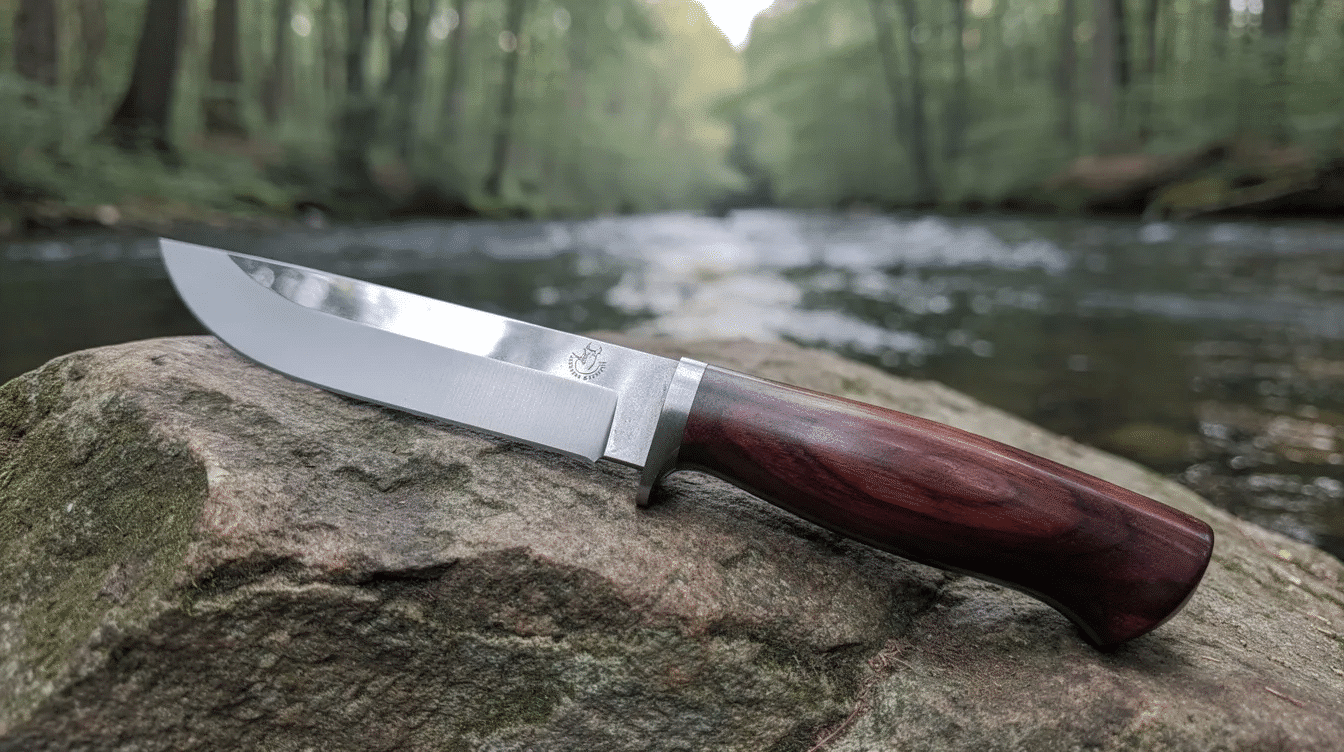
The steel composition of a hunting knife determines its hardness, edge retention, ease of sharpening, and maintenance requirements. Japanese bladesmiths have refined specific steel types over generations, each offering distinct characteristics for outdoor work.
Blue Paper Steel (Aogami)
Blue #2 carbon steel contains approximately 1.05-1.15% carbon with additions of tungsten and chromium, achieving hardness levels around 62-63 HRC. This superior hardness translates directly to edge retention—the blade maintains its cutting ability through extended processing sessions where softer steels would require repeated sharpening.
The kind of performance Blue Paper steel delivers comes with maintenance requirements. This traditional carbon steel demands proper care to prevent rust, particularly when exposed to blood, moisture, and game fluids. However, hunters who appreciate exceptional performance consider this trade-off worthwhile. Professional hunters consistently prefer Aogami for its ability to take extremely sharp edges and hold them through demanding work.
White Paper Steel (Shirogami)
White #2 steel offers a purer carbon composition without the tungsten additions of Blue steel, reaching hardness around 61-63 HRC. This makes the blade easier to sharpen while still delivering excellent cutting performance—ideal for hunters who prioritize maintaining their own knives in the field.
The production methods for White Paper steel create a blade that responds beautifully to basic sharpening techniques. A few minutes with a portable whetstone restores the edge to working condition, making these knives practical for extended hunting trips where professional sharpening isn’t available. The trade-off is slightly reduced edge retention compared to Blue steel, though most hunters find the easier maintenance more than compensates.
Swedish Stainless Steel
Corrosion-resistant Swedish stainless steel addresses the needs of hunters in wet or humid conditions where carbon steel maintenance becomes challenging. With approximately 15% chromium content, these blades resist the effects of moisture, blood, and environmental exposure that would quickly damage unprotected carbon steel.
Low-maintenance steel proves perfect for occasional hunters and beginners who haven’t yet developed blade care habits. While hardness typically reaches 60-61 HRC—slightly below premium carbon steels—Swedish stainless combines durability with ease of care for worry-free outdoor use. These knives perform reliably without demanding constant attention to drying and oiling.
How to Use Your Japanese Hunting Knife
Proper technique maximizes knife performance while extending blade life. Japanese hunting knives respond to skilled handling with exceptional results, but they also demand respect for their specific characteristics.
Field Dressing Techniques
Japanese blade geometry—whether single-bevel or double-bevel—influences optimal cutting angles during game processing. Single-bevel knives excel at precise skinning cuts close to hide, allowing the flat back to ride along the animal while the angled edge separates tissue cleanly. Double-bevel designs offer more forgiveness during general butchering work.
The key to efficient field dressing lies in letting the blade do the work. Japanese hunting knives achieve sharpness levels that reduce the force needed for each cut. Pressing harder rarely improves results and risks damaging the thin edge. Instead, focus on correct angle and smooth, drawing cuts that utilize the full blade length.
Step-by-step skinning and butchering follows the animal’s natural structure rather than fighting against it. Work with joints rather than through bone when possible. The shape of Japanese blade geometry makes this approach particularly effective, as the acute edge angles slice through connective tissue with minimal effort.
Maintenance in the Field
Quick cleaning methods using natural materials keep carbon steel blades in working condition during extended camping trips. Wiping the blade immediately after each use with dry grass or cloth removes blood and moisture before corrosion begins. A light coating of oil—even cooking fat in field conditions—protects the metal until proper cleaning becomes possible.
Rust prevention for carbon steel requires consistent attention but becomes habit with practice. The mistake most new owners make is leaving the blade wet or dirty even briefly. Heat from a nearby fire can speed drying when cloth isn’t available, though avoid placing the blade directly in flames, which could affect the steel’s hardness.
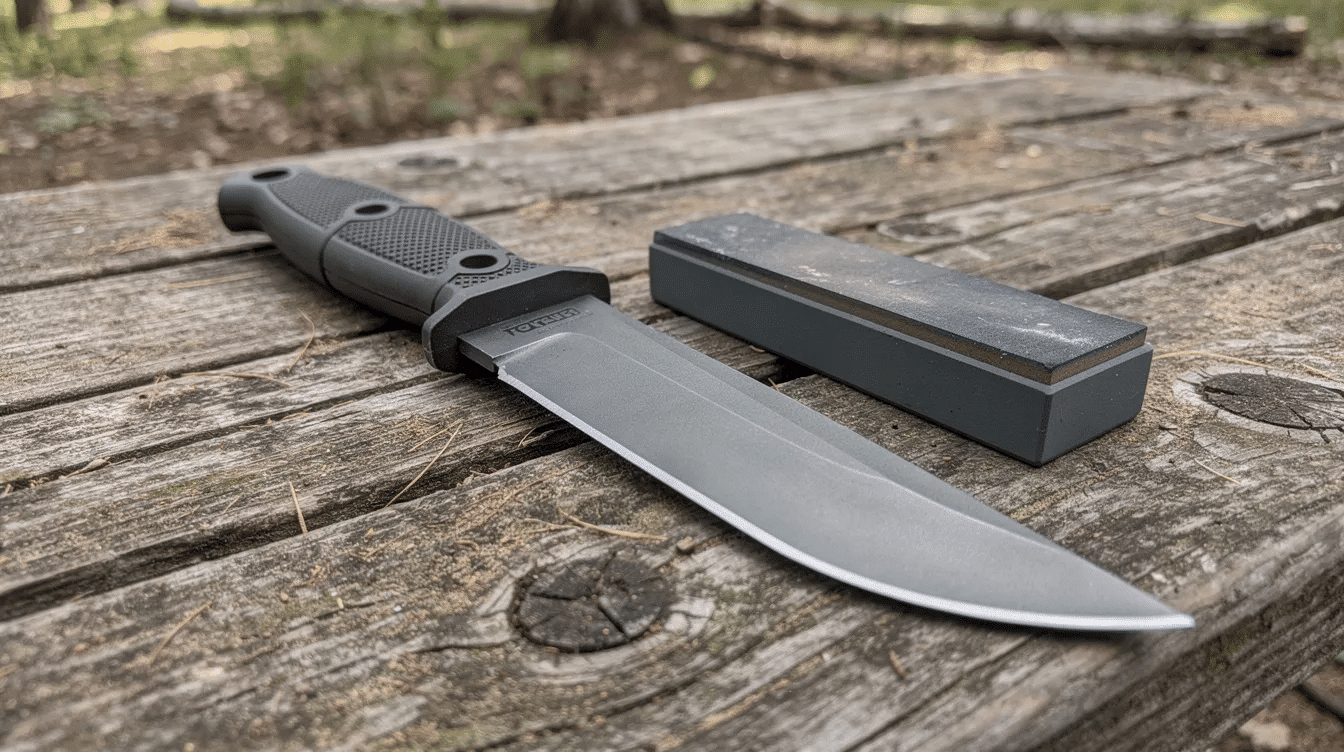
Basic sharpening with portable whetstones maintains edge performance during extended hunting trips. A compact 1000/3000 grit combination stone handles most field repairs, while a leather strop—or even a smooth belt—maintains the edge between full sharpening sessions. Japanese steels respond well to this kind of regular maintenance, rewarding consistent care with lasting performance.
Handcrafted Japanese Hunting Knives: Tradition and Quality
Japanese hunting knives are handcrafted by skilled artisans using traditional techniques that have been passed down for generations. This dedication to craftsmanship ensures each knife is not only functional but also a work of art, with quality and durability that stand the test of time. The expertise and care invested in every blade guarantee high-quality production, making these knives trusted companions for serious hunters and outdoor enthusiasts.
Shop Japanese Hunting Knives Online
Our collection brings authentic Japanese bladesmithing directly to hunters worldwide. From traditional ken-nata designs to modern interpretations of classic forms, each knife represents genuine craftsmanship using premium materials and time-honored methods.
Worldwide shipping makes these exceptional tools accessible to customers across North America, Europe, and beyond. Each knife ships securely with appropriate documentation, protective sheaths, and care instructions to ensure your blade arrives ready for its first hunt.
Selecting your first Japanese hunting knife starts with understanding your primary hunting style and the type of game you pursue most often. Bow hunters processing small game need different characteristics than rifle hunters breaking down elk. Our selection includes options for every experience level—from accessible entry points for those new to Japanese knives to premium hand-forged pieces for collectors and professionals.
Explore over 30 types of premium hunting knives crafted in Japan. Whether you’re drawn to the exceptional edge retention of Blue Paper steel, the easy maintenance of stainless options, or the rustic beauty of kurouchi-finished blades, your perfect Japanese hunting knife awaits. These aren’t just tools—they’re investments in a lifetime of more efficient, more satisfying hunts, much like selecting the right Gyuto chef’s knife for versatile kitchen work or high-performance Takamura kitchen knives for precision food preparation.
