Finding the perfect knife for your kitchen can transform the way you cook. Japanese kitchen knives have earned a reputation worldwide for their razor-sharp edge, exceptional balance, and stunning craftsmanship. For Filipino cooks seeking precision in every slice, this guide covers everything you need to know about buying, maintaining, and collecting Japanese chef knives in the Philippines.
- Quick Answer: Where to Buy a Japanese Chef Knife in the Philippines Today
- Why Japanese Chef Knives Are Popular in the Philippines
- Main Types of Japanese Chef Knives Useful in Filipino Kitchens
- Kitchen Essentials: Must-Have Japanese Knives for Every Filipino Home
- Choosing the Right Japanese Chef Knife: Steel, Handle & Budget
- Popular Japanese Knife Brands Available in the Philippines
- Where Filipinos Buy Japanese Chef Knives: Online & Offline Options
- Care & Maintenance in the Philippine Climate
- Personalization, Gifting & Collecting Japanese Knives
- Japanese Kitchen Culture & Professional Chefs in the Philippines
- Frequently Asked Questions about Japanese Chef Knives in the Philippines
Quick Answer: Where to Buy a Japanese Chef Knife in the Philippines Today
If you’re wondering where to shop for a Japanese chef knife in the Philippines, you have both online and physical options available today. Major e-commerce platforms dominate sales, while specialty stores in metro manila cater to serious enthusiasts and professional chefs.
Online Marketplaces:
- Lazada carries listings labeled “Japanese Chef Knives” with stainless steel options ranging from budget tiers around ₱500 to premium imports exceeding ₱5,000
- Shopee offers thousands of listings including brands like Yoshihiro Cutlery, with frequent flash sales dropping prices by 20-50%
- Specialty online shops like Nikuya.ph (with knives from ₱1,249) and Itamae.com.ph curate authentic options for professionals and home cooks
Physical Stores:
- Chef supply stores in Makati, BGC, and Ortigas occasionally stock higher-end Japanese brands like Global or Miyabi
- Department stores such as Rustan’s carry premium options (Global G-2 at around ₱10,000+)
- Hotel supply shops in BGC serve bulk professional orders
To avoid low-quality fakes, always verify clear brand names with proper kanji engravings, check the steel type (look for specifications like VG-10 or AUS-8), and confirm warranty coverage. If the sale price seems too good for a 210mm Gyuto—say, under ₱800—it’s likely not genuine Japan craftsmanship.
Why Japanese Chef Knives Are Popular in the Philippines
Between 2024 and 2026, Filipino home cooks and professional chefs have increasingly shifted toward Japanese knives. This trend mirrors the explosion of Japanese fusion dining—over 500 sushi and ramen spots now operate in Metro Manila alone. TikTok and YouTube vlogs by Filipino chefs showcasing precise cuts on kinilaw tuna or delicate mincing for adobo garlic have driven a reported 35% year-over-year sales increase in premium cutlery.
Key benefits that attract Filipino buyers:
- Thinner blades (0.2-0.3mm thinner at the edge than Western counterparts) create cleaner cuts on fish and vegetables, reducing bruising
- Superior sharpness at angles as low as 15 degrees per side enables feathery slices for sashimi, sushi, and precise garnishes
- Better performance on local dishes like kinilaw, fine-minced garlic for sinangag, and clean slicing for lechon or roast beef
- Lighter weight (often 150-200g for a Gyuto) reduces fatigue during extended everyday prep sessions
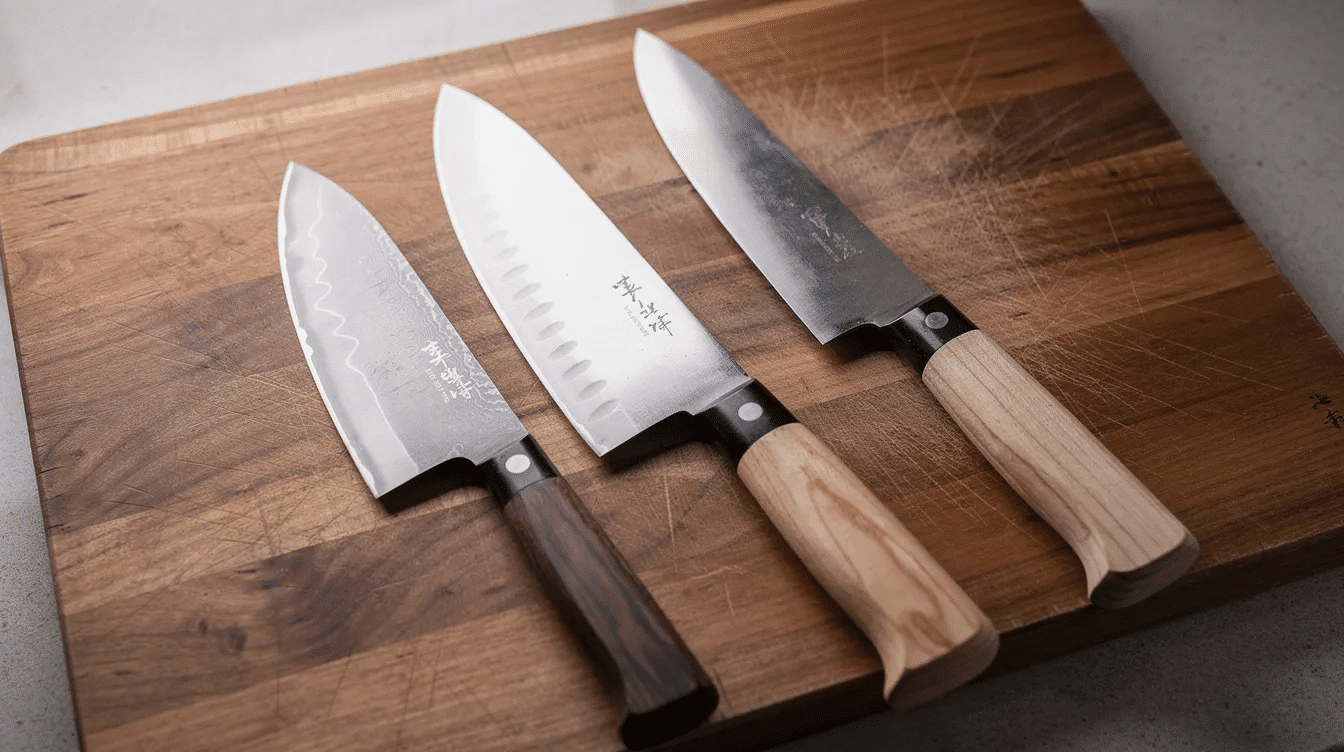
Beyond performance, the beauty of japanese craftsmanship appeals to collectors and gift buyers. Damascus patterns from 33+ layered steel folds, octagonal wa-handles carved from magnolia wood, and elegant kanji engravings transform these knives into display-worthy pieces. Each piece carries a blend of tradition and artistry that resonates with Filipino culture’s appreciation for handcrafted quality.
Main Types of Japanese Chef Knives Useful in Filipino Kitchens
Japanese knives are specialized by design, and choosing the right profile matters more than grabbing just a knife labeled “chef’s knife.” Understanding these categories helps you select a blade shaped for your actual cooking style, and a solid grasp of the essential Japanese knife types makes it easier to match tools to specific tasks.
Gyuto (Japanese Chef’s Knife)
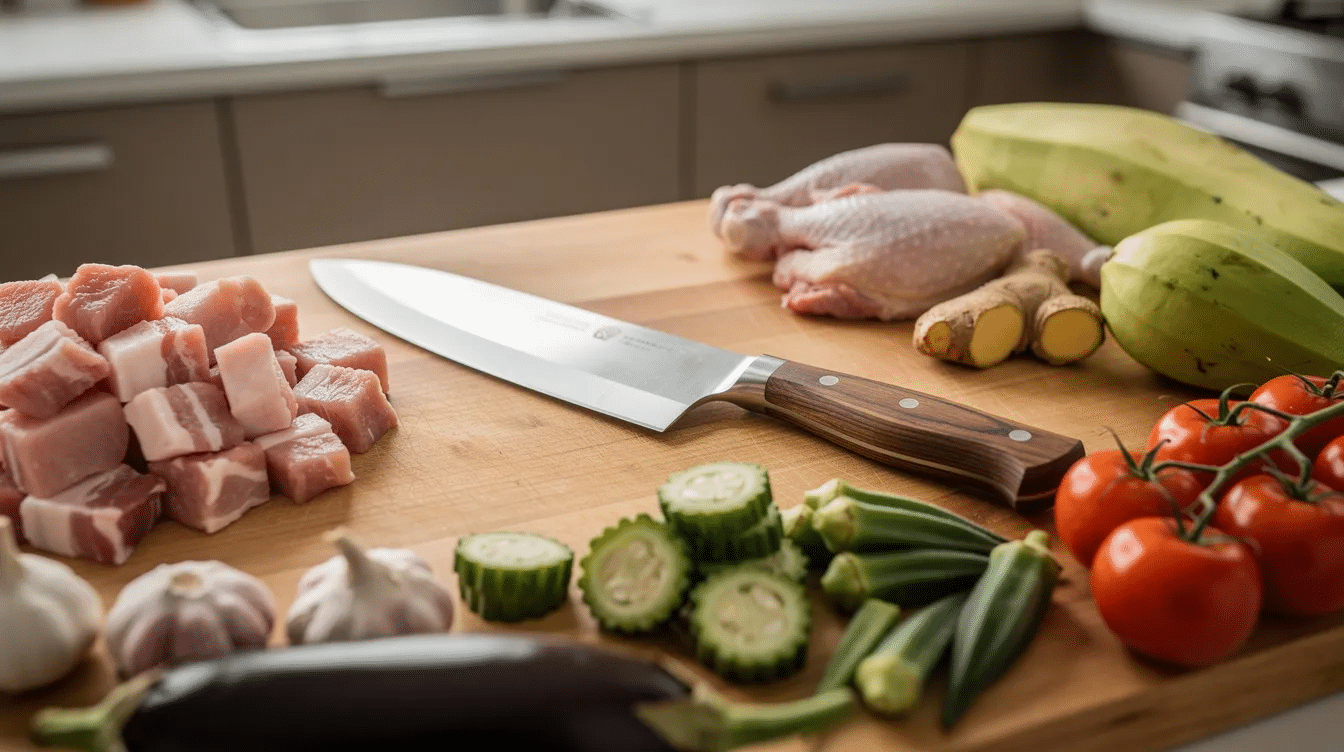
The Gyuto stands as the most versatile option for Filipino cooking. With a typical length of 210-240mm and a curved belly suited for rocking cuts, it handles meat, vegetables, and all-around kitchen tasks with ease. Whether you’re tackling pork for adobo, chicken for tinola, or vegetables for pinakbet, a Gyuto delivers everyday use versatility. Most quality examples weigh just 150-200g, offering excellent balance for fatigue-free prep.
Santoku
At 165-180mm, the Santoku (“three virtues” for slice, dice, mince) suits Filipino home cook needs perfectly. Its lighter 120-150g frame and granton scallops that prevent food from sticking make it ideal for small condo kitchens. The forgiving sheepsfoot tip works well on crowded counters, handling everyday tasks from dicing garlic to slicing bangus fillets.
Nakiri
The Nakiri’s rectangular 160-170mm straight edge excels at chopping fibrous vegetables without wedging. For those who frequently prepare gulay—ampalaya, pechay, carrots, cabbage—this refined blade pushes through cleanly. Its thin spine (under 2mm) enables paper-thin herb slices, making it essential for salad-heavy or plant-based diets.
Deba and Yanagiba (Fish Knives)
For seafood-centric Filipino cooking, these specialized tools shine. The Deba (150-180mm, hefty 200-250g) features a thick spine designed for filleting tilapia, butchering tuna belly for kinilaw, or cracking through fish scales and bones. The Yanagiba (240-300mm, slender 150g) delivers feathery sashimi slices via single-bevel pull-cuts—essential in Japanese and fusion restaurants for nigiri prep. Note that Yanagiba blades aren’t suited for heavy chopping and risk chipping on dense bones.
Kitchen Essentials: Must-Have Japanese Knives for Every Filipino Home
Japanese kitchen knives have become an essential part of the modern Filipino kitchen, celebrated for their blend of traditional craftsmanship and everyday practicality. Whether you’re a home cook preparing family meals or someone who enjoys experimenting with new recipes, having the right tools can make all the difference. For everyday prep, a sharp paring knife is indispensable—perfect for peeling, trimming, and slicing vegetables with precision.
When choosing your kitchen knives, consider the material that best suits your lifestyle. Carbon steel knives are renowned for their razor-sharp edge and the satisfying feel they bring to every cut, but they do require regular maintenance to prevent rust, especially in the humid Philippine climate. On the other hand, stainless steel knives offer a durable, low-maintenance option that resists corrosion, making them ideal for everyday use in busy households.
To protect your investment and keep your knives in top condition, a genuine leather knife bag is a smart addition. Not only does it provide safe storage, but it also makes it easy to carry your knives when cooking outside your home. With the right blend of Japanese kitchen knives, you’ll enjoy the sharpness, balance, and beauty that come from centuries of Japanese craftsmanship—turning everyday cooking into an art form.
Choosing the Right Japanese Chef Knife: Steel, Handle & Budget
Not every knife labeled “Japanese” delivers equal quality. Filipino buyers should balance sharpness, maintenance requirements, and budget to find their ideal tool. Here’s how to evaluate your options systematically.
Steel Types: Carbon Steel & Others
Stainless Steel Options:
- VG-10 (59-61 HRC): A cobalt-vanadium alloy offering exceptional edge retention and chip resistance. Ideal for the humid Philippine climate with minimal patina development. Slightly less “toothy” than carbon but requires less maintenance.
- AUS-8 (57-59 HRC): Budget-friendly stainless with solid toughness for daily tasks. Dulls faster than VG-10 but handles abuse like adobo bones reasonably well. Common in ₱1,500 entry-level knives.
Carbon Steel Options:
- White Steel #1 (Shirogami, 63-65 HRC): Achieves mirror-sharp edges but reacts to acids, forming a patina over time. Demands rigorous drying in 80%+ humidity Manila summers.
- Blue Steel #2 (Aogami, 62-64 HRC): Similar performance to white steel with slightly better edge retention. Both require camellia oil coatings for rust prevention.
For most Filipino kitchens, stainless steel offers the best contrast between performance and practicality given local humidity levels.
White Steel and Blue Steel Options
For those seeking the pinnacle of Japanese kitchen knives, white steel and blue steel blades stand out as top choices. White steel, prized for its purity and ability to achieve an incredibly sharp edge, is a favorite among professional chefs who demand precision and performance. Its fine grain structure allows for effortless slicing and a mirror-like finish, making it a joy to use for both everyday tasks and special occasions.
Blue steel, meanwhile, is celebrated for its exceptional edge retention and toughness. Crafted through traditional Japanese methods, blue steel knives maintain their sharpness even after extended use, making them a reliable companion in any kitchen. Both white steel and blue steel embody the spirit of Japanese craftsmanship, offering a perfect balance of sharpness, durability, and quality. Whether you’re a seasoned chef or a passionate home cook, these knives are designed to create a superior cutting experience and elevate your culinary skills.
Handle Styles
- Wa-handle (Japanese): Octagonal wood construction, ergonomic for pinch grip, breathable but can slip when wet
- Western handle: Triple-riveted Pakkawood with full tang for stability and balance. About 70% of Philippine home cooks prefer this style initially due to familiarity
Budget Tiers (PHP)
Tier | Price Range | What to Expect |
|---|---|---|
Entry-level | ₱1,000–₱3,000 | AUS-8 stamped blades, 1-2 month edge retention |
Midrange | ₱3,000–₱8,000 | Clad VG-10 core, 3-6 month edge retention |
Premium | ₱8,000+ | Honyaki Blue Steel, 6-12 month retention under pro use |
The regular price difference between tiers reflects steel quality, forging process, and handle craftsmanship. Investing in midrange often provides the best life value for serious home cooks. |
Popular Japanese Knife Brands Available in the Philippines
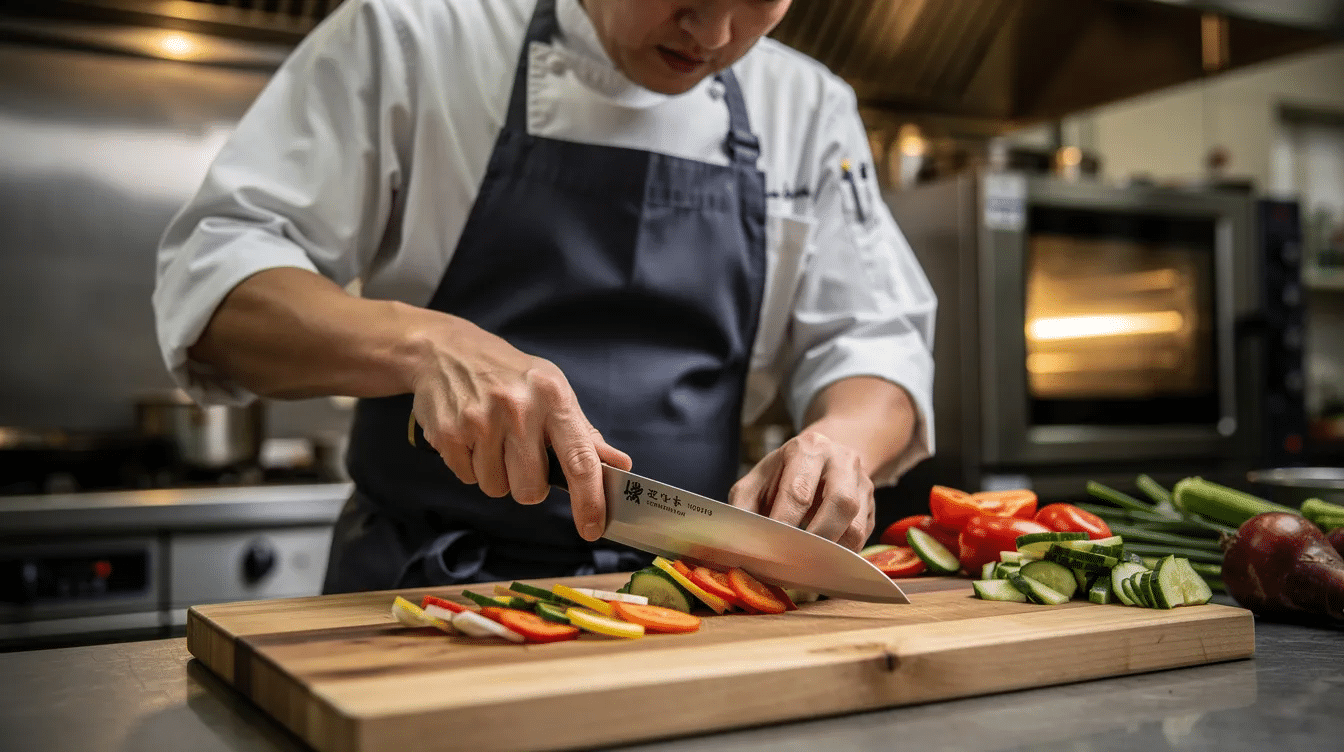
Filipino cooks have access to a diverse selection of Japanese knife brands, each bringing its own signature blend of craftsmanship, style, and performance to the kitchen. Brands like Yoshihiro, Musashi, Takamura knives known for precision and performance, and Seisuke are especially popular, known for their meticulous attention to detail and commitment to quality. Yoshihiro knives are celebrated for their elegant designs and razor-sharp blades, making them a top choice for chefs who value both aesthetics and function. Musashi offers a range of knives that combine traditional forging techniques with modern innovation, delivering tools that excel in slicing, dicing, and everyday prep. Seisuke, meanwhile, is favored by home cooks for its accessible price points and reliable performance.
Whether you’re searching for a versatile chef knife, a nimble paring knife, or a specialized slicing tool, these brands offer a wide array of options to suit every cooking style and budget. With features designed to enhance comfort, control, and cutting precision, investing in a quality Japanese knife ensures you have the right tool for every culinary moment.
Where Filipinos Buy Japanese Chef Knives: Online & Offline Options
Most Filipino buyers in 2024-2026 purchase Japanese knives online, with e-commerce platforms capturing roughly 80% of kitchenware sales. However, physical stores remain valuable for hands-on testing and immediate purchase needs.
Online Marketplaces
Lazada and Shopee offer convenience, variety, and frequent promotional sales. LazMall verified sellers provide added security with 98%+ positive feedback ratings. Cons include counterfeit risks and variable quality control—watch for vague “high-carbon” claims without JIS steel codes, absence of real-user edge tests in photos, or suspiciously low prices.
How to evaluate sellers:
- Check for 4.9+ ratings with 100+ sales
- Look for detailed descriptions specifying steel type and blade origin
- Verify clear return policies
- Request QC videos when possible
Specialty Online Shops
Curated retailers like Nikuya.ph and Itamae.com.ph offer greater authenticity assurance. These shops often bundle knives with accessories and provide metro manila pickup or delivery options. The collection tends to be smaller but better vetted.
Physical Stores
Higher-end department stores, hotel supply shops, and select kitchenware stores in Metro Manila and Cebu stock Japanese or Japanese-style knives. Inventory rotates based on imports, so call ahead. Visiting in person lets you feel the balance and weight before you purchase.
Direct Import
Serious collectors may order directly from Japanese brands or overseas retailers shipping to the Philippines. Expect 7-14 day shipping via DHL and potential customs duties of 12-20% on orders exceeding ₱20,000. This route provides access to sold-out limited editions but requires patience and budget flexibility.
Care & Maintenance in the Philippine Climate
High humidity (75-90%) and tropical heat create a challenging world for knife maintenance, especially for carbon steel blades that can oxidize within 24-48 hours if left wet. Proper care ensures your investment delivers a lifetime of performance.
Daily Cleaning Routine
- Hand wash immediately after use with mild soap (pH 7)
- Never use dishwashers—alkalinity (pH 10+) etches edges and damages handles
- Dry thoroughly with a clean towel; don’t air-dry in humid conditions
Rust Prevention
- Wipe the blade completely dry after every wash
- For carbon steel, apply a light coat of food-safe mineral oil (camellia oil works well, around ₱500/bottle)
- Never leave knives resting on wet chopping boards
Storage Solutions
Storage Type | Best For | Notes |
|---|---|---|
Magnetic strips | Condos with limited drawer space | Wall-mounted, holds 5-10 knives without dulling |
Saya (wooden sheaths) | Individual protection | Traditional style, around ₱1,000+ |
Knife bags | Transport and storage | Often genuine leather for premium sets |
Sharpening Approach
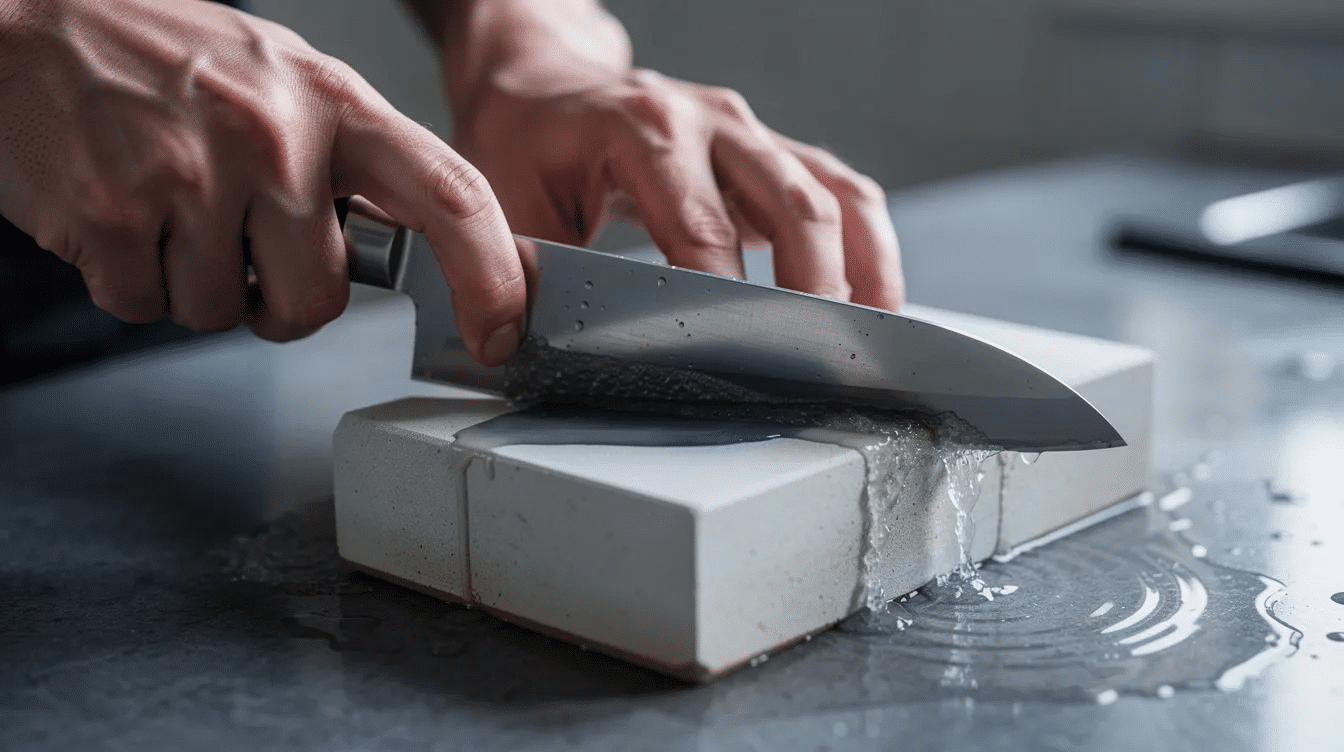
Japanese whetstones deliver the best results. A typical grit progression starts at 1000-grit for regular maintenance (5-10 minutes per side) and moves to 3000-6000 for polishing. Professional sharpening services in Makati charge around ₱300 per session using king stones at 15° angles.
Home cooks should sharpen every 2-4 weeks (approximately 20 hours of use), while professionals in high-volume kitchens may need weekly maintenance.
Handle Maintenance and Repair
To ensure your Japanese kitchen knives deliver a lifetime of precision and performance, proper handle care is just as important as blade maintenance. Always hand wash your knives and dry them thoroughly after each use to prevent moisture from damaging the handle. For knives with handles made from natural materials like wood or bone, regular oiling helps preserve their beauty and stability, keeping them comfortable and safe to use.
If your knife handle shows signs of wear or damage, don’t worry—professional repair services are available to restore it to its original condition. With attentive care and timely maintenance, your Japanese kitchen knives will remain reliable companions in your kitchen, offering the same level of craftsmanship and performance for years to come.
Personalization, Gifting & Collecting Japanese Knives
Japanese chef knives have emerged as premium gifts in the Philippines for weddings, housewarmings, and chef anniversaries. A timeless masterpiece crafted in japan carries meaning beyond its utility—it becomes an heirloom that can last generations with proper care.
Personalization Options
Many Philippine online sellers offer laser engraving as an add-on service (around ₱500). You can create a unique gift by adding names, short messages, or dates on the blade ferrule or handle. This transforms a functional tool into a personal keepsake with natural pride of ownership.
Collector Appeal
Limited-edition Damascus-pattern blades with 101+ layer welds attract collectors who appreciate the art of metallurgy. Some enthusiasts display these knives on acrylic stands rather than using them daily, treating them as functional art that embodies japanese kitchen tradition.
Gift Set Accessories
Elevate a knife gift with complementary accessories:
- Wooden or genuine leather knife bags (around ₱2,000) for elegant presentation and transport
- Protective sheaths (saya) paired with the specific blade profile
- End-grain cutting boards that protect hard Japanese steels from scarring
- Complete sets bundled for ₱15,000+ make memorable milestone gifts
A handcrafted knife bundled with quality accessories communicates thoughtfulness and respect for the recipient’s skill in the kitchen. The moment someone unwraps such a gift, they understand its significance.
Japanese Kitchen Culture & Professional Chefs in the Philippines
Japanese kitchen culture has found a passionate following in the Philippines, especially among professional chefs and culinary enthusiasts in Metro Manila. The artistry and discipline of Japanese cuisine—where every ingredient is treated with respect and every dish is crafted with precision—resonate deeply with Filipino cooks who value both tradition and innovation. Japanese kitchen knives are at the heart of this culture, serving as essential tools that empower chefs to create dishes with unmatched finesse and flavor.
In Metro Manila, a growing number of restaurants and culinary schools offer classes and workshops dedicated to Japanese cooking techniques. These experiences provide aspiring chefs and home cooks with hands-on training in the use of Japanese kitchen knives, from mastering the perfect slice to understanding the nuances of blade maintenance. By embracing the tools and traditions of the Japanese kitchen, Filipino chefs are able to elevate their craft, blending local flavors with the refined techniques of Japanese cuisine to create something truly unique.
Japanese Kitchen Culture
The world of Japanese kitchen culture is a testament to timeless tradition, meticulous craftsmanship, and a deep respect for the art of cooking. Every aspect, from the forging of a single knife to the preparation of a simple meal, reflects a commitment to quality and precision that has been passed down through generations. For both home cooks and professional chefs, exploring Japanese kitchen culture offers a window into a culinary philosophy where every detail matters and every tool is crafted with purpose.
Whether you’re learning the art of sushi-making, studying the history of Japanese knife forging, or simply appreciating the beauty of a well-balanced blade, immersing yourself in this culture can be a truly enriching experience. With its focus on harmony, skill, and the pursuit of perfection, Japanese kitchen culture continues to inspire cooks around the world, reminding us that cooking is not just a task, but an enduring art form rooted in tradition and pride.
Frequently Asked Questions about Japanese Chef Knives in the Philippines
Here are answers to common questions Filipino buyers ask about Japanese chef knives.
How can I tell if a Japanese knife listing is authentic or just “Japanese-style”?
Authentic Japanese knives feature branded origins with proper kanji engravings (look for place names like “Seki” indicating Gifu Prefecture craftsmanship). Check for specific JIS steel certifications rather than vague “high-carbon” claims. Price alignment matters too—a genuine 210mm Gyuto rarely sells under ₱1,000. Read reviews carefully for comments about 6-month edge retention and HRC hardness ratings above 58.
Can Japanese knives handle Filipino dishes with bones like adobo or sinigang?
Most Japanese knives like Gyuto and Santoku handle soft bones adequately but aren’t designed for hacking through ribs or thick bones. For dishes involving butchering whole fish or dealing with tough bones, use a Deba knife with its robust single-bevel design. Using a thin Yanagiba on dense bones risks chipping the edge permanently.
How often should I sharpen my Japanese knife at home versus professional use?
Home cooks typically need sharpening every 2-4 weeks, depending on use frequency—roughly every 20 hours of cutting. Professional chefs in high-volume kitchens may need weekly touch-ups. The process involves using 1000-grit whetstones for maintenance, progressing to finer grits for polishing. Consider professional services in major cities if you’re uncomfortable maintaining the angle yourself.
What should I do about rust spots appearing quickly in humid Philippine weather?
Light surface rust can be removed by soaking the blade briefly (5 minutes) in white vinegar, then scrubbing gently with a soft cloth. After removing rust, dry completely and apply food-safe mineral oil immediately. Prevent recurrence by storing knives with humidity packs or in climate-controlled spaces. Always dry blades immediately after washing—never leave them in the sink or on wet surfaces.
Whether you cook daily for your family or run a professional kitchen, investing in a quality Japanese chef knife elevates your skill and brings joy to every cut. Start by identifying your primary cooking tasks, then match them to the right blade profile. Shop from verified sellers, prioritize proper care in our humid climate, and your knife will reward you with precision that lasts a lifetime.
