A japanese all purpose knife is the single most versatile tool you can add to your kitchen. In Japan, these all-purpose knives are called Santoku, Gyuto, and Bunka, each with their own traditional uses and characteristics.
These blades handle meat, fish, and vegetables with precision that Western knives struggle to match. For over a thousand years, Japanese swordsmiths perfected techniques that made katanas renowned for their sharpness, durability, and precise balance. The transition from sword making to kitchen knives involved applying centuries of expertise to create knives that were as sharp and effective as the swords that preceded them. Japanese all-purpose knives are prized for their superior sharpness, lightweight agility, and exceptional edge retention.
- Quick answer: what is a Japanese all-purpose knife?
- Ultimate guide to all-purpose Japanese knives
- History of Japanese knife making
- Understanding Japanese all-purpose knives
- Handle and construction of Japanese all-purpose knives
- How to choose the best all-purpose Japanese knife for you
- Japanese all-purpose knife vs Western chef’s knife
- Care, sharpening, and maintenance
- Frequently asked questions about Japanese all-purpose knives
Quick answer: what is a Japanese all-purpose knife?

A japanese all purpose knife refers primarily to three blade types: the Santoku, Gyuto, and Bunka. These japanese kitchen knives are crafted for everyday prep work, combining centuries of traditional japanese blade-making with modern materials. Unlike specialized knives designed for single tasks, these all-rounders tackle 90% of what home cooks and professional chefs encounter daily. Top Japanese all-purpose knives for home chefs include the MAC Professional 8-inch Chef’s Knife, Shun Classic 8-inch Chef’s Knife, and Tojiro DP Gyuto.
- Santoku knife – excels at cutting vegetables with its flat edge and tall heel for rapid push cuts. The average length of a Santoku knife ranges from 150mm to 180mm, making it easy for beginners to wield.
- Gyuto – the supreme all-rounder for meat and general prep with a curved belly for versatile techniques
- Bunka knife – features a distinctive tip for precise, detailed work on proteins and produce
What separates a japanese knife from a Western chef’s knife comes down to geometry and steel. While both are considered essential all-purpose tools, the Western chef’s knife typically has a broader, heavier blade and a more pronounced curve, making it suitable for rocking motions. Japanese blades run thinner at the spine (typically 1.5-3.5mm versus 2-3mm or more), use harder steel (60+ HRC compared to 56-58), and sharpen to more acute edge angles (12-15° per side versus 20°). This creates a blade that slices rather than pushes through food, preserving texture and reducing bruising.
If you’re new to japanese chef knives, choosing one quality all-purpose blade is enough to transform your daily cooking. You don’t need an entire knife set to experience the precision these tools bring to your board.
Ultimate guide to all-purpose Japanese knives
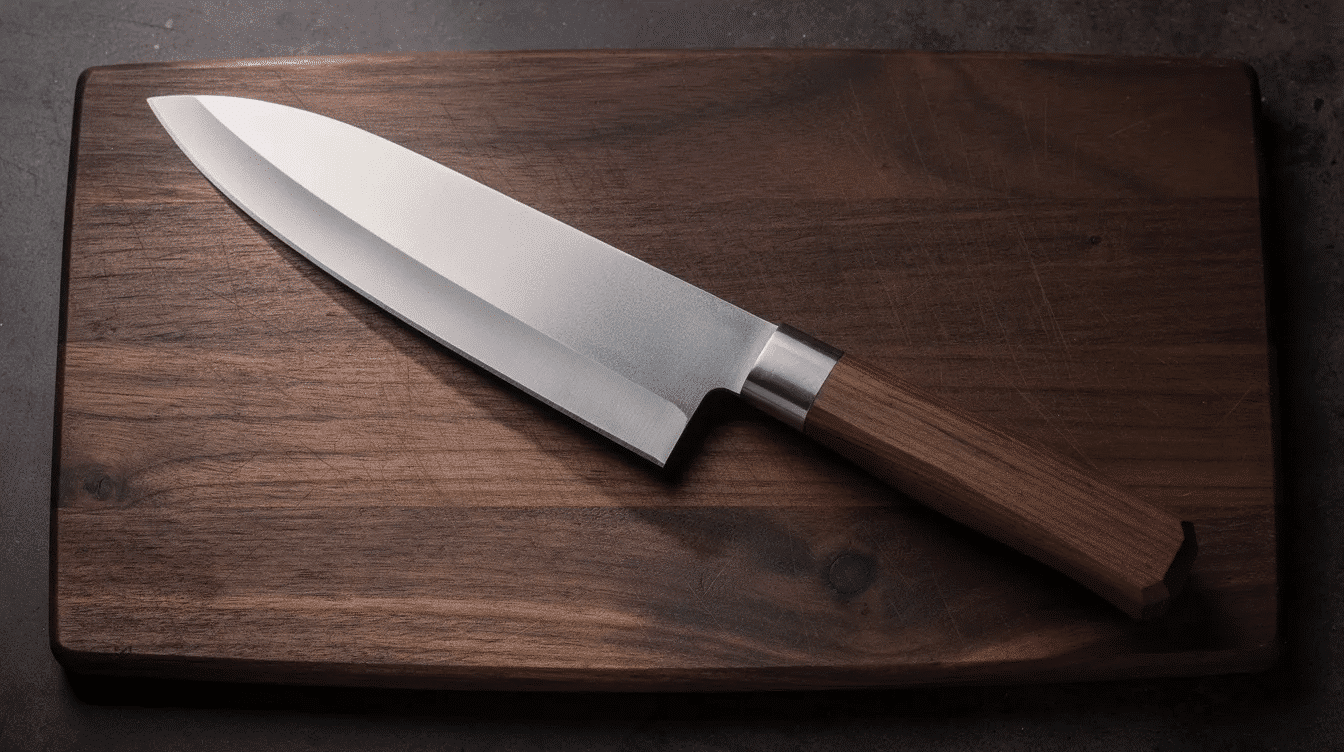
This section serves as your practical roadmap for understanding the three core all-rounders that dominate modern japanese kitchen spaces. Whether you cook for yourself or run a professional kitchen in Tokyo, these knives form the foundation of efficient prep work.
The focus here is on Santoku, Gyuto, and Bunka – the versatile workhorses that professional chefs and home cooks alike rely on. Typical blade length for all-purpose use falls between 165-210mm, a range that works equally well on compact apartment cutting boards and spacious professional stations.
You’ll discover how each knife feels in hand, what tasks it excels at, and which cooking style it matches best.
History of Japanese knife making
Japanese knife making traces directly to samurai sword traditions, where master smiths in regions like Seki and Sakai perfected layered forging techniques using tamahagane steel. This japanese craftsmanship created blades of legendary sharpness and resilience and laid the foundation for essential Japanese knife types used in modern kitchens.
The Meiji Restoration of 1868 marked a turning point. Sword bans reduced katana production, redirecting artisans toward kitchen tools. As Japan opened to Western influences and beef consumption rose after dietary restrictions lifted, smiths created the Gyuto – literally “cow sword” – originally designed for butchering Western-style meat.
Santoku emerged mid-20th century post-WWII, answering the needs of Japanese households shifting to urban, space-constrained living. Its compact shape blended the nakiri knife’s straight edge with Gyuto versatility. The nakiri knife, specifically designed for cutting vegetables, features a square, thin blade that encourages a straight-down chopping motion and typically measures between 165-180mm. This design makes the nakiri knife ideal for precise vegetable preparation, while the Santoku adapts that straight edge for broader all-purpose use.
Today’s all-purpose japanese knives fuse centuries-old forging methods with modern alloys like VG-10 stainless and blue steel, achieving hardness levels of 60-62 HRC while maintaining the precision of traditional craftsmanship, and premium makers such as Takamura knives known for precision and performance push these designs even further with advanced powdered steels.
Understanding Japanese all-purpose knives
In Japanese culinary context, “all-purpose” means one blade mastering the triad of meat, fish, and vegetables. The term “san-toku” literally translates to “three virtues,” capturing this philosophy of balanced versatility.
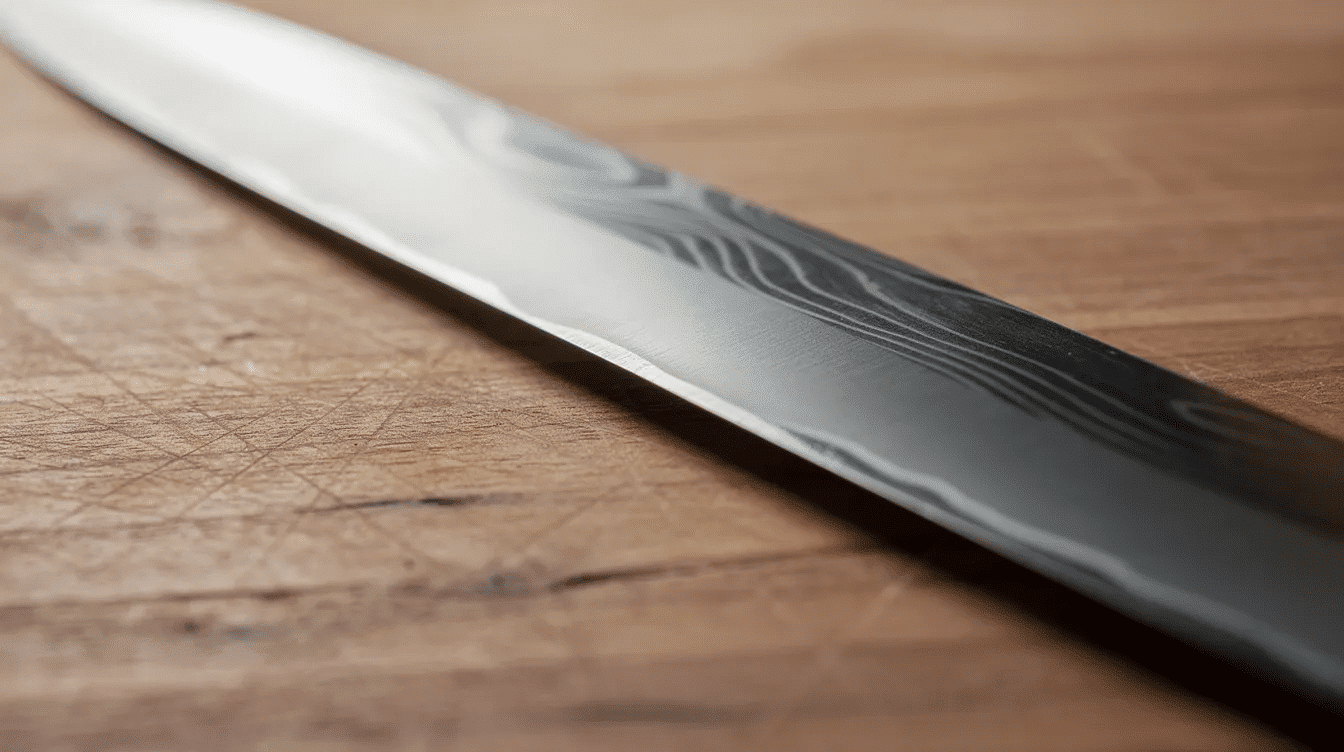
Blade geometry sets these knives apart from european counterparts. Expect a thin spine tapering to a razor edge, a flatter profile than curved Western blades, and steel hardened to 60-64 HRC. These features enable acute bevels that slice fibrous textures cleanly rather than crushing cells.
Cutting motions differ from western style techniques:
- Push-cut and pull-cut – preferred for Santoku and Bunka, keeping the blade in contact with the board
- Gentle rocking – suits Gyuto’s curved belly for herbs and fine work
While Japan produces many specialty knives (Deba for fish filleting, Usuba as a peeling knife for vegetables, Yanagiba for sashimi slicing), most home cooks can handle 90% of tasks with one all-purpose blade.
Core tasks these knives excel at: chopping onions, slicing meat, mincing herbs, trimming fish, dicing vegetables, and cutting fruits with clean edges that prevent oxidation.
Santoku
The santoku name means “three virtues” or “three uses,” referring to its balanced prowess across meat, fish, and vegetables. This shape emerged as Japan’s answer to compact, efficient home cooking.
Blade characteristics include a tall heel, relatively flat edge, and gently rounded tip. Typical length runs 150-180mm, making it ideal for smaller cutting boards and users with smaller hands. The straight edge supports rapid up-and-down push cuts rather than rocking.
Common steel options include:
Steel Type | Characteristics |
|---|---|
VG-10 stainless | Corrosion-resistant, excellent edge retention |
AUS-10 | Budget-friendly sharpness |
White steel | Traditional, takes extremely sharp edge |
High-carbon | Superior bite, requires more maintenance |
Best uses: rapid vegetable chopping like julienning carrots, precise slicing of boneless protein, and general everyday prep. The santoku commonly serves as the ideal first japanese knife for beginners. |
Gyuto
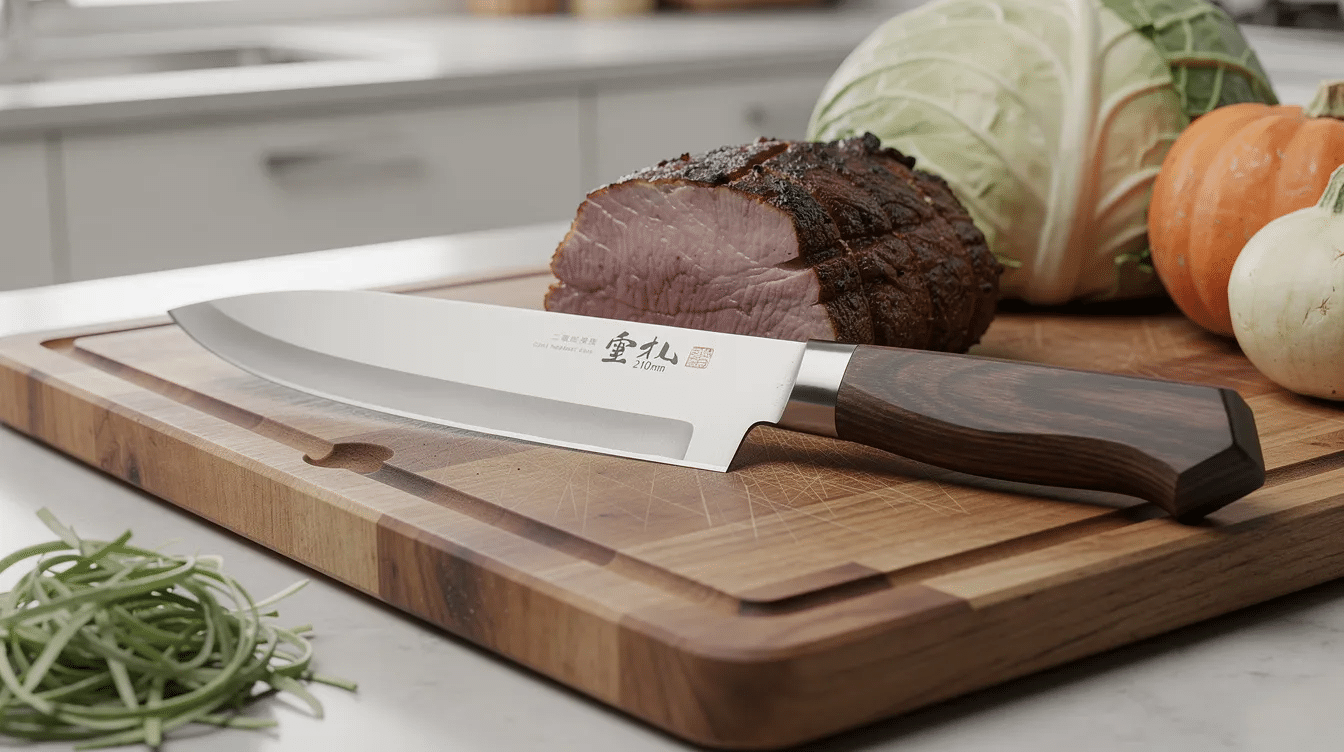
The gyuto stands as the Japanese answer to the Western chef’s knife, originally made for cutting beef when Western diet influences reached Japan. Professional chefs worldwide now consider it among the most versatile blades available, and cooks choosing a new primary chef’s knife often look to dedicated guides on the best gyuto knives to compare steel, length, and handle options.
Blade shape features a longer profile with a more pronounced belly for rocking cuts and a pointed tip for piercing. Length typically ranges 210-270mm for professional settings, with 210mm proving ideal for most home kitchens. This length handles family-sized prep without overwhelming the user.
The gyuto suits cooks who already favor a rocking motion and want one knife that stays on the board for most tasks. Compared to German-style chef’s knives, the thinner, harder blade allows finer slices and more detailed work.
Key use cases include portioning roasts, breaking down large vegetables like cabbage or squash (avoiding hard bone), slicing fish, and fine chiffonade of herbs where precision matters.
Bunka
The bunka knife presents a more traditionally-styled alternative to Santoku, featuring a distinctive reverse tanto (k-tip) profile that immediately catches the eye. This shape combines aesthetic appeal with practical precision.
Blade dimensions typically mirror Santoku at 165-180mm, but with a straighter edge and sharply angled tip. This geometry excels at detailed tip work that other all-purpose knives struggle with.
Many enthusiasts favor Bunka for its versatility across vegetables and precise cuts on meat and fish. The aggressive-looking tip proves surprisingly practical for tasks like scoring chicken skin, trimming sinew, or creating intricate vegetable garnishes that bring beauty to plated dishes.
Bunka works best with push and pull cuts on a flat board, maximizing that sharp tip’s leverage for controlled movements.

Handle and construction of Japanese all-purpose knives
The handle and construction of Japanese all-purpose knives are at the heart of what makes these tools so revered by chefs and home cooks around the world. Whether you’re reaching for a Santoku knife, Gyuto, or Bunka knife, the attention to detail in both the blade and handle reflects centuries of Japanese craftsmanship and a deep respect for the art of cooking.
Japanese kitchen knives typically feature handles crafted from high-quality woods, often sourced from native Japanese trees. This choice of material isn’t just about aesthetics—it’s about creating a comfortable, balanced grip that feels like a natural extension of your hand. The handle’s shape, often octagonal or D-shaped, is designed for precise control, allowing for effortless chopping, slicing, and dicing of meat, vegetables, and fruits. This ergonomic design is especially valued by professional chefs who spend hours at the cutting board, but it’s equally appreciated by home cooks seeking comfort and precision.
When it comes to construction, Japanese chef knives are renowned for their meticulous build quality. Many feature a full tang, where the blade runs the entire length of the handle, providing exceptional balance and durability. Some traditional Japanese knives use a half tang, which still offers a secure fit but results in a lighter overall feel—ideal for those who prefer agility and finesse in their cutting technique. The blade itself is typically forged from high-carbon steels like White Steel or Blue Steel, each chosen for its ability to achieve and maintain a razor-sharp edge. White Steel is prized for its sharpness and ease of honing, while Blue Steel offers a harmonious blend of sharpness and long-lasting durability.
A defining feature of Japanese all-purpose knives is their straight edge or gently curved profile, which supports a variety of cutting styles—from the push and pull cuts favored in Japanese cuisine to the rocking motion familiar to Western cooks. The double bevel edge, found on most Santoku and Gyuto knives, makes these blades accessible to both right and left-handed users, further enhancing their versatility in the kitchen.
Compared to Western style knives, such as the classic chef’s knife, utility knife, or paring knife, Japanese knives are typically lighter and more precisely balanced. This difference in construction allows for greater control and less fatigue during extended prep sessions. The result is a knife that not only brings beauty to your kitchen but also elevates your cooking with its sharpness, precision, and versatility.
The process of Japanese knife making is a true art form, with skilled craftsmen dedicating years to perfecting their techniques. Every step—from selecting the finest materials to forging, shaping, and sharpening the blade—is carried out with meticulous care. The result is a knife that is as much a work of art as it is a practical tool, designed to inspire confidence and creativity in every cook.
For anyone looking to discover the world of Japanese kitchen knives, understanding the handle and construction is key to appreciating their unique qualities. Whether you’re preparing a traditional Japanese meal or experimenting with new recipes, a well-crafted Japanese all-purpose knife offers the perfect balance of sharpness, comfort, and style—making every cut a pleasure and every dish a masterpiece.
How to choose the best all-purpose Japanese knife for you
Selection depends on hand size, cutting style, and typical ingredients – not just price or brand recognition. The best knife is one that feels balanced and comfortable through 20-30 minutes of continuous prep.
Santoku works best for smaller kitchens, beginners, and those favoring push-cuts on compact boards. Gyuto suits cooks already comfortable with Western chef’s knives who want maximum versatility. Bunka appeals to those valuing tip control, aesthetics, and precise work.
Ideal blade length:
- 165-180mm – compact spaces, precision work, smaller hands
- 210mm – maximum versatility on standard home boards
Steel choices in plain terms:
Steel Category | Pros | Cons |
|---|---|---|
Stainless | Rust-proof, easy care | Slightly less sharp |
Carbon | Extremely sharp | Requires immediate drying |
Powdered | Extreme edge retention | Higher cost |
Consider handle style too – traditional wa-handles (octagonal wood) optimize pinch-grip comfort and run lighter, while Western handles offer full-tang weight and familiar feel. |
Japanese all-purpose knife vs Western chef’s knife
Both styles can serve as your primary kitchen knife, but they feel distinctly different in use. Understanding these differences helps you discover which suits your cooking approach.
Feature | Japanese All-Purpose | Western Chef’s Knife |
|---|---|---|
Edge angle | 12-15° per side | ~20° per side |
Steel hardness | 60+ HRC | 56-58 HRC |
Spine thickness | 1.5-3.5mm | 2-3mm+ |
Primary motion | Push/pull slicing | Rocking, heavy chopping |
Japanese designs deliver cleaner cuts that preserve food texture, better edge retention from harder steel, and superior precision from thinner geometry. Trade-offs include increased brittleness (no prying or twisting), technique sensitivity (avoid heavy chopping through bone), and care demands (whetstones rather than simple honing rods). |
Meticulous home cooks and professional chefs who prioritize clean cuts often gravitate toward japanese knives. Those preferring robust, forgiving blades for aggressive prep may find Western knives more suitable.
Care, sharpening, and maintenance
Proper care extends the life and performance of any japanese knife by years. These tools demand more attention than their Western counterparts, but the payoff in sharpness and precision justifies the effort.
Daily habits:
- Always use a wooden or soft synthetic cutting board
- Wash by hand immediately after use
- Dry thoroughly before storage
- Never leave soaking in water
Avoid absolutely:
- Dishwashers (harsh detergents erode edges)
- Glass or stone boards (dulls edges rapidly)
- Twisting through hard materials or bone
- Using as a meat cleaver or utility knife
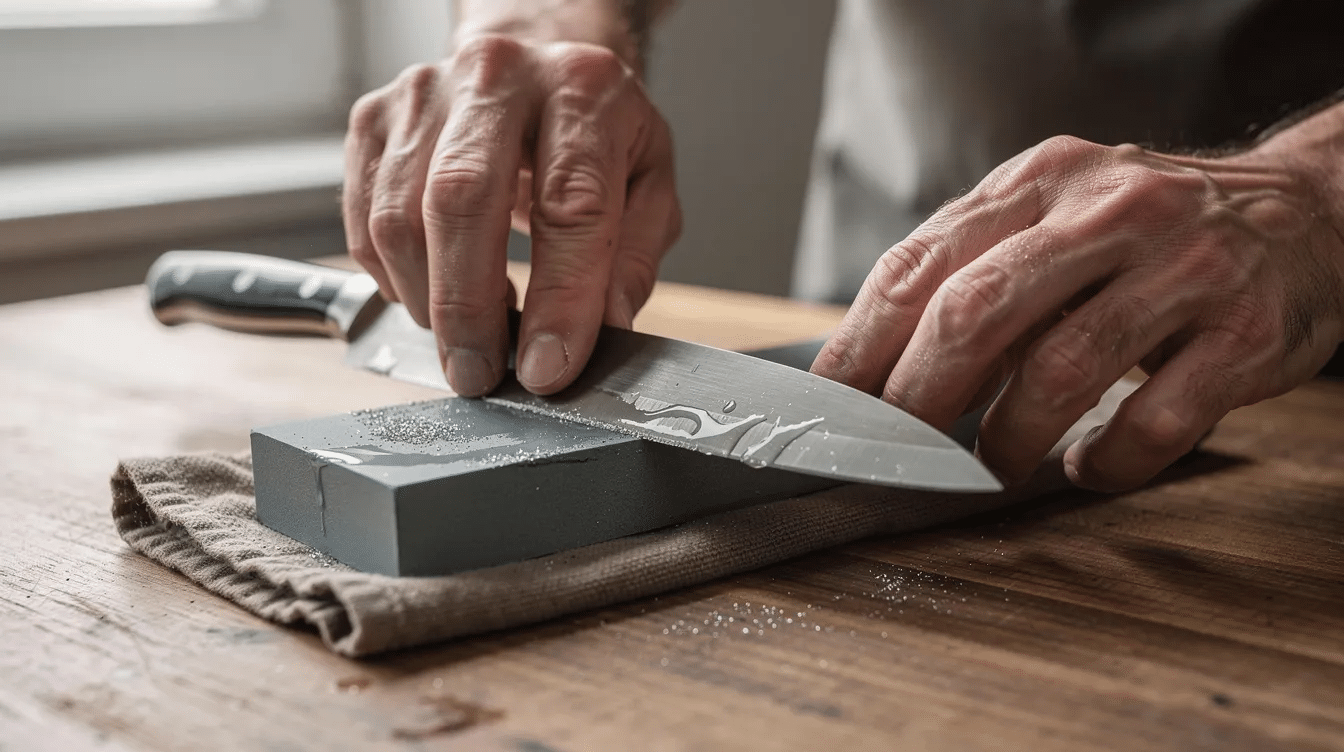
Sharpening approach: Regular maintenance involves smooth ceramic rod honing for some stainless steels, with periodic sharpening on Japanese whetstones. Start with 1000-grit to form a burr, then progress to 3000-6000 grit for polish, maintaining 15° angles.
Store your blade on a magnetic strip with edge facing up, in a dedicated guard, or within a knife block. These methods protect the fine double bevel edge from damage.
Frequently asked questions about Japanese all-purpose knives
These questions come up repeatedly among cooks exploring japanese knives for the first time.
Is Santoku, Gyuto, or Bunka best as a first Japanese knife? All three work depending on your cooking style. Santoku suits beginners with its forgiving handling and compact size. Gyuto appeals to those comfortable with Western techniques. Bunka fits cooks who value precision and aesthetics.
How many knives does a home cook actually need? One all-purpose knife plus a small paring knife or 150mm petty knife handles 95% of kitchen tasks. You can always add specialty blades later.
Do Japanese knives chip easily? Correct technique and proper boards minimize risk by 80%. Chips typically result from poor cutting surfaces (glass or stone), twisting motions, or contact with frozen food and bones – not inherent fragility.
What should I expect at different price points?
- Under $100: Basic AUS stainless, decent starters for learning
- $100-250: VG-10 Damascus, pro-home balance with excellent edge retention
- Beyond $250: Custom powdered steels, heirloom-grade craftsmanship
Prioritize edge quality over brand names. A well-crafted $150 knife from a reputable maker often outperforms flashier options at twice the price.
Start with one quality japanese all purpose knife matched to your cooking style, sharpen it properly, and you’ll wonder why you waited so long to make the switch.
