When a japanese knife crosses the $1,000 threshold, you enter a world where steel meets art and function transcends everyday cooking. These aren’t mass-produced tools—they’re hand-forged instruments created by master bladesmiths who dedicate decades to perfecting their craft.
Professional chefs and collectors alike invest in these expensive japanese kitchen knives for reasons that go beyond simple food preparation. A blade forged by a third-generation smith using techniques passed down from the Edo period offers something no factory can replicate: supernatural sharpness, perfect balance, and the kind of precision that transforms cooking into performance.
What separates a $10,000 gyuto from a $300 alternative? The difference lies in single-bevel forging where the smith hammers the billet thousands of times, premium steels like Honyaki or Blue #1 reaching 62-67 HRC hardness, and visible hamon lines that reveal the blade’s differential heat treatment. These japanese chef knives hold edges through 500+ cuts and slice through proteins without cellular damage.
In this guide, we’ve selected six exceptional knives based on craftsmanship, steel quality, cutting edge performance, and heritage from Japan’s most revered bladesmiths, building on a broader understanding of essential Japanese knife types.
- How We Chose the Best Expensive Japanese Kitchen Knives
- Top 6 Expensive Japanese Kitchen Knives for Professionals
- 1. Shigefusa Honyaki Gyuto 240mm
- Why It Stands Out
- Best For
- Key Strengths
- Possible Limitations
- 2. Yoshihide Takeda Damascus Kiritsuke 240mm
- Why It Stands Out
- Best For
- Key Strengths
- Possible Limitations
- 3. Mutsumi Hinoura White #1 Honyaki Gyuto 240mm
- Why It Stands Out
- Best For
- Key Strengths
- Possible Limitations
- 4. Takeshi Saji Rainbow Damascus Gyuto 240mm
- Why It Stands Out
- Best For
- Key Strengths
- Possible Limitations
- 5. Yoshikazu Tanaka Blue #1 Honyaki Yanagiba 300mm
- Why It Stands Out
- Best For
- Key Strengths
- Possible Limitations
- 6. Sukenari ZDP-189 Honyaki Gyuto 240mm
- Why It Stands Out
- Best For
- Key Strengths
- Possible Limitations
- Quick Comparison of the Best Expensive Japanese Kitchen Knives
- How to Choose the Right Expensive Japanese Kitchen Knife
- Which Option Is Best for You?
- Final Thoughts
How We Chose the Best Expensive Japanese Kitchen Knives
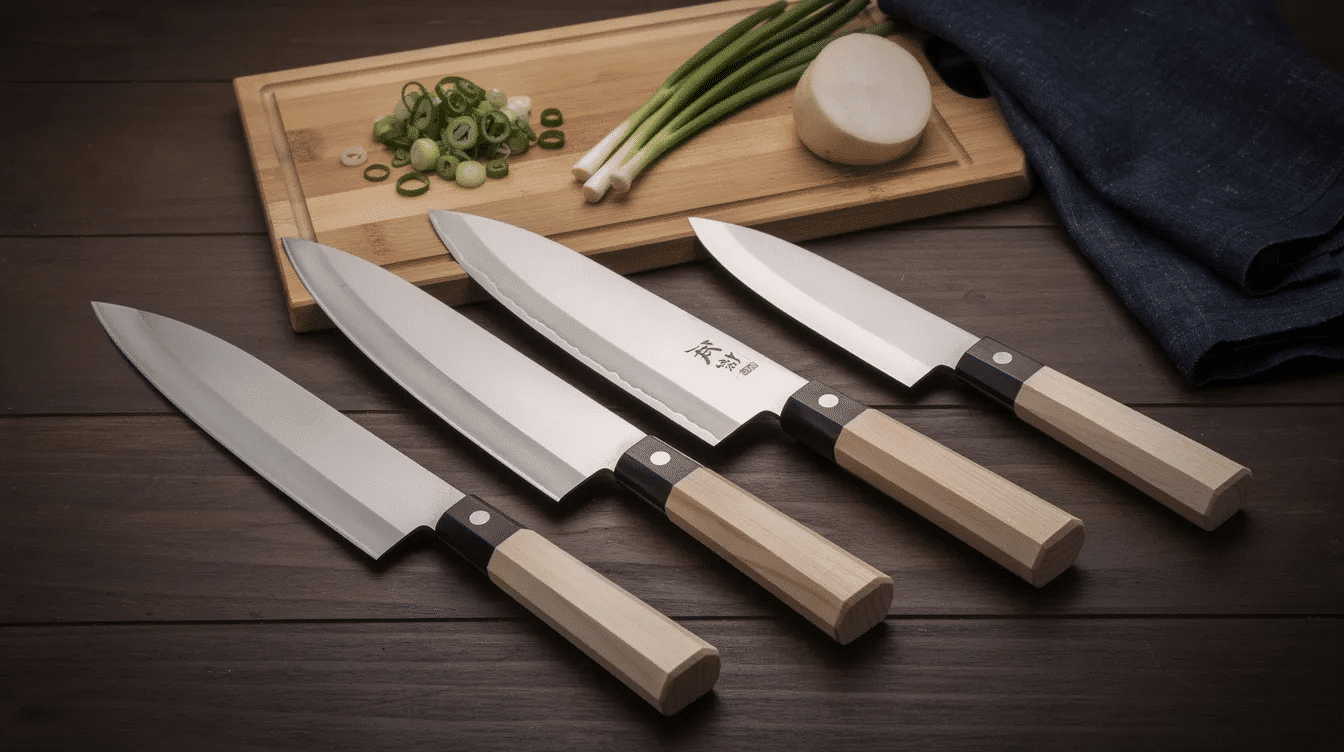
Our selection process focused on knives that belong in working kitchens, not just display cases. While these blades qualify as art, they must first excel at their primary purpose: cutting food with precision that cheaper options simply cannot match.
Steel Quality and Composition
We evaluated traditional japanese steels including:
- Honyaki (single steel type requiring expert heat control)
- Damascus with 100-500+ folded layers
- Advanced powder steels like ZDP-189
- White #1 and Blue #1 carbon steel varieties
Craftsmanship Heritage
Every knife comes from bladesmiths with 20-50 years of experience, representing family dynasties and regional traditions from Sakai, Seki, Kyoto, and Echizen.
Performance Metrics
We assessed:
- Edge retention through extended cutting tests
- Sharpness capable of achieving sub-0.2mm edges
- Balance achieved via distal taper
- Handle ergonomics using materials like ebony handle wood, urushi-lacquered magnolia, and octagonal ho wood
Authenticity and Value
All selections come from reputable dealers, ensuring no mass-produced counterfeits. We also considered long-term collectibility, as authentic pieces from master smiths appreciate 15-30% yearly according to collector forums.
Top 6 Expensive Japanese Kitchen Knives for Professionals
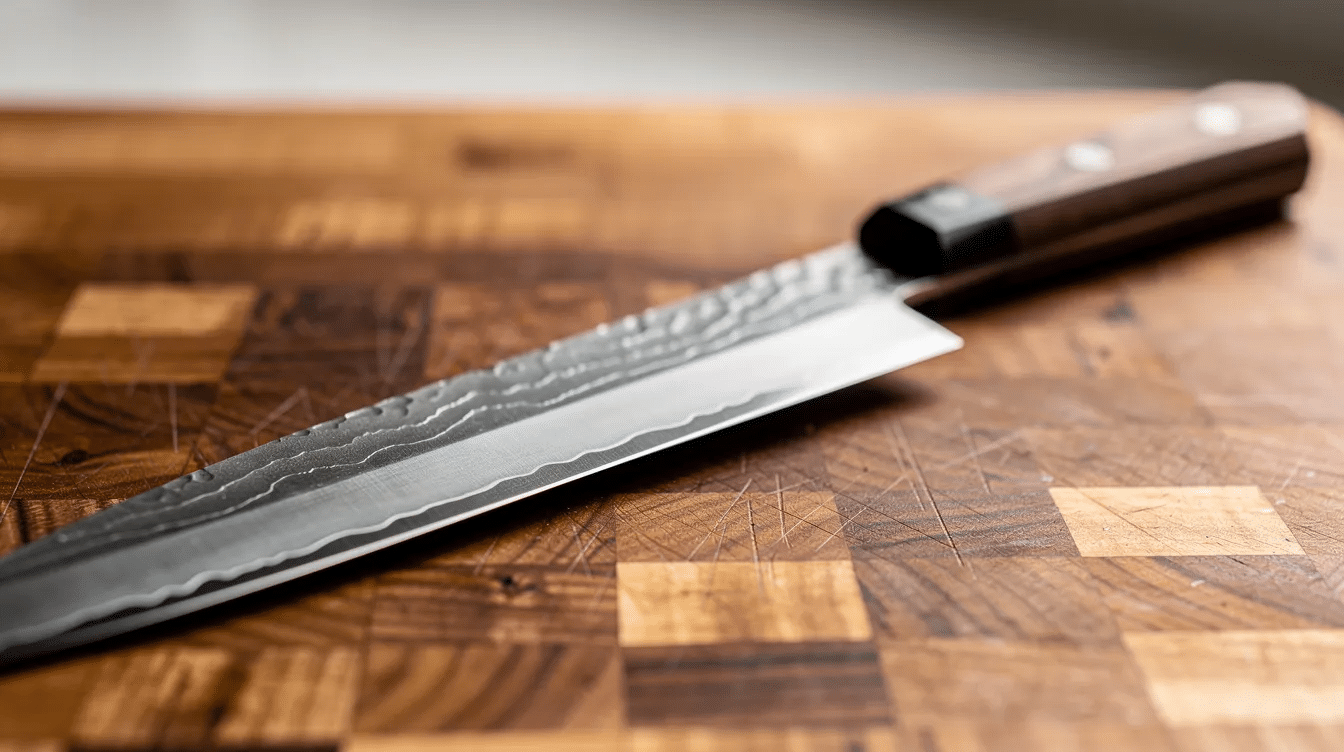
These six knives represent the pinnacle of what traditional japanese bladesmithing can achieve. Each offers distinct characteristics suited to different cooking styles, aesthetic preferences, and collection goals.
1. Shigefusa Honyaki Gyuto 240mm
Forged by Shigeki Tanaka—a third-generation smith from the San-in region—this blade represents the absolute pinnacle of japanese knife artistry. The Shigefusa name carries weight that few other knives can match, commanding respect from chefs and collectors worldwide.
Price range: $12,000-$15,000+
Why It Stands Out
The flawless hamon line on a Shigefusa blade mirrors Mount Fuji’s silhouette or ocean waves, achieved through meticulous clay application during quenching. The mirror finish reflects light like liquid mercury, revealing craftsmanship that borders on supernatural.
Rarity drives much of its prestige. Tanaka produces only 5-10 honyaki pieces annually, creating waiting lists stretching 3+ years. At auction, custom orders regularly exceed $20,000, with values rising 20-30% yearly.
Best For
- Master chefs seeking the pinnacle of traditional forging technique
- Serious collectors building investment-grade knife collections
- Professionals who understand that one thing sets apart legend from excellence: patience and dedication
Key Strengths
Attribute | Details |
|---|---|
Craftsmanship | Legendary third-generation bladesmith |
Edge Precision | Honyaki construction for supreme sharpness |
Investment Value | Documented appreciation of 20-30% annually |
Aesthetic | Museum-quality hamon and mirror polish |
Possible Limitations
- Extreme price point limits accessibility to elite buyers
- 3+ year waiting periods for authentic pieces
- Carbon steel demands daily strop maintenance to prevent rust
2. Yoshihide Takeda Damascus Kiritsuke 240mm
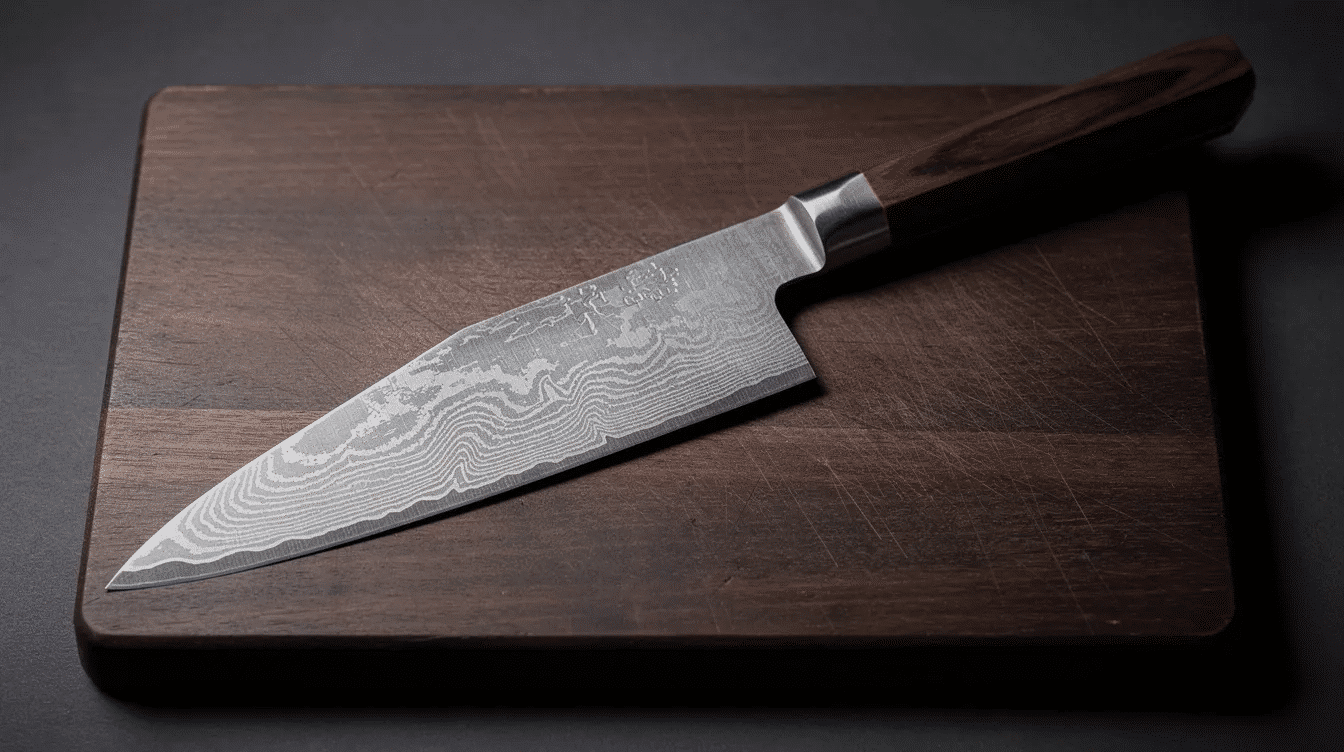
The late Yoshihide Takeda (passed 2021) created japanese blades that blur the line between functional tools and fine art. His Takefu workshop produced knives with signature 300+ layer ripple damascus patterns that mesmerize even experienced collectors.
Price range: $10,000-$12,000
Why It Stands Out
Takeda’s damascus steel features a high-carbon core folded with iron, creating hypnotic moiré patterns unlike any other knives on the market. The layered steel construction provides both beauty and structural integrity.
The kiritsuke shape—with its angled tip and flat belly—excels at rocking cuts and scooping, offering versatility that specialized blades cannot match. This style demands skill but rewards users with a single piece capable of handling diverse kitchen tasks.
Best For
- Chefs who want multipurpose functionality with artistic appeal
- Collectors attracted to Damascus aesthetics and pattern variation
- Professionals seeking a conversation piece that performs under pressure
Key Strengths
Attribute | Details |
|---|---|
Pattern Beauty | 300+ layer ripple Damascus |
Versatility | Kiritsuke design handles multiple cutting styles |
Legacy | Final works from a deceased master smith |
Construction | Hand-forged in Takefu workshop |
Possible Limitations
- Kiritsuke shape requires skilled technique to use effectively
- Damascus patterns need oiling to preserve visual appeal
- Wide blade profile may feel unfamiliar to western knives users
3. Mutsumi Hinoura White #1 Honyaki Gyuto 240mm
The Hinoura family dynasty in Sakai carries over 500 years of blade-making roots. This heritage shows in every detail of their White #1 Honyaki, which represents traditional japanese craftsmanship at its purest.
Price range: $8,000-$11,500
Why It Stands Out
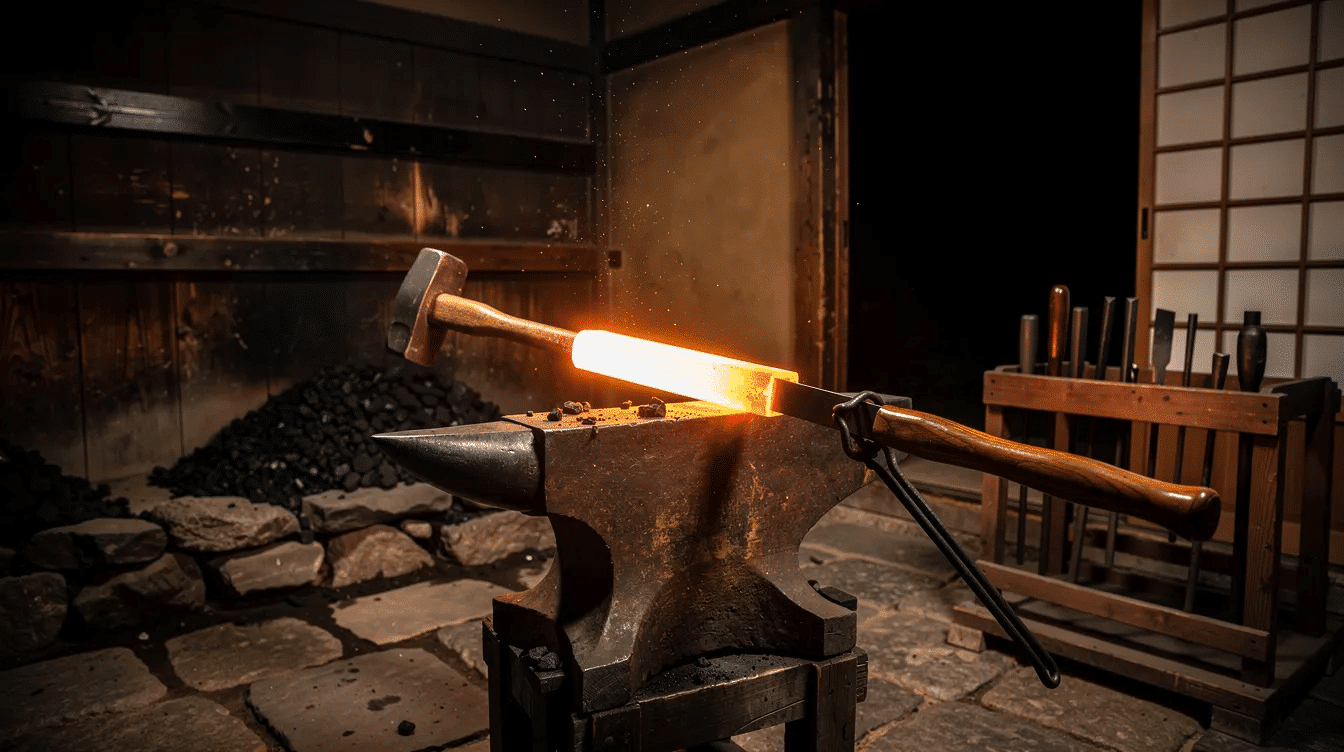
Pure Shirogami #1 steel—99.5% iron with 1.25-1.5% carbon—achieves edges reaching 62-64 HRC through traditional yaki-ire heat treatment. The vivid hamon line tells the story of the blade’s creation, while the urushi lacquer handle hardens like resin for durability that lasts a life time.
This knife exemplifies what happens when bladesmiths refuse to compromise on material or technique. The sharpness pushes through tomatoes without drag, making every cut feel effortless.
Best For
- Traditionalists who appreciate authentic Japanese aesthetics
- Chefs focused on maximum edge sharpness above all else
- Purists seeking knives forged using century-old techniques
Key Strengths
Attribute | Details |
|---|---|
Steel Purity | 99.5% iron Shirogami #1 |
Hardness | 62-64 HRC for extreme edge retention |
Handle | Urushi lacquer over traditional wood |
Heritage | 500+ years of family bladesmithing |
Possible Limitations
- Carbon steel requires careful maintenance and regular sharpening
- Blade develops patina and risks staining with acidic foods
- Higher maintenance demands than stainless alternatives
4. Takeshi Saji Rainbow Damascus Gyuto 240mm
Working from his Fukui workshop in Echizen, Takeshi Saji pushes the boundaries of what damascus can achieve. His patented heat-tinting process creates iridescent rainbow hues that make each blade unique.
Price range: $6,000-$10,800
Why It Stands Out
Saji’s innovation involves heating 500+ Damascus layers using rare alloys like SRS13 at precise temperatures (800-1000°C), creating oxidation patterns that shift through the spectrum. The result is a knife that functions as both cutting edge tool and artistic expression.
Each blade’s unique pattern means no two Saji knives look identical. The beauty complements proven performance in professional kitchens, where these blades have earned respect from demanding chefs.
Best For
- Chefs who want their tools to spark conversation
- Collectors interested in innovative Damascus artistry
- Home cooks ready to invest in a uniquely beautiful performer
Key Strengths
Attribute | Details |
|---|---|
Visual Impact | Patented rainbow Damascus coloring |
Uniqueness | Individual character in every blade |
Performance | Proven cutting ability in professional settings |
Innovation | Pushing traditional technique boundaries |
Possible Limitations
- Distinctive appearance may clash in minimalist kitchen setups
- Coloring fades without careful hand-washing
- Bold look isn’t for everyone—some prefer understated elegance
5. Yoshikazu Tanaka Blue #1 Honyaki Yanagiba 300mm
For sushi masters and Japanese cuisine specialists, this 300mm yanagiba represents the ultimate slicing instrument. Crafted in Kyoto by white steel specialists, it embodies precision that transforms sashimi preparation into art.
Price range: $8,000-$10,000
Why It Stands Out
Blue #1 (Aogami #1) steel contains 1.4% carbon with trace tungsten and molybdenum for toughness that pure carbon lacks. The single-bevel right-handed grind, specially designed for pull-cutting, minimizes tearing on delicate proteins.
The mirror polish reveals subtle hada grain patterns while the 300mm length enables whole fish filleting in a single stroke. This is the knife that separates professional sashimi from amateur attempts.
Best For
- Sushi masters committed to authentic technique
- Japanese cuisine specialists who understand single-bevel precision
- Chefs who need to fillet whole fish without multiple passes
Key Strengths
Attribute | Details |
|---|---|
Steel | Blue #1 with tungsten/molybdenum |
Grind | Single-bevel right-handed design |
Length | 300mm for whole fish work |
Finish | Mirror polish with visible hada grain |
Possible Limitations
- Highly specialized—limits versatility for general cooking
- Requires diamond stones for proper sharpening
- Single-bevel design takes time to master
6. Sukenari ZDP-189 Honyaki Gyuto 240mm
When modern metallurgy meets traditional forging, you get the Sukenari ZDP-189. This knife represents the cutting edge of steel technology, offering performance that carbon steel purists might not imagine possible.
Price range: $5,000-$8,200
Why It Stands Out
Hitachi’s ZDP-189 powder metallurgy steel contains 3% carbon and 20% chromium, quenched to an extraordinary 66-67 HRC. Lab tests show this hard steel holds its edge through 1000+ cuts—roughly double what traditional carbon achieves.
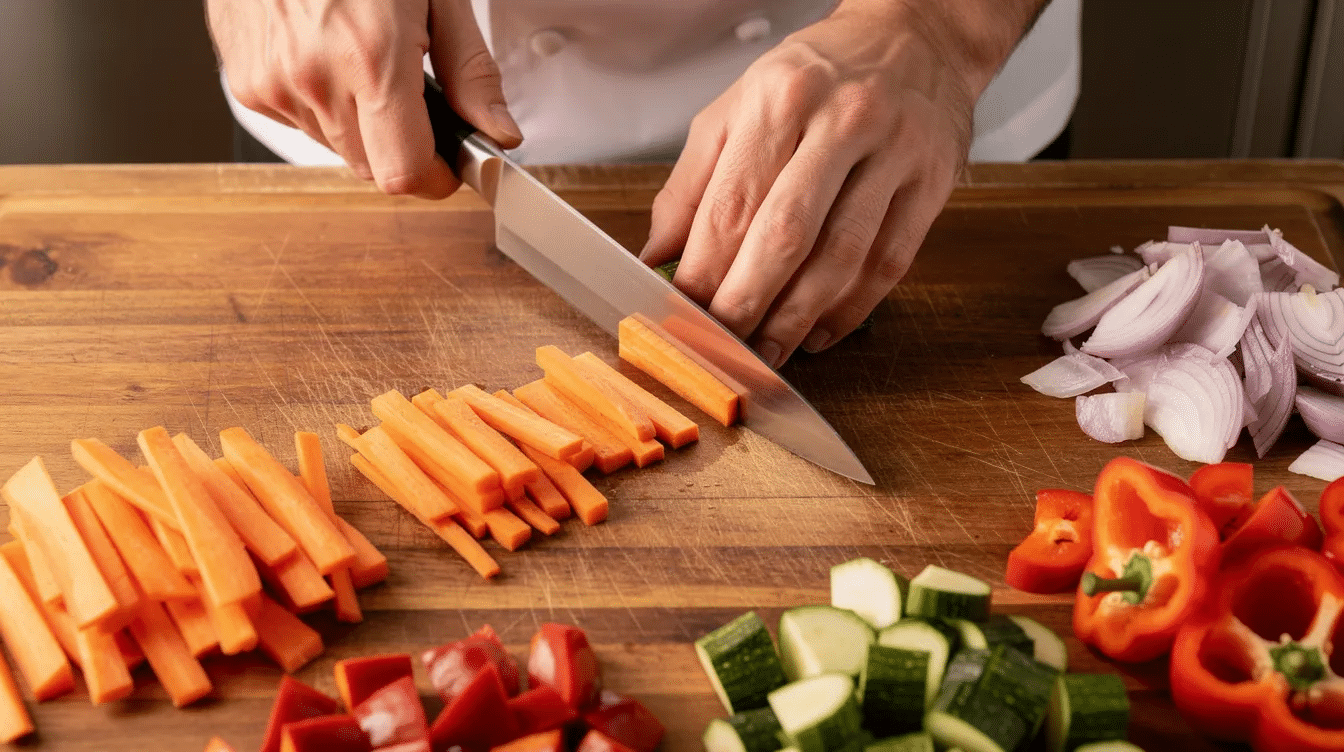
Honyaki forging in Seki preserves luxury aesthetics while the stainless composition resists sticking and corrosion. It’s the well balanced choice for chefs who refuse to compromise between performance and practicality.
Best For
- Performance-driven professional chefs
- Knife enthusiasts interested in advanced steel technology and curious how it compares to other high-performance makers like Takamura knives
- Busy professionals who need maximum edge retention with easier maintenance
Key Strengths
Attribute | Details |
|---|---|
Hardness | 66-67 HRC—among the hardest kitchen knives available |
Edge Retention | 1000+ cuts per sharpening cycle |
Corrosion Resistance | High chromium content reduces rust risk |
Construction | Honyaki forged in Seki |
Possible Limitations
- Extreme hardness creates brittleness—avoid bones and frozen food
- Requires professional-level 1000/3000/8000 grit sharpening routines
- Less forgiving than softer steels if dropped or misused
Quick Comparison of the Best Expensive Japanese Kitchen Knives
Knife | Price Range | Best For | Steel Type |
|---|---|---|---|
Shigefusa Honyaki | $12,000-$15,000+ | Ultimate prestige and traditional artistry | Honyaki carbon |
Takeda Damascus | $10,000-$12,000 | Versatile cutting with artistic appeal | 300+ layer Damascus |
Mutsumi Hinoura | $8,000-$11,500 | Traditional Japanese knife purists | White #1 carbon |
Takeshi Saji | $6,000-$10,800 | Unique artistic expression with performance | Rainbow Damascus |
Yoshikazu Tanaka | $8,000-$10,000 | Sushi and Japanese cuisine specialists | Blue #1 carbon |
Sukenari ZDP-189 | $5,000-$8,200 | Modern performance and edge retention | ZDP-189 powder steel |
Quick Decision Guide: |
- Highest prestige: Shigefusa
- Most artistic: Takeshi Saji
- Purest tradition: Mutsumi Hinoura
- Best value: Sukenari ZDP-189
- Most specialized: Yoshikazu Tanaka
- Most versatile: Takeda Damascus
How to Choose the Right Expensive Japanese Kitchen Knife
Choose Based on Intended Use
Different knife shapes serve distinct purposes. Consider what you’ll actually cook:
- Gyuto (240mm): All-purpose chopping, slicing, and mincing—handles everything from garlic to potatoes to proteins, making it the flagship among Gyuto chef’s knives
- Kiritsuke: Versatile with rocking capability—good for bread, vegetables, and general prep
- Yanagiba: Specialized slicer for sashimi, sushi, and delicate proteins
Imagine your typical day in the kitchen. If you’re portioning beef, making sandwiches, and prepping vegetables, a gyuto offers the versatility you need. If you’re running a sushi counter, the yanagiba becomes essential.
For everyday use, gyuto shapes provide the most flexibility. Specialized blades like yanagiba reward expertise but limit what you can accomplish with a single knife. Some chefs build a collection over time; others prefer one exceptional piece for most tasks.
Choose Based on Steel Preference
Your tolerance for maintenance should guide steel selection:
Carbon Steel (White #1, Blue #1)
- Superior initial sharpness and edge feel
- Develops patina with use (some find this beautiful)
- Requires daily oiling, whetstone honing every few weeks
- Risks rust if left wet or exposed to acidic food
Stainless and Powder Steels (ZDP-189)
- Excellent edge retention without corrosion concerns
- Easier maintenance—less careful attention required
- Slightly different edge feel than pure carbon
- Harder steels require expert sharpening technique
Damascus (San Mai and Multi-Layer)
- Combines hard core with protective outer layers
- Stunning visual patterns on the blade
- Requires oiling to preserve pattern appearance
- Hammered finish or smooth options available
Choose Based on Budget and Collectibility
These kitchen knives represent investments. Consider:
- Entry point ($5,000-$8,000): Sukenari offers exceptional value with modern steel
- Mid-range ($8,000-$12,000): Hinoura, Tanaka, and Saji balance artistry with relative accessibility
- Prestige tier ($12,000+): Shigefusa and rare Takeda pieces with investment appreciation potential
Current 2025 trends show 15% price increases due to yen weakness and master smith retirements. Waiting lists inflate collectibility—a 3-year wait adds perceived value beyond material worth.
Never purchase without verifying authenticity. Counterfeits from overseas markets plague online sales. Work only with reputable dealers like established Japanese knife specialists who guarantee provenance.
Which Option Is Best for You?
Choose Shigefusa if you want the most prestigious japanese knife available and can afford the price and wait time. This is the knife other knives are measured against.
Choose Takeda Damascus if you prefer artistic Damascus with versatile functionality. The kiritsuke shape handles diverse tasks while the ripple pattern stands out in any collection.
Choose Hinoura if you value traditional craftsmanship and pure carbon steel performance. This knife represents 500 years of family heritage in every cut.
Choose Saji if you want unique artistry that still performs in professional kitchens. No two Saji knives look alike, giving you a true one thing only you possess.
Choose Tanaka if you specialize in Japanese cuisine and sushi preparation. The yanagiba design achieves precision that gyutos cannot replicate.
Choose Sukenari if you prioritize cutting-edge steel technology and maximum performance. The ZDP-189 represents the future of knife materials.
Final Thoughts
These expensive japanese kitchen knives represent where craftsmanship meets peak performance. Each blade carries generations of knowledge from Japan’s master bladesmiths, forged using techniques refined over centuries.
The best choice depends on your cooking style, budget, and whether you’re building a working chef’s arsenal or a collector’s box of treasures. A Shigefusa might never see everyday action, while a Sukenari could stand on your counter as a daily tool.
Proper care separates those who appreciate these investments from those who damage them. Use ceramic honing rods, balsa strops, and careful hand-washing. Store in knife blocks with proper tip protection. Never cut on hard surfaces like glass or granite.
Most critically, source authentically. Work with established dealers who verify provenance and offer free returns. The world of premium japanese blades rewards the careful buyer who does research before committing thousands of dollars.
Whether you’re a cook seeking supernatural cutting precision or a collector chasing beasts of beauty and function, these knives deliver what no mass-produced alternative can match: the feeling of holding history in your hand while creating something delicious.
