
Japanese knives deliver superior sharpness and precision cutting, while German knives offer better durability and versatility. The answer to which is “best” depends entirely on your cooking style, maintenance commitment, and the tasks you perform most often in the kitchen.
Below is a detailed comparison of Japanese and German knives across the factors that matter most.
- Introduction to Chef Knives
- History and Development of Japanese and German Knives
- Japanese vs. Other Knives: Key Differences
- Steel Quality and Hardness
- Sharpness and Cutting Precision
- Durability and Maintenance Requirements
- Cutting Performance and Versatility
- Ergonomics and Comfort
- Damascus Steel and Its Benefits
- Price and Value Considerations
- The Importance of Personal Preference
- Are Japanese Knives the Best? The Verdict
Introduction to Chef Knives
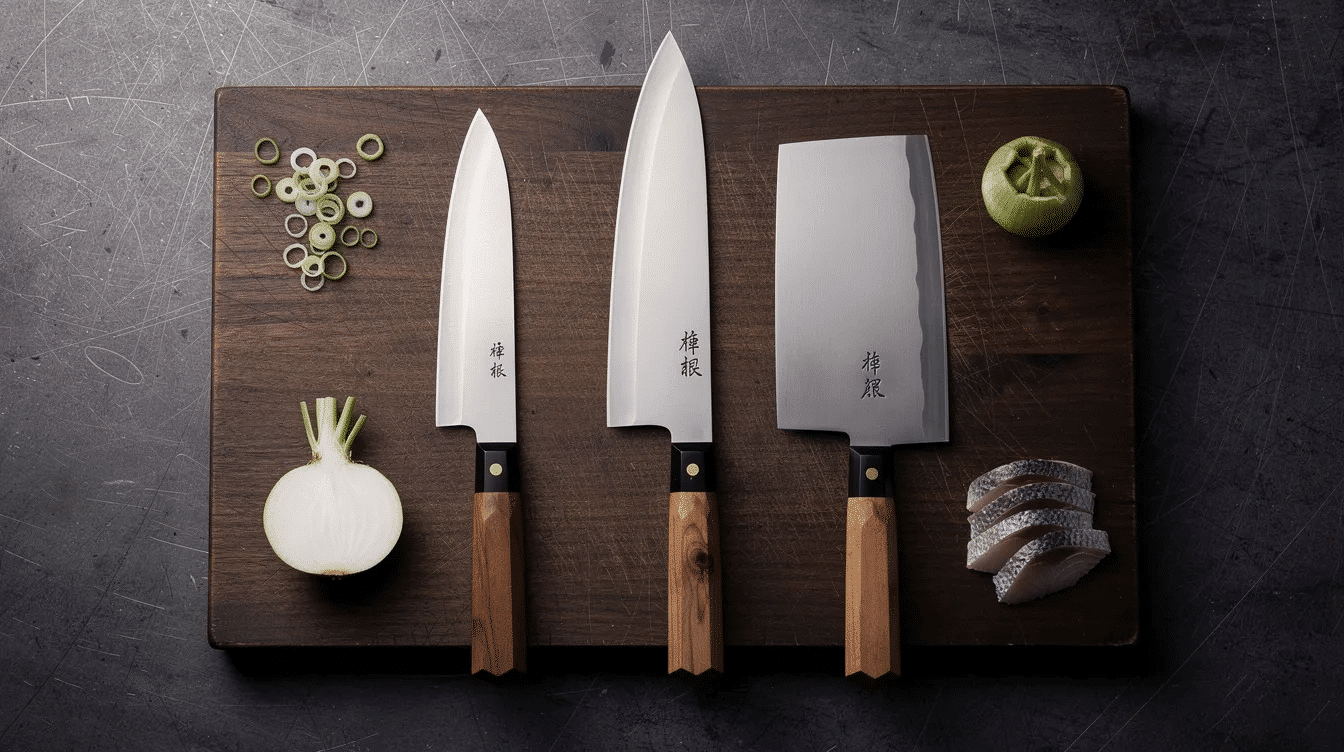
Chef knives are the cornerstone of any well-equipped kitchen, serving as the primary cutting tool for a wide range of culinary tasks. Whether you’re a home cook or a seasoned culinary professional, the quality and design of your chef knife can make a significant difference in your cooking experience. Among the most respected options are Japanese knives and German knives, each renowned for their craftsmanship and performance. Japanese knives are celebrated for their razor-sharp edges and ability to deliver precise cuts, making them ideal for tasks that require delicacy and accuracy. In contrast, German knives are valued for their robust construction and versatility, excelling in kitchens where durability and adaptability are essential. As we explore the world of chef knives, we’ll compare the unique features of Japanese and German knives, helping you understand what sets these high-quality knives apart and how to choose the best cutting tool for your needs.
History and Development of Japanese and German Knives
The evolution of Japanese and German knives is deeply rooted in their respective cultural and culinary histories. Japanese knives, such as the santoku knife and gyuto knife, trace their origins back to the art of samurai sword making. This tradition emphasized creating blades with exceptional sharpness and precision, qualities that remain central to traditional Japanese knives today. Over centuries, Japanese knife makers refined their techniques to produce specialized blades for various cutting tasks, from slicing raw fish to preparing intricate vegetable garnishes.
German knives, including the iconic German chef’s knife, have a long-standing heritage in regions like Solingen, known as the “City of Blades.” German knife production focused on crafting durable, versatile knives capable of handling a wide range of cutting tasks in Western kitchens. The result is a collection of knives designed for strength, reliability, and all-purpose use, with blade shapes and cutting edges tailored to the demands of European cooking.
Understanding the history and development of Japanese and German knives reveals why these tools are so distinct. The influence of sword making on Japanese knives led to the creation of blades optimized for precise, clean cuts, while the German tradition prioritized toughness and versatility for everyday kitchen use. This historical context can help you appreciate the unique qualities of each style and guide your choice when selecting a chef knife for your own cooking needs.
Japanese vs. Other Knives: Key Differences
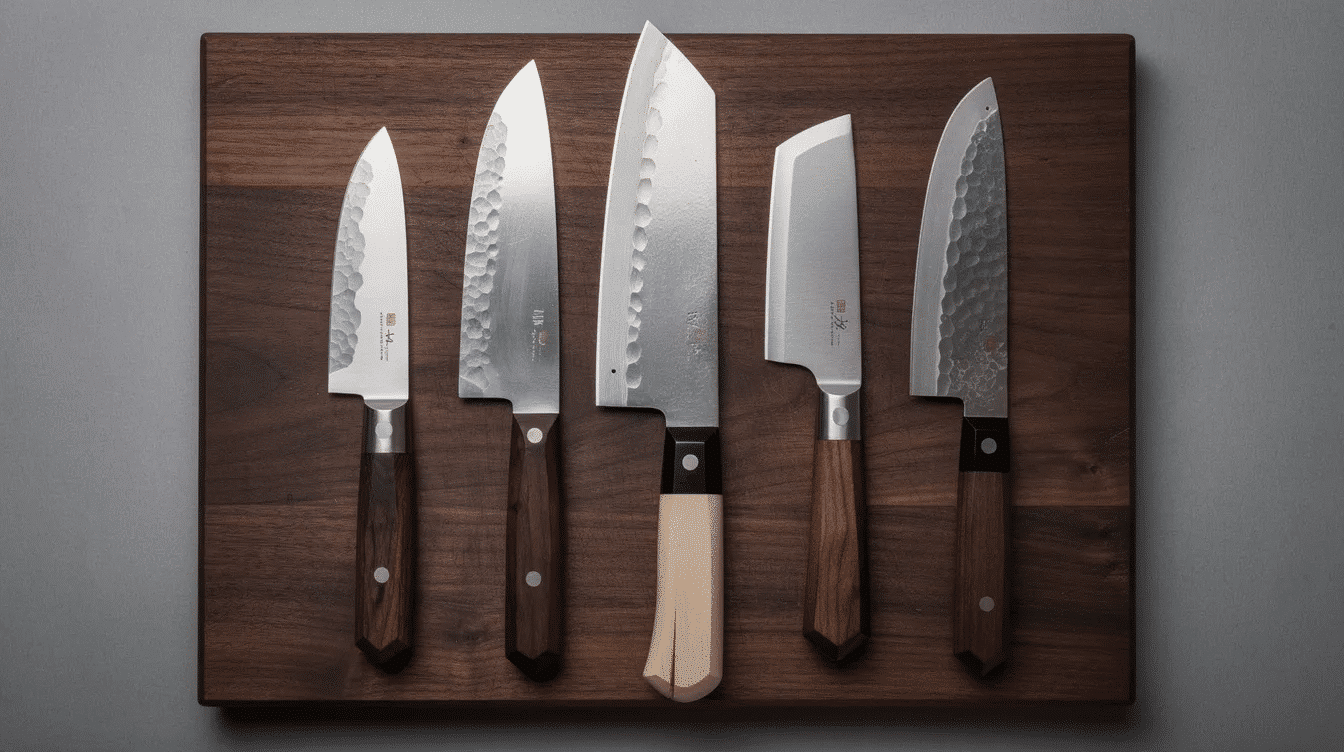
The distinction between Japanese knives and western style knives comes down to different design philosophies.
- Japanese blades prioritize razor sharp edge geometry and precise cuts for delicate work.
- German knives tend toward toughness, versatility, and forgiving maintenance.
Blade design, especially blade shape and curvature, plays a major role in how these knives are used. Japanese knives often feature a flatter profile, which is ideal for precise slicing and push or tap chopping techniques. In contrast, the more pronounced curve of a German chef’s knife supports rocking and mincing motions, making it better suited for those cutting styles.
Steel quality, hardness, blade shape, and cutting edge angles all influence real-world performance. Japanese steel typically reaches 60-66 HRC on the Rockwell hardness scale, while German steel sits around 56-58 HRC. This fundamental difference affects everything from edge retention to chipping risk.
Both German and Japanese knives can excel in professional kitchen environments. Traditional Japanese knives evolved from sword making traditions dating back centuries, while German style knives developed for Western cooking techniques emphasizing rock chop motions and all-purpose utility. The German chef’s knife, with its pronounced curve and robust tip, is particularly well-suited for rocking and mincing, contrasting with the flatter, more delicate profile of Japanese gyuto knives.
Steel Quality and Hardness
Steel composition determines how sharp a knife can become, how long it stays sharp, and how much abuse it can handle.
Japanese Steel in Knife Making
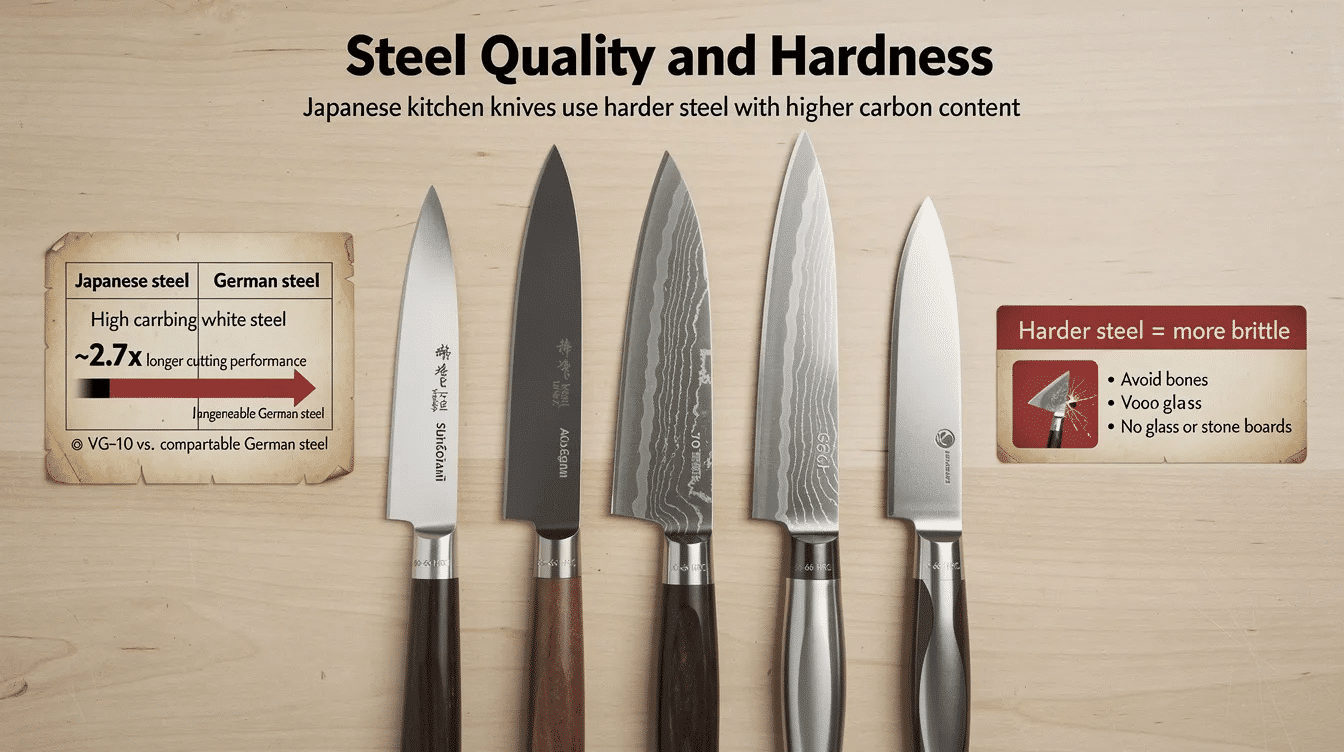
Japanese kitchen knives use harder steel with higher carbon content than their Western counterparts. Premium Japanese chef knives typically feature:
- High carbon steel varieties like white steel (Shirogami) and blue steel (Aogami)
- Modern stainless options including VG-10 and SG2 powder steel
- Damascus steel cladding for aesthetics and corrosion protection
- Hardness ratings of 60-66 HRC enabling exceptionally fine edge geometry
This harder steel allows Japanese blades to achieve and maintain a sharper edge far longer than softer steel alternatives. In testing, VG-10 Japanese steel maintained cutting performance approximately 2.7 times longer than comparable German steel during slicing tasks.
The trade-off is brittleness. Many Japanese knives chip more easily under lateral stress, contact with bones, or use on inappropriate cutting board surfaces like glass or stone.
German and Western Knife Steel
German blades use softer steel that prioritizes durability over maximum sharpness. Common characteristics include:
- Stainless steel construction using alloys like X50CrMoV15
- Hardness ratings of 56-58 HRC for improved toughness
- Higher chromium content providing corrosion resistance
- Steel that rolls rather than chips under stress
Western knives sacrifice ultimate sharpness for forgiveness. The softer steel handles accidental twisting, contact with harder ingredients, and less precise technique without catastrophic damage.
This makes German knives made with these alloys more practical for busy home kitchens where careful handling isn’t always possible.
Sharpness and Cutting Precision
Blade geometry and edge angles determine how cleanly a knife cuts through ingredients. A sharp blade is essential for clean, effortless slicing and helps preserve the texture of ingredients, which is especially important in Japanese cuisine.
Japanese Knife Sharpness
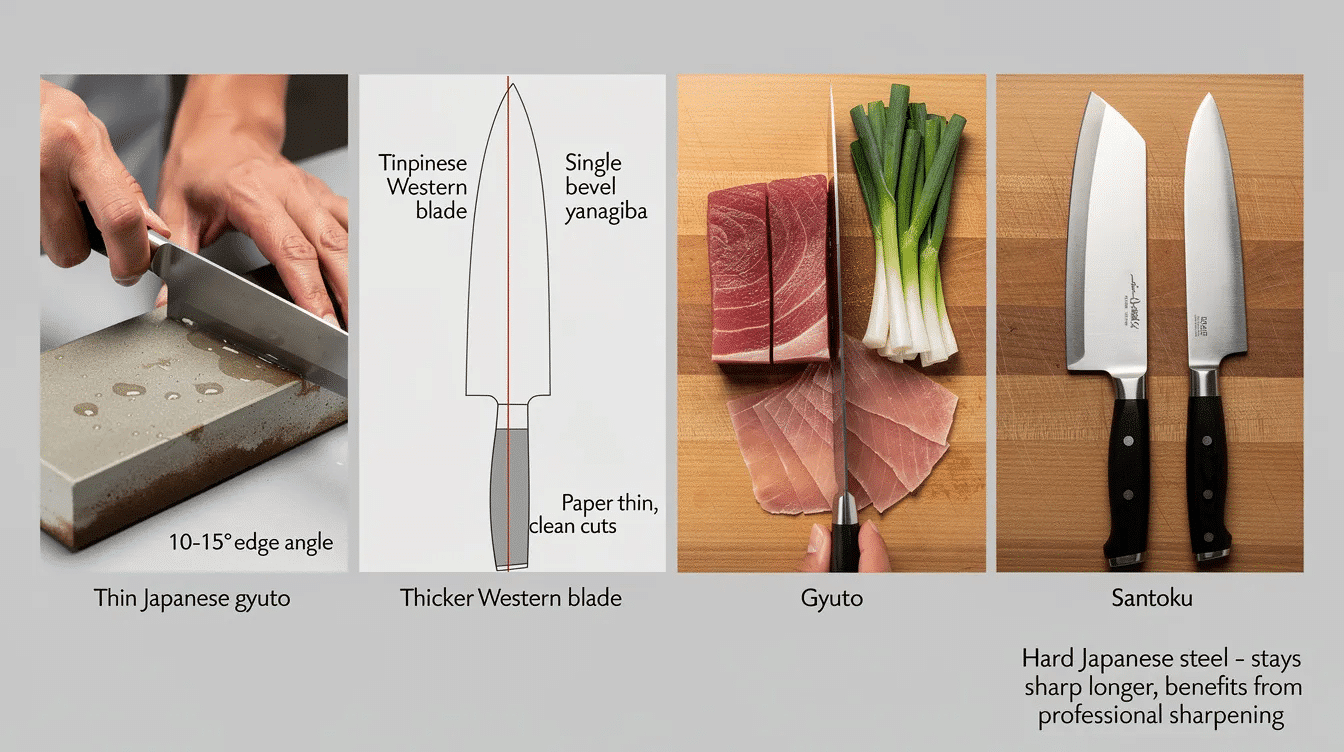
Japanese knives achieve exceptional sharpness through acute edge angles of 10-15 degrees per side. Combined with thin blade profiles and harder steel, this creates:
- Minimal cutting resistance through delicate ingredients
- Clean slicing without crushing or tearing fibers
- Superior performance for precise slicing of raw fish and vegetables
- Paper-thin cuts impossible with thicker Western blades
Traditional Japanese knives like the yanagiba use single bevel blades ground on one side only, achieving even sharper results for specialized tasks. The gyuto knife and santoku knife represent Japanese adaptations of western style knives with these sharper edge characteristics.
A sharp knife using Japanese steel stays sharp longer, reducing the frequency of sharpening stone sessions compared to German alternatives. Due to the hardness and fine edge of Japanese knives, they often benefit from being professionally sharpened to maintain their quality and avoid damage.
German Knife Sharpness
German chef’s knife designs use wider edge angles of 17-20 degrees, creating a more durable cutting edge that sacrifices ultimate sharpness for reliability.
Characteristics include:
- Double bevel edges ground symmetrically on both sides
- Curved blade profiles facilitating rocking motion cutting
- Reliable sharpness for various cutting tasks including tough vegetables
- Sharp point, making the knife especially useful for working with meat and enabling precise slicing and dicing
- Less precise but more practical for everyday cooking
Western knives with these wider angles require less skill to maintain and resist damage from aggressive cutting techniques. For culinary professionals processing large volumes quickly, this predictability offers real value.
Durability and Maintenance Requirements
How much care a knife demands affects whether it performs well long-term.
Japanese Knife Maintenance
The same properties that make Japanese blades exceptionally sharp create higher maintenance demands:
- Whetstone sharpening using proper technique and grit progression
- Careful handling to avoid chipping the fine edge
- Immediate drying and occasional oiling for carbon steel varieties
- Avoidance of twisting motions, frozen foods, and bone contact
High quality knives from Japan, including high-performance Takamura knives, require more skill to maintain properly. Poor sharpening technique can ruin blade geometry, and honing rod use is less effective on harder steel. Japanese knives are made for users willing to invest time in proper care.
Carbon steel traditional Japanese knives develop patina and rust without diligent maintenance, though stainless varieties like VG-10 reduce this concern.
German Knife Maintenance
German knives offer more forgiving maintenance suited to average home cooks:
- Simple honing steel use between professional sharpenings
- Edges that roll rather than chip, making correction easier
- Better corrosion resistance requiring less immediate drying
- Lower risk of permanent damage from technique mistakes
While German blades require more frequent sharpening to maintain good knives performance, the process is simpler and more forgiving. For busy households, this practical advantage often outweighs the superior edge retention of Japanese alternatives.
Cutting Performance and Versatility
Different knife styles excel at different kitchen tasks.
Japanese Knife Performance
Japanese chef knives perform exceptionally for:
- Precise cuts and clean slicing of delicate ingredients
- Preparing Japanese cuisine including sashimi and sushi
- Thin vegetable work where presentation matters
- Extended cutting sessions where lighter weight reduces fatigue
Specialized blade shapes serve specific purposes. The nakiri knife features a rectangular blade optimized to chop vegetables. The gyuto knife serves as an all-purpose cutting tool similar to Western chef knives but with Japanese sharpness characteristics. The santoku knife offers a shorter, multipurpose option with a pointed tip and narrow blade profile.
Professional chefs focused on precise slicing and delicate ingredient handling often find Japanese kitchen knives essential for achieving specific presentation standards.
German Knife Performance
German blades handle diverse tasks effectively:
- All-purpose cutting from rough prep to finished plating
- Heavy-duty work including bone-in meats and hard vegetables
- Rocking motion chopping using curved blade profiles
- Tasks where leverage and weight aid cutting force
The heavier construction with full tang handles provides stability for aggressive cutting. Right handed users find the standard bolster design comfortable for extended use, though this adds weight compared to the octagonal handle common on Japanese style knives.
For home cooks who want one knife handling everything from breaking down a chicken to mincing herbs, German designs offer practical versatility.
Ergonomics and Comfort
A chef knife’s ergonomics and comfort are just as important as its cutting performance, especially during extended kitchen sessions. Japanese knives, such as the nakiri knife, often feature octagonal or D-shaped handles crafted from lightweight wood or composite materials. These handle designs provide a secure, balanced grip that allows for precise control and reduces hand fatigue, making them ideal for tasks that require repetitive, delicate movements.
German knives, like the classic German chef’s knife, typically come with contoured handles made from durable materials such as synthetic polymers or riveted wood. These handles are shaped to fit comfortably in the hand, offering excellent control and stability for a variety of cutting techniques. The balance between the blade and handle in German knives is carefully engineered to support both power and finesse, making them comfortable for users of all skill levels.
When choosing a chef knife, it’s important to consider how the handle feels in your hand, the weight distribution, and the overall balance of the knife. A well-designed handle can make a significant difference in comfort and safety, allowing you to work efficiently and confidently with your knives, whether you’re chopping vegetables or tackling more demanding cutting tasks.
Damascus Steel and Its Benefits
Damascus steel is highly prized in the world of kitchen knives for its striking appearance and outstanding performance. Recognizable by its distinctive wavy patterns, Damascus steel is created by layering different types of steel together, resulting in a blade that combines the best qualities of each material. Japanese knives, such as the santoku knife and gyuto knife, often feature Damascus steel blades that are renowned for their razor sharp edge, excellent edge retention, and resistance to corrosion.
The benefits of Damascus steel extend beyond aesthetics. The layered construction provides a fine edge that can be honed to exceptional sharpness, making it ideal for precise cuts and delicate slicing. Additionally, the unique forging process enhances the blade’s durability and helps prevent rust, ensuring that your knife remains a reliable cutting tool for years to come. German knives, including some high-end German chef’s knives, also incorporate Damascus steel to blend the sharpness and beauty of this material with the robust, versatile design of German blades.
When selecting a chef knife, considering a Damascus steel blade can offer both functional and visual advantages. Its combination of sharpness, durability, and corrosion resistance makes it a popular choice among culinary professionals and home cooks seeking high quality knives that stand out in both performance and appearance.
Price and Value Considerations
Cost extends beyond purchase price to include maintenance and replacement factors.
Entry-level Japanese knives from reputable makers start around $150-200 for a quality gyuto or santoku. High-end knives made with premium materials like blue super steel or handmade Damascus steel can exceed $1,000, reflecting the craftsmanship of centers like Seki and Sakai where knife production evolved from samurai swords manufacturing. Modern brands such as Global knife are internationally recognized for their high-performance Japanese kitchen knives, distinctive futuristic design, and premium pricing, making them a popular choice among professional chefs and food enthusiasts.
German knives offer more predictable pricing, with quality chef knives typically ranging from $100-200. Premium options exist but rarely reach Japanese artisan pricing levels.
Total cost of ownership includes:
- Sharpening stone sets for Japanese knives versus simpler honing tools for German
- Potential chip repair or blade replacement for misused Japanese steel
- Professional sharpening services if home maintenance isn’t feasible
- Time investment in learning proper care techniques
For users committed to mastering sharpening stone technique and proper handling, Japanese knives deliver exceptional performance per dollar. For those preferring minimal maintenance involvement, German knives often represent better practical value.
The Importance of Personal Preference
Choosing the perfect chef knife ultimately comes down to personal preference. Every cook has unique needs and preferences when it comes to blade shape, cutting edge, handle style, and overall feel. Japanese knives, such as Japanese chef knives, are often favored by those who prioritize precise cuts, a sharper edge, and a lighter, more agile blade. These knives excel in tasks that require finesse and attention to detail, making them a favorite for preparing Japanese cuisine or achieving professional-level presentation.
On the other hand, German style knives appeal to cooks who value a durable, versatile cutting tool that can handle a wide range of cutting tasks with ease. The robust construction and ergonomic handles of German knives make them well-suited for everything from chopping dense vegetables to slicing meats.
When selecting a chef knife, consider your cooking style, the types of ingredients you work with most often, and how the knife feels in your hand. Whether you’re drawn to the sharpness and precision of Japanese blades or the strength and reliability of German knives, the right choice is the one that best matches your needs and enhances your experience in the kitchen. By understanding the unique characteristics of Japanese and German knives, you can confidently choose a cutting tool that will serve you well for years to come.
Are Japanese Knives the Best? The Verdict
Japanese knives are the best choice if you prioritize razor sharp edge performance, work extensively with delicate ingredients, and commit to proper maintenance. The superior sharpness and edge retention of Japanese steel make these kitchen knives unmatched for precision work.
German knives are the better choice if you need versatile all-purpose performance, prefer forgiving maintenance, and handle tough cutting tasks regularly. The durability and practicality of German blades suit busy kitchens where careful knife handling isn’t always possible.
Choose Japanese knives for:
- Sushi, sashimi, and Japanese cuisine preparation
- Precise vegetable work where clean cuts matter
- Users willing to learn proper whetstone sharpening
- Experienced cooks who appreciate the feel of a sharper blade
Choose German knives for:
- General cooking across diverse cuisines
- Kitchens with multiple users of varying skill levels
- Tasks involving bone, frozen ingredients, or heavy cutting
- Users preferring simpler maintenance routines
Many culinary professionals own both Japanese and German knives, selecting the right tool for each task. There is no single “best” knife—only the best knife for your specific cooking style, skill level, and maintenance commitment.
