When discussing a japanese long knife, we’re typically referring to specialized slicing blades that exceed standard chef’s knife lengths—tools optimized for precise, uninterrupted cuts on raw fish, meat, and sushi preparations. The most iconic examples include the Yanagiba and Sujihiki, alongside rarer extra-long variants like the Maguro Bocho that can stretch to extreme dimensions for industrial-scale filleting.
These fine japanese knives emerged from Japan’s culinary evolution, particularly during the Edo period (1603–1868) when sushi stalls in urban Tokyo demanded tools for slicing fresh seafood into translucent sashimi sheets. Today, professional chefs at 2020s Osaka kaiseki restaurants and Tokyo’s Toyosu Market (which replaced Tsukiji in 2018) continue wielding 300mm-plus blades to portion bluefin tuna into uniform slices.
The distinct knife making philosophy behind these long, thin blade designs relies on the physics of a single, smooth pull-cut where the narrow blade glides through flesh via minimal friction, preserving cellular integrity and yielding a glossy, mirror-like surface on slices.
Key benefits of Japanese long knives:
- Unparalleled precision from thin spines (often under 2mm at the edge)
- Superior presentation through damage-free cuts that showcase fish grain and fat marbling
- Efficiency in high-volume prep where a single stroke yields multiple servings
- Up to 30% less cellular rupture compared to shorter knives requiring sawing motions
- Quick Answer: Which Japanese Long Knife Do You Need?
- Core Types of Japanese Long Knives
- Yanagiba: The Classic Long Sashimi Knife
- Sujihiki and Other Double-Bevel Long Knives
- Other Extra-Long Japanese Knives (Maguro Bocho, Sushikiri, Takohiki)
- Chef’s Knife and Japanese Kitchen Knives: Where Long Blades Fit In
- Anatomy of a Japanese Long Knife
- Steel Choices and Edge Geometry for Long Blades
- Using a Japanese Long Knife Correctly
- Care, Storage, and Sharpening of Long Japanese Knives
- How to Choose the Right Length and Style for Your Kitchen
- Conclusion: Bringing a Japanese Long Knife into Your Workflow
Quick Answer: Which Japanese Long Knife Do You Need?
If you want a fast recommendation before diving into details, here’s what most knife makers and professional chefs suggest based on your use case.
Quick recommendations by user type:
- Home sushi nights: 240–270mm Sujihiki, double bevel, stainless steel like VG-10. Fits standard cutting boards and forgives sharpening mistakes.
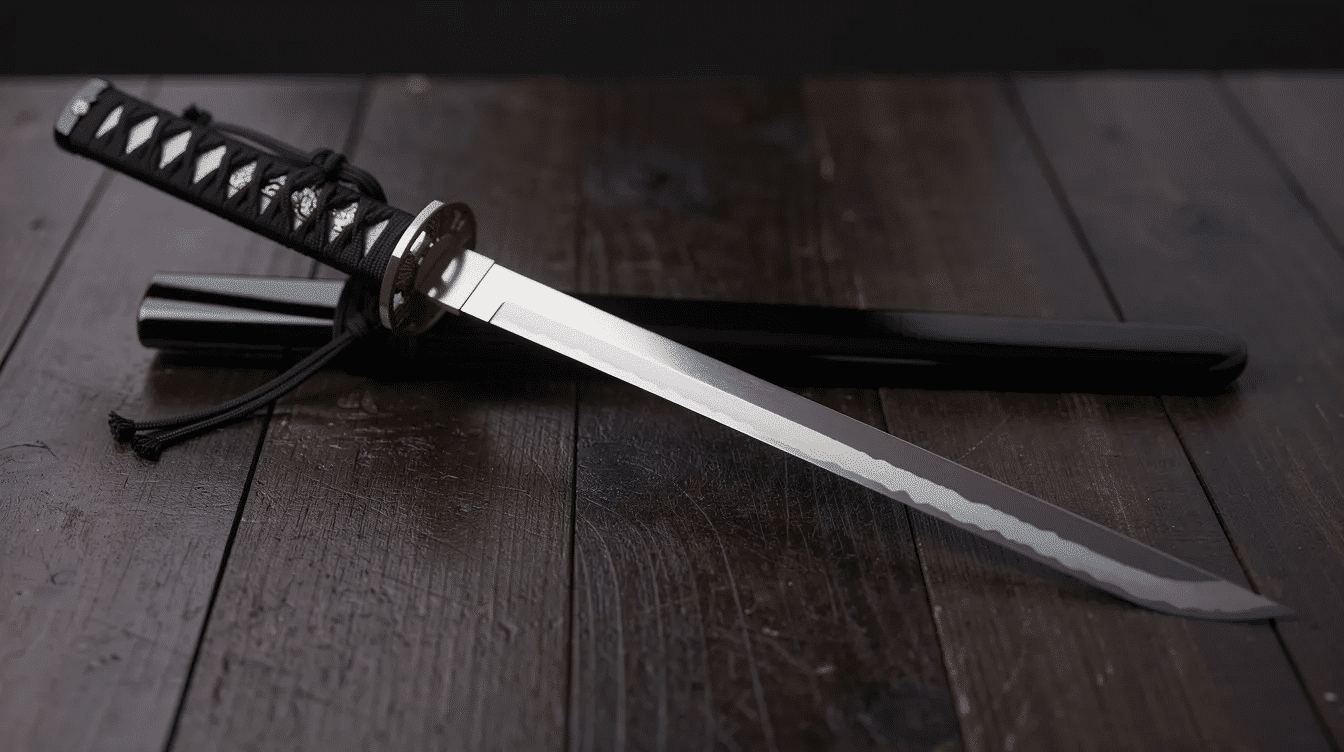
- Traditional sashimi work: 270–300mm Yanagiba, single bevel carbon steel (White #2 or Blue #2). Delivers razor edges for translucent slices.
- Professional tuna or large salmon breakdown: 330–360mm Yanagiba or long Deba. For whole tuna processing in Japan, a Maguro Bocho over 1m is standard.
- Beginners with some experience: Start with a double-bevel 240mm Sujihiki before progressing to single-bevel yanagiba knives.
Who should choose what:
- Home cooks: Double-bevel Sujihiki (easier maintenance, ambidextrous)
- Serious enthusiasts: Single-bevel Yanagiba in carbon steel
- Professional itamae (sushi chef): Extended Yanagiba 300mm+ or specialized Maguro Bocho
The rest of this article explains each option in detail, covering anatomy, steel choices, and proper maintenance.
Core Types of Japanese Long Knives
In japanese kitchen knives, “long knife” primarily means specialized slicers for fish, meat, and sushi preparation—typically 240–360mm blades that enable full forearm strokes. Professional use pushes lengths to 450mm and beyond, while home use typically caps at 270mm due to counter space limits.
Key long knife categories:
- Yanagiba (willow leaf blade): Traditional sashimi slicer, 240–360mm, single bevel with straight edge and pointed tip. The archetypal japanese long knife.
- Sujihiki (flesh puller): Western-style carving knife, 210–300mm, double bevel. Similar profile to Yanagiba but with symmetrical sharpening for ambidextrous use.
- Kiritsuke and Kiritsuke Gyuto: Long multipurpose blades with aggressive angled tips, 240–300mm. Blends slicer length with gyuto versatility.
- Maguro Bocho (cow sword for tuna): Massive filleting knife, 600–1500mm. Used at fish markets for whole bluefin tuna breakdown.
- Sushikiri and Takohiki: Specialty knives for maki rolls (curved blade, 240–270mm) and Kanto-region sashimi (square-tipped, 240–330mm).
Yanagiba: The Classic Long Sashimi Knife
The Yanagiba—literally “willow blade”—is the archetypal long sashimi knife that every sushi chef deeply respects. Its name evokes willow leaves for the slender, flexible profile: blade height around 30–35mm, width tapering from 3–4mm at spine to under 1mm at edge. Common lengths run 270–300mm for pros and 240–270mm for home cooks.
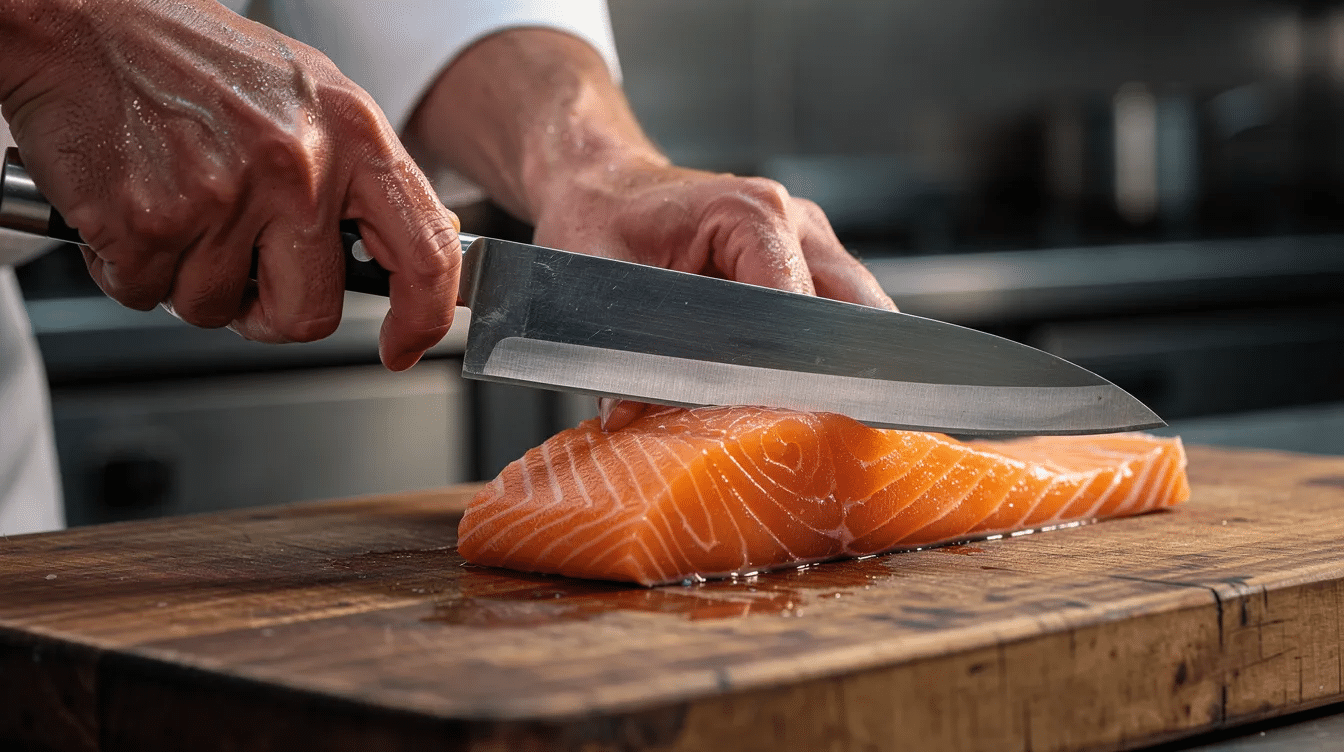
Key design traits define its cutting performance: single bevel construction with the kataba grind deflecting fish fibers for cleaner exits, very thin spine enabling long pull-cuts, and a pointed tip for precise work. This traditional japanese knife excels at slicing raw fish—maguro (tuna), sake (salmon), hamachi (yellowtail)—in single strokes that preserve the fish’s natural oils and deliver amazing sharpness in presentation.
Why Yanagiba is often the first “long knife” a sushi student buys:
- White #2 (Shirogami 2) carbon steel achieves HRC 62–64 for ultra-fine 10° bevels
- VG-10 stainless offers corrosion resistance for humid kitchens with less maintenance
- Common lengths: 270mm ≈ 10.6”, 300mm ≈ 11.8”, 330mm ≈ 13.0”
- Single-bevel design enables sub-millimeter precision for translucent sashimi sheets
- The long blade allows cutting through entire fish blocks without sawing
Sujihiki and Other Double-Bevel Long Knives
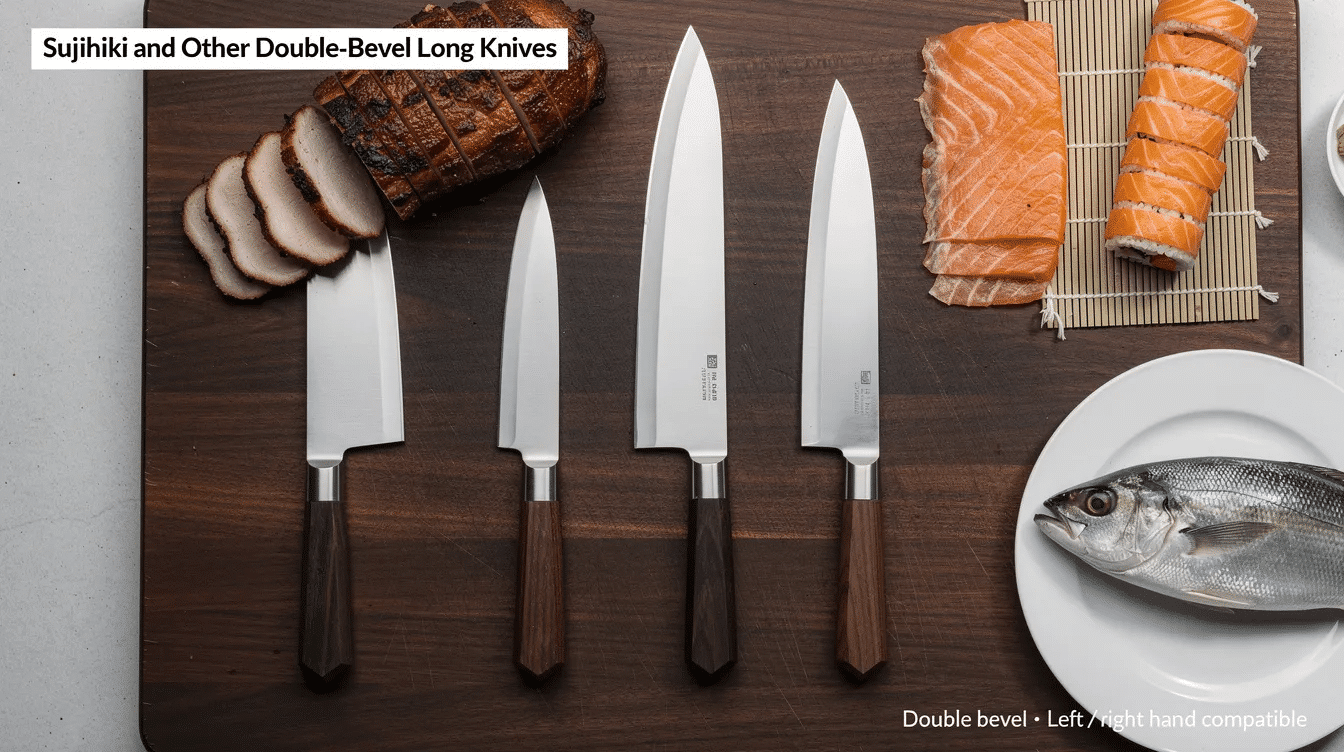
The Sujihiki serves as the double bevel counterpart to Yanagiba—more familiar to Western chefs and easier to sharpen symmetrically. Its philosophy and knife characteristics make it ideal for those transitioning from standard chef’s knife techniques to Japanese slicing methods. Both the Sujihiki and Gyuto are considered Japanese equivalents of the Western chef’s knife, offering versatility as all-purpose kitchen knives for a wide range of cutting tasks.
Typical lengths span 210–300mm with narrower profiles than gyuto (spine 1.8–3mm, height 25–32mm). Common uses include carving roasts, slicing smoked salmon, portioning rolled sushi, and filleting fish in non-traditional kitchens. The double-bevel design means total left/right compatibility, unlike single-bevel Yanagiba’s handedness restrictions.
Sujihiki vs Yanagiba comparison:
- Versatility: Sujihiki handles meat and fish equally well; Yanagiba optimized for sashimi
- Learning curve: Double bevel is significantly easier for beginners
- Cutting feel: Yanagiba offers more “steering” precision; Sujihiki provides stable glide
- Maintenance: Sujihiki’s 50/50 grind simplifies sharpening routines
Bevel type impacts the precision and function of Japanese knives: Yanagiba and Deba are generally single-bevel, while Gyuto and Sujihiki are double-bevel.
Related long double-bevel knives:
- Kiritsuke Gyuto: 240–270mm with sloped tip for hybrid slicing and chopping
- Long Gyuto: 240–270mm generalist blade for meat and vegetables with more curve for rocking motion
Choose Sujihiki if you’re a beginner, prefer ambidextrous use, or work primarily with roasts and smoked fish alongside occasional sashimi.
Other Extra-Long Japanese Knives (Maguro Bocho, Sushikiri, Takohiki)
Some Japanese long knives are highly specialized tools rarely seen outside professional or regional contexts. These represent the outer limits of japanese craftsmanship in blade length and purpose.
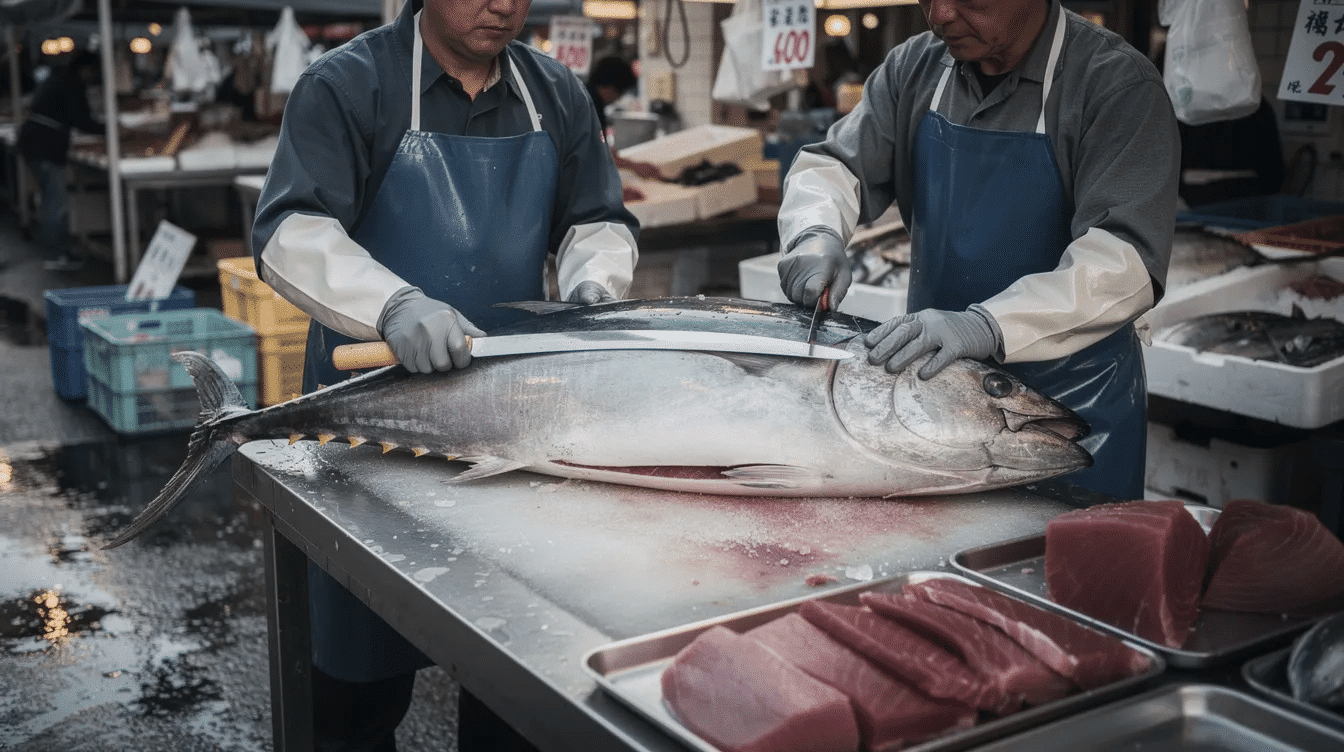
Maguro Bocho (Tuna Knife):
- Designed for filleting whole tuna at markets like Toyosu Market in Tokyo
- Blade lengths from 600mm (23.6”) up to 1500mm (59”) for large bluefin tuna
- Often requires two people—one guiding the tip, one holding the japanese handle—during butchery
- High-carbon steel construction with 4–6mm thick spines tapering for rigidity under 50kg pressure
- Teams execute 5–10m total cuts per fish at market auctions
Sushikiri:
- Long curved blade (240–270mm) for slicing thick maki rolls without crushing
- Subtle curve distributes force to avoid squashing nori and rice layers
- More common in specialized sushi restaurants producing jumbo roll varieties
Takohiki:
- Rectangular, square-tipped variant of Yanagiba popular in the Kanto region (Tokyo area)
- Traditionally used for sashimi including octopus (tako) and block-style slicing
- Lengths 240–330mm with straight heel-to-tip edge yielding uniform rectangles
- Represents the japanese version of regional knife adaptation prized in Edo-style presentation
Chef’s Knife and Japanese Kitchen Knives: Where Long Blades Fit In
In the world of Japanese kitchen knives, the chef’s knife—known as the Gyuto, or “cow sword”—stands as a symbol of versatility and precision. With its long, double-bevel blade, the Gyuto is designed to handle a wide range of tasks, from slicing meat and fish to chopping vegetables with a single, fluid motion. This thin blade, often sharpened to a razor edge, embodies the distinct knife making philosophy that has made Japanese knives renowned for their amazing sharpness and cutting performance.
Japanese craftsmanship is deeply respected among chefs and collectors alike, with leading knife makers such as Takeshi Saji, Ichiro Hattori, and brands like Takamura knives known for exceptional sharpness and balance blending traditional technology with ingenious ideas to create blades that are both beautiful and functional. Whether forged in the historic workshops of Seki City or Takefu City, each knife reflects a commitment to quality and a reverence for the art of blade making.
While the Gyuto is the workhorse of many kitchens, the huge product range of Japanese knives offers specialized tools for every task. The petty knife, with its narrow blade and compact size, is perfect for precise work like filleting fish or slicing small vegetables—making it a favorite among both home cooks and professional chefs. For those who need even more control, the ko deba, a smaller version of the traditional deba, excels at filleting fish and handling delicate tasks where a small knife is essential.
Japanese kitchen knives also include the nakiri, a vegetable knife with a straight edge and thin blade that glides effortlessly through vegetables, and the santoku, a best-selling knife prized for its ability to chop, slice, and mince with ease. The Japanese version of the cleaver, with its handy, balanced design and thin blade, showcases how traditional forms can be adapted for modern kitchens without sacrificing control or precision.
For sushi chefs, the yanagiba remains the ultimate tool for preparing sashimi, thanks to its long, single-bevel blade and sharp tip that allow for clean, precise cuts of raw fish. When it comes to filleting tuna, the maguro bocho—a specialized, extra-long knife—demonstrates the lengths to which Japanese knife makers will go to ensure perfect results for every ingredient.
What sets Japanese knives apart is not just their cutting performance, but also their attention to detail and aesthetic appeal. Each blade, whether designed for meat, fish, or vegetables, is a testament to the philosophy of combining form and function. The result is a collection of knives that are as beautiful to look at as they are effective to use.
Whether you’re a professional chef seeking the best tools for your craft or a home cook looking to elevate your kitchen experience, Japanese knives offer a world of possibilities. Their thin blades, precise edges, and thoughtful designs make every cut a pleasure, while their rich history and innovative spirit ensure that there’s a perfect knife for every task. Explore the huge product range and discover why Japanese kitchen knives are celebrated worldwide for their quality, sharpness, and enduring appeal.
Anatomy of a Japanese Long Knife
Long japanese knives are built for balance and continuous slicing rather than chopping vegetables or bone work. Understanding their anatomy helps you appreciate why these tools excel at precise work.
Key components:
- Blade profile: Long, narrow shape with consistent curve or straight edge. Length-to-height ratios around 10:1 ensure planar cuts avoiding wedging.
- Spine thickness: Thin for Yanagiba/Sujihiki (1.5–2.5mm) reducing drag force by 40–50% vs thicker blades. Maguro Bocho runs 5–9mm for torque resistance.
- Bevel type: Single bevel enables micro-steering via wrist for 0.5mm precision. Double bevel provides stable glide for consistent cuts.
- Heel and tip shapes: Rounded heel (3–5mm radius) for pinch-grip safety. Tips pointed (Yanagiba) for piercing or square (Takohiki) for shearing.
- Tang and handle junction: Machi gap (1–2mm) prevents food trap while aiding balance on 300mm blades.
Handle types on long knives:
- Octagonal or D-shaped wa-handles in magnolia, walnut, or pakkawood
- Horn ferrules buffering flex at blade-handle junction
- Typical lengths 130–180mm for proper balance with long blade
- D-shaped handles oriented for right-hand bias on single-bevel knives
Steel Choices and Edge Geometry for Long Blades
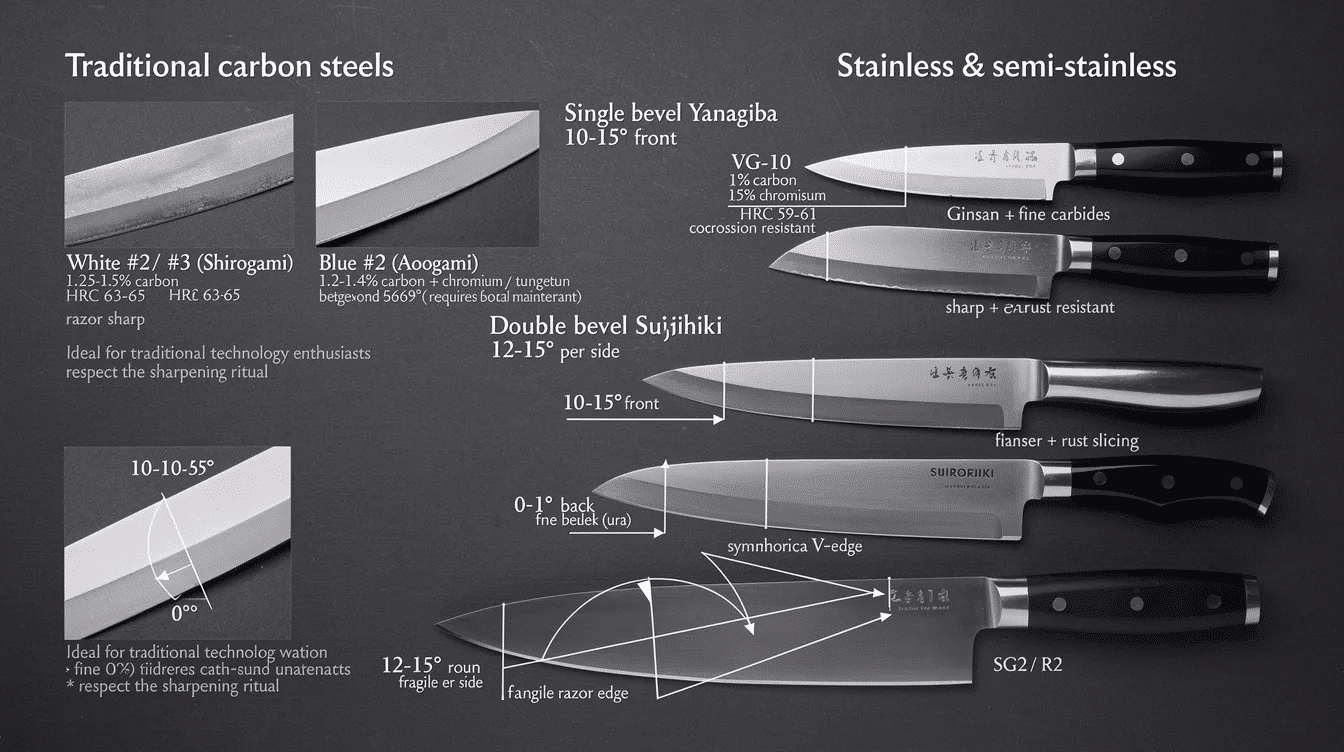
Steel choice matters more on long knives because any rolling or chipping affects the entire slicing stroke. A small knife can compensate; a long blade cannot.
Traditional carbon steels:
- White #2/#3 (Shirogami): 1.25–1.5% carbon, HRC 63–65, razor sharp but rusts in 10–20 minutes without wiping
- Blue #2 (Aogami): 1.2–1.4% carbon plus chromium/tungsten, better edge retention, still requires patina maintenance
- Ideal for traditional technology enthusiasts who deeply respect the sharpening ritual
Stainless and semi-stainless steels:
- VG-10: 1% carbon, 15% chromium, HRC 59–61, corrosion resistant for humid kitchens
- Ginsan (Silver #3): Fine carbides, excellent combination of sharpness and rust resistance
- SG2/R2 powdered steel: HRC 62–64, uniform sub-micron grains for best selling knives in premium ranges
Clad constructions:
- San-mai (three-layer): Hard edge steel with softer cladding for toughness
- Warikomi (inserted edge): Similar benefits, grinding 50% easier than monosteel
Edge angle guidance:
- Single bevel Yanagiba: Around 10–15° on front side with mild ura (0–1°) on back
- Double bevel Sujihiki: Around 12–15° per side for fine slicing without excessive fragility
Using a Japanese Long Knife Correctly
Technique is critical with Japanese long knives. These tools are designed for pull cuts, not sawing back and forth. The light, handy feel of a properly balanced blade rewards correct motion.
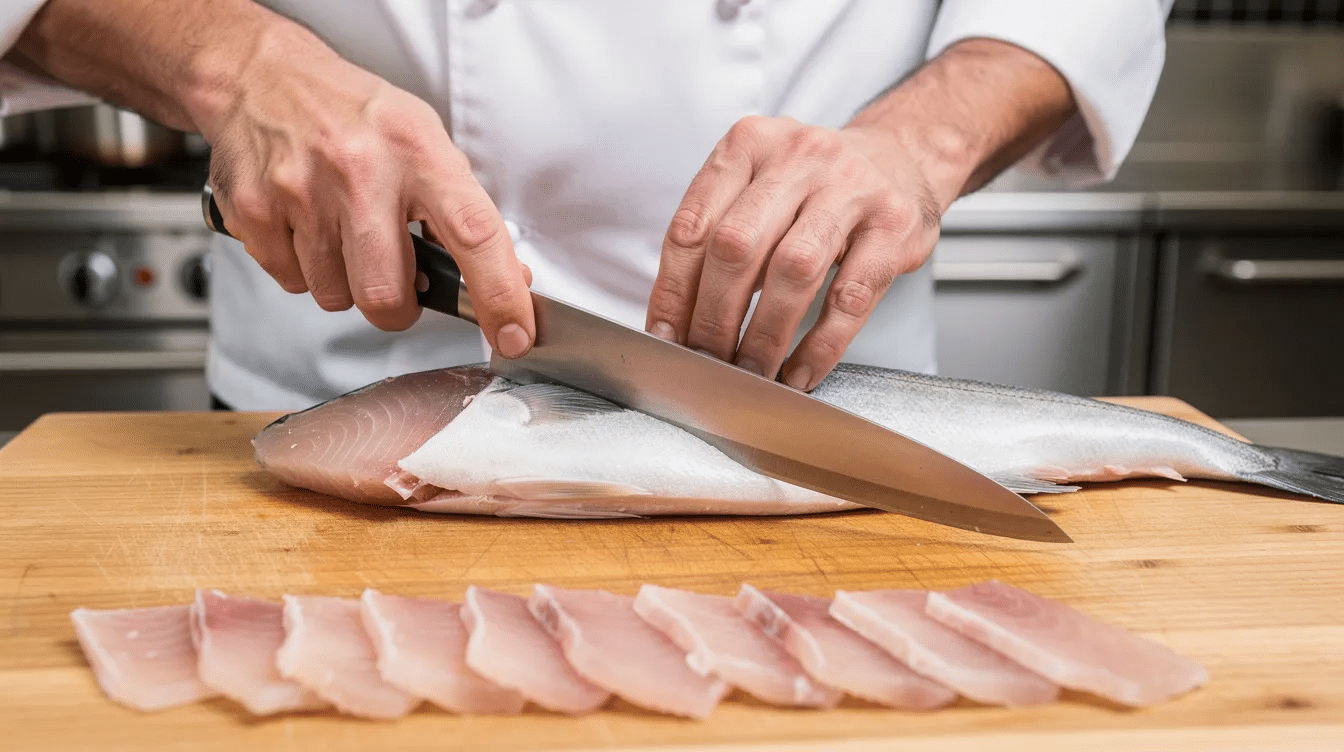
Technique best practices:
- Draw the blade toward your body in one smooth motion to cut fish or meat
- Use full-length strokes—heel to tip—rather than only the middle section
- Apply gentle downward pressure (<5N) to avoid drag; let the sharp edge do the work
- Keep guiding hand in claw grip with fingertips tucked and knuckles guiding
- Position knife perpendicular to ingredient, using shoulder momentum for 270–360mm strokes
What to avoid:
- Sawing motions increase friction 2–3x and cause cellular rupture
- Heavy bone cutting or prying—use a cleaver or Deba for that
- Rocking motion meant for santoku or petty knife styles
- Mid-blade-only use that causes uneven dulling
Practice progression:
- Start with cucumbers (mimics fish drag and provides control feedback)
- Progress to farmed salmon (forgiving fats, lower cost)
- Build to premium tuna, delicate white fish, and otoro (fatty tuna)
- Experts report 20% yield improvement from clean, precise cuts
Care, Storage, and Sharpening of Long Japanese Knives
Long blades demand careful maintenance to avoid warping, chipping, or rust. The ingenious ideas behind Japanese knife design assume proper care from users.
Daily care guidelines:
- Hand wash in lukewarm water immediately after use; never soak or dishwash
- Dry completely within 1 minute—carbon steels oxidize in 10–20 minutes
- Use soft end-grain wood boards (hinoki reduces impact 70% vs plastic)
- Avoid glass, stone, or bamboo cutting surfaces that destroy fine edges
Sharpening instructions:
- Use water stones in 210mm+ lengths to accommodate 270–300mm blades comfortably
- For Yanagiba: Work single bevel side with circular motions at 10–15°; maintain ura lightly with #3000+ grit
- For Sujihiki: Alternate sides with consistent 15° angle, full strokes heel to tip
- Progress through grits: #1000 for sharpening, #3000–6000 for polishing
Storage solutions:
- Saya (wooden blade covers): 320mm saya for 300mm blades
- Magnetic strips: Ensure sufficient length and strength to support entire blade
- Felt-lined drawer inserts prevent curvature and edge contact
- Never store loose in drawers with other utensils
How to Choose the Right Length and Style for Your Kitchen
Length and style should match your cutting space, typical ingredients, and current skill level. The leading knife maker will tell you that quality matters less than fit.
Length decision guidelines:
Length | Best For | User Type |
|---|---|---|
210–240mm | Compact spaces, mixed tasks, small fillets | Home cooks, small knife collections |
270–300mm | Dedicated sashimi work, fish blocks 1–2kg | Serious enthusiasts, aspiring itamae |
330mm+ | Large fish breakdown, professional stations | Professional chefs, high-volume prep |
Factors to consider: |
- Hand size and arm length (60–70cm arm suits 270–300mm well)
- Cutting board depth (standard 12–14 inch boards fit 240–270mm without overhang)
- Typical ingredients: whole fish needs 330mm+; fillets and roasts suit 240–270mm
- Skill level: beginners benefit from double-bevel forgiveness; single-bevel rewards experience
Recommended progression:
- Start with 240–270mm double-bevel Sujihiki in stainless steel
- Add 270–300mm single-bevel Yanagiba as skills and interest develop
- Consider ko deba or specialized tools only after mastering fundamentals
- Data from chef surveys shows 270mm optimal for 80% of tasks
Conclusion: Bringing a Japanese Long Knife into Your Workflow
A well-chosen japanese long knife transforms how you prepare sashimi, meat, and fish—delivering the cutting performance that professional chefs have relied on for centuries. Whether you’re selling knives in a shop in Seki City or Takefu City, or simply preparing sushi at home, the fundamentals remain: choose appropriate length for your space, understand single vs double bevel implications, and invest in proper care.
The huge product range of traditional japanese knives can feel overwhelming, but start with one long blade that fits your current needs. A 270mm Sujihiki offers versatility for most home cooks, while a Yanagiba rewards those ready to embrace its precision. Like master craftsmen such as Ichiro Hattori or Takeshi Saji would advise, focus on mastering one tool before expanding your collection. The three virtues of Japanese knife characteristics—sharpness, balance, and beauty—await those willing to learn.
