
Looking for a handmade Japanese knife that transforms your cooking? Discover authentic artisan blades and handcrafted Japanese knives crafted by master blacksmiths using traditional techniques passed down through generations. Each knife is the result of a skilled knife maker’s expertise, blending heritage, artistry, and precision. From precise santoku knives to versatile gyuto chef’s knives, our collection combines exceptional sharpness, premium steel and centuries-old craftsmanship.
Handmade Japanese knives are high-performance tools forged using techniques derived from centuries-old samurai sword-making traditions. The art of Japanese knife-making has been passed down through generations through hard work and apprenticeship.
Find your perfect blade and elevate your culinary skills today.
- Introduction to Japanese Knives
- History and Culture of Japanese Knives
- Handmade Japanese Knives for Every Kitchen Need
- Choose the Right Handmade Japanese Knife for Your Cooking Style
- Materials and Construction of Japanese Kitchen Knives
- Traditional Steel Types That Define Excellence
- Characteristics of a Beautiful Japanese Knife
- The Importance of Balance and Size in Kitchen Knives
- How to Care for Your Handmade Japanese Knife
- Shop Authentic Handmade Japanese Knives
Introduction to Japanese Knives
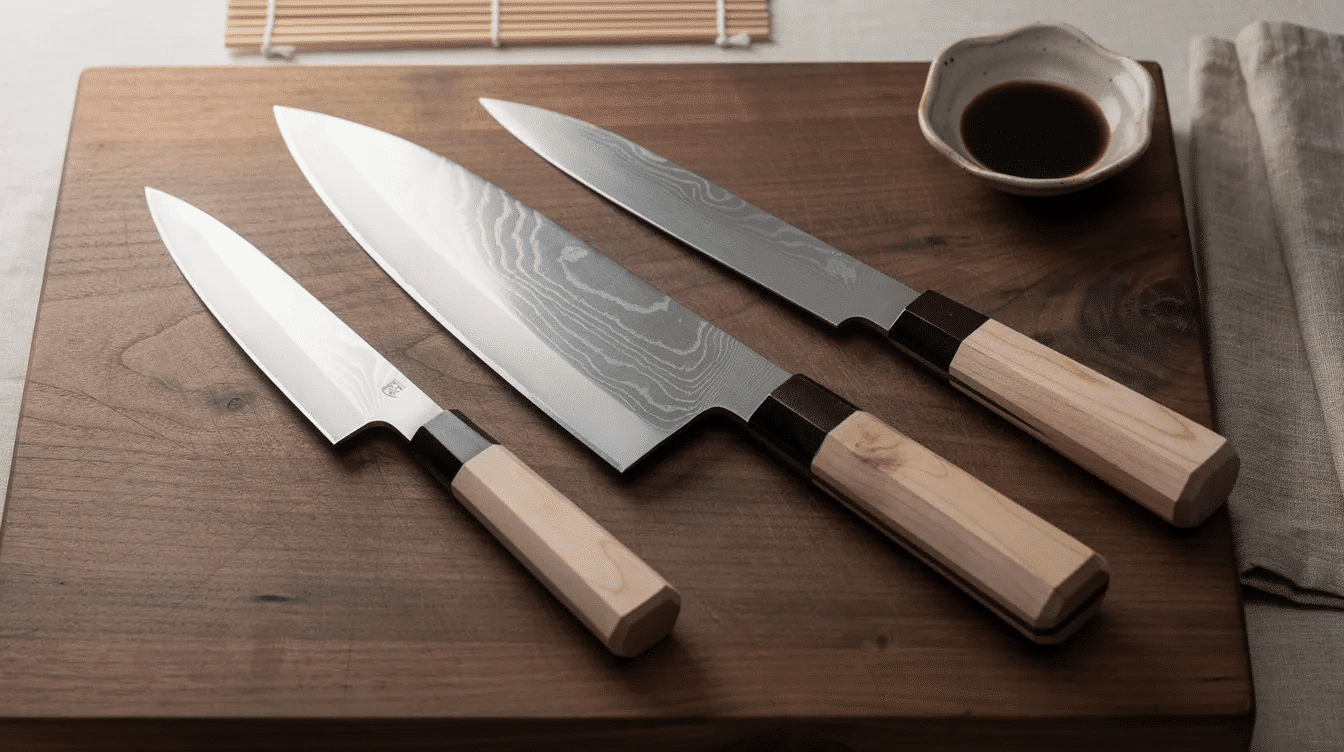
Japanese kitchen knives are celebrated worldwide for their unmatched sharpness, durability, and refined beauty. Rooted in centuries of Japanese tradition, these knives have become indispensable tools for both professional chefs and home cooks who value precision and artistry in the kitchen. From traditional Japanese kitchen knives designed for specialized tasks to versatile Japanese chef knives that adapt to any cooking style, the range of options ensures there is a perfect tool for every culinary need. The unique construction, balance, and blade geometry of Japanese knives set them apart, making them a favorite among chefs who demand the highest standards of performance and craftsmanship. As we explore the world of Japanese knives, you’ll discover how these exceptional kitchen knives have shaped cooking practices around the world, elevating everyday prep into an art form.
History and Culture of Japanese Knives
The story of Japanese kitchen knives is deeply intertwined with Japan’s rich history of sword-making and metalwork. For centuries, Japanese blacksmiths have honed their craft, transforming the techniques once used to forge legendary swords into the creation of high quality Japanese knives. Cities like Sakai have become synonymous with excellence, where master artisans and renowned makers such as Sakai Takayuki continue to uphold the legacy of traditional Japanese kitchen knives. Each region in Japan has developed its own distinctive knife-making styles, resulting in a diverse array of blades like the iconic Santoku and Gyuto. Beyond their practical use, these knives embody the Japanese appreciation for the art of cooking and the importance of using the right tool. Owning a Japanese knife is not just about performance—it’s about connecting with a centuries-old tradition that values precision, beauty, and the pursuit of perfection in every cut.
Handmade Japanese Knives for Every Kitchen Need
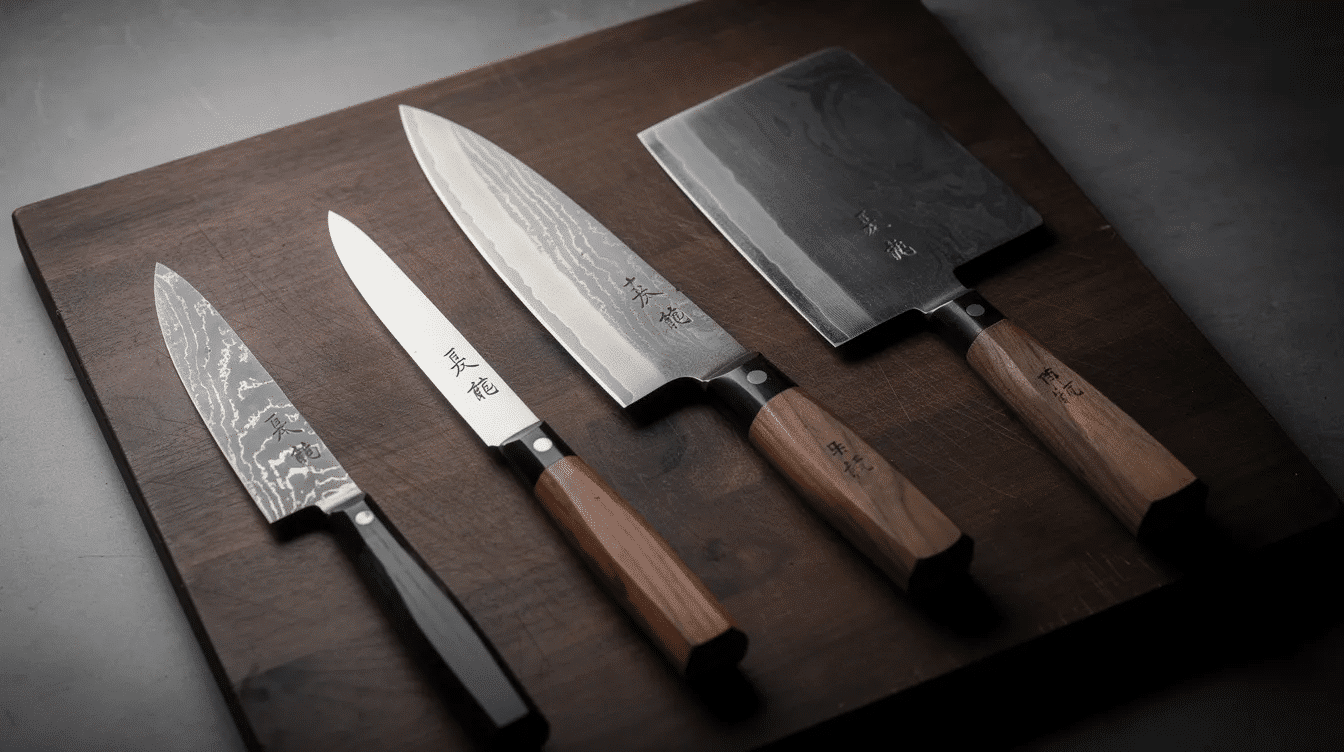
Whether you’re a professional chef or passionate home cook, there’s a handcrafted Japanese knife for every cutting task, and understanding the essential Japanese knife types will help you choose the right tools.
Essential Everyday Knives
The santoku knife remains one of the most popular Japanese kitchen knives, offering versatile performance for chopping, dicing and slicing vegetables, meat and fish with effortless cuts. For those seeking the ultimate all-purpose blade, the gyuto serves as Japan’s answer to the Western chef’s knife, typically ranging from 210-240mm with a curved profile ideal for rock chopping and push cuts.
Petty knives complete your everyday prep arsenal, providing precise control for detail work and small ingredients. These Japanese chef knives enhance daily cooking efficiency through their extremely sharp edges and refined blade geometries.
Specialized Traditional Knives
Traditional Japanese kitchen knives include specialized forms perfected over centuries. The usuba knife features a flat edge and single-bevel design, allowing professional chefs to execute techniques like katsuramuki—paper-thin vegetable slicing that defines Kyoto cuisine. With blade lengths typically between 150-240mm, this knife type demands skill but rewards with unmatched precision.
The deba knife handles fish and poultry preparation, featuring a thick spine (up to 10mm) capable of cutting through bones while maintaining the sharp edge needed for filleting. Meanwhile, the yanagiba excels at sashimi work, its elongated blade creating smooth, precise cuts that preserve delicate textures.
Modern Fusion Designs
Contemporary Japanese artisans continue evolving the craft through modern interpretations. Kiritsuke knives combine traditional aesthetics with versatile functionality, while bunka knives offer hybrid capabilities with distinctive pointed tips. Damascus pattern knives showcase stunning visual appeal through layered steel construction, proving that these blades are far more than just a tool—they’re works of art.
These modern designs maintain traditional Japanese craftsmanship while meeting contemporary kitchen demands, crafted by knife makers who honor ancient methods.
Choose the Right Handmade Japanese Knife for Your Cooking Style
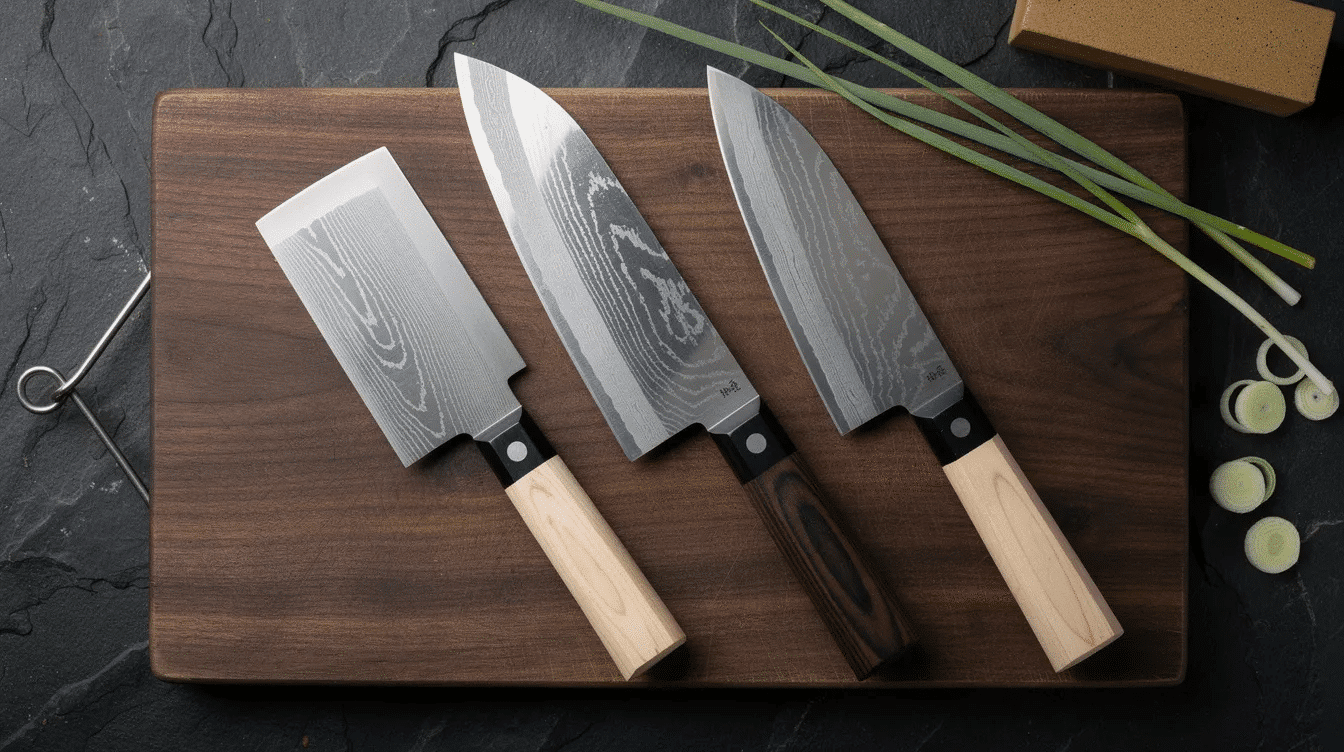
The right knife complements your technique and enhances your culinary confidence.
For Beginning Japanese Knife Users
Start your journey with stainless steel options that offer forgiveness and easy maintenance. Double bevel knives provide familiar cutting angles, making the transition from Western cutlery smooth and intuitive. Medium sizes (180-210mm) deliver versatile performance across various ingredients.
Consider high quality Japanese knives from established makers like Sakai Takayuki, whose reputation spans two decades of excellence. Generally speaking, rust resistant stainless blades allow beginners to focus on developing knife skills rather than maintenance routines.
For Experienced Home Cooks
Home cooks ready for the next level should explore high carbon steel blades, prized for superior sharpness and edge retention. Single-bevel options unlock specialized techniques previously reserved for professional kitchens, while building a collection of multiple knife types expands your culinary possibilities.
Transitioning from Western to Japanese cutting techniques reveals why chefs worldwide treasure these tools. The blade angle on Japanese knives—typically 12-15° per side for double bevel designs—creates an edge that glides through ingredients with remarkable ease.
For Professional Chefs
Master-level blades from renowned artisan blacksmiths represent the pinnacle of Japanese tradition. Names like Yu Kurosaki, Takeshi Saji, Takamura’s high-performance knives and artisans from Sakai City forge investment pieces that become culinary heirlooms. Custom handle options ensure comfort during extended use, while specialized blade geometries serve specific cuisine requirements.
These beautiful knife creations from Japanese blacksmiths command premium prices but deliver lifetime performance that defines professional cooking.
Materials and Construction of Japanese Kitchen Knives
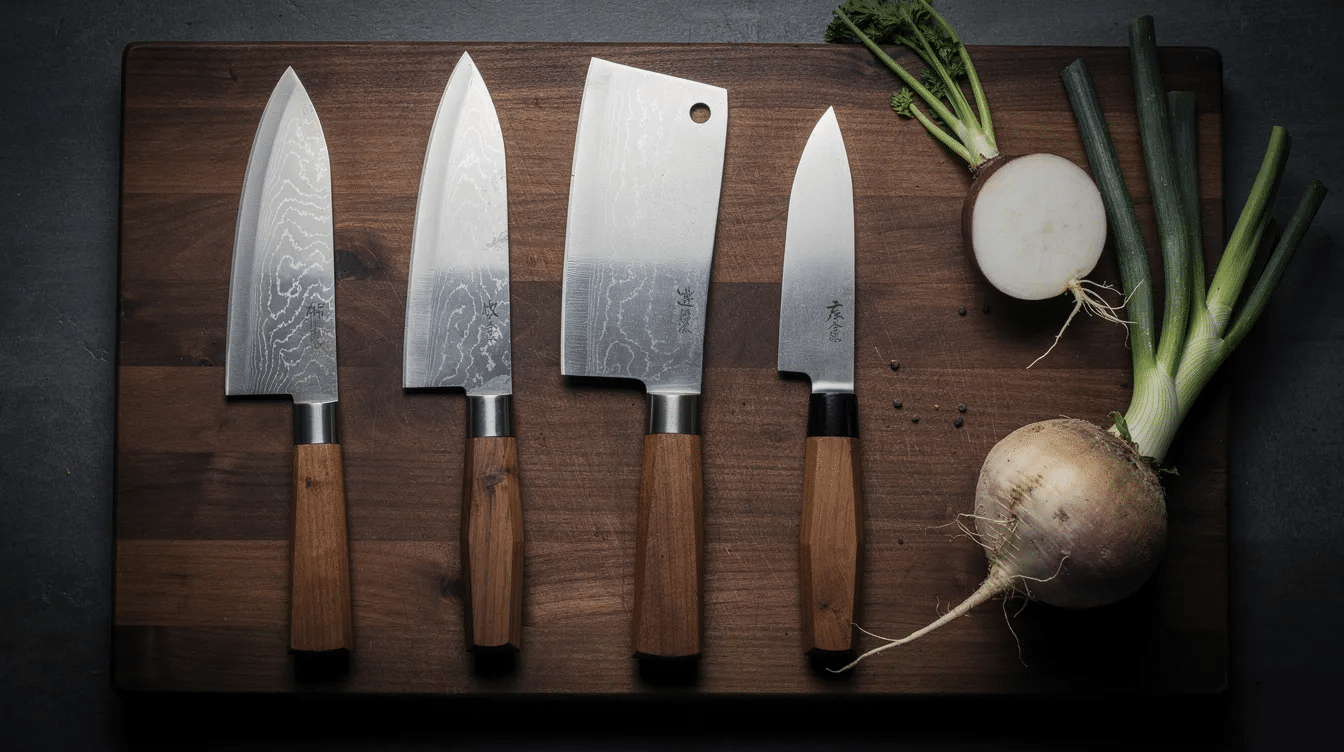
At the heart of every exceptional Japanese knife is the careful selection of materials and meticulous hand-forged construction. Japanese kitchen knives are often crafted from high carbon steel, such as white steel or blue steel, prized for their ability to achieve an extremely sharp edge and maintain it through rigorous use. Traditional high carbon steels like Aogami Super are favored by master knife makers for their hardness and edge retention, allowing for precise, effortless cuts. Each knife is hand forged, with artisans like Takeshi Saji dedicating years to perfecting their craft and ensuring every blade meets the highest standards of sharpness and durability. The handles, made from premium woods or modern resins, are designed for comfort and balance, complementing the blade’s performance. This dedication to quality materials and expert craftsmanship results in high quality Japanese knives that are as beautiful as they are functional—true works of art crafted for the kitchen.
Traditional Steel Types That Define Excellence
The soul of every hand forged Japanese knife lies in its steel composition and forging technique.
Carbon Steel Masterpieces
Traditional high carbon steels remain the gold standard for cutting performance. Aogami (Blue Steel) contains chromium and tungsten additions that provide exceptional edge retention—Blue #2 achieves 62-63 HRC hardness while maintaining workability. Shirogami (White Steel) offers pure cutting performance through minimal alloying, with White #1 reaching 64-65 HRC for unmatched sharpness.
High carbon compositions develop beautiful patina over time, creating unique character that reflects your cooking life. Professional chefs prefer these steels for their ability to take an extremely sharp edge and the satisfying feedback during sharpening.
Premium Stainless Steel
Modern stainless options like VG-10 and R2/SG2 steel deliver corrosion resistance without sacrificing performance. VG-10 achieves 60-61 HRC with approximately 15% chromium content, while SG2 powder metallurgical steel reaches 62-64 HRC with superior chip resistance.
Ginsan (Silver #3) steel bridges both worlds, combining stainless properties with the feel of carbon steel. These options suit busy kitchens where maintaining traditional carbon blades proves challenging—they stay sharp, resist rust and simplify care without compromising on quality.
Damascus and Laminated Construction
San-mai (three-layer) construction sandwiches a hard cutting core between softer outer layers, creating optimal balance between sharpness and durability. Damascus patterns emerge from folded steel layers, producing stunning visual appeal alongside functional benefits.
Laminated construction reduces chipping risk while preserving the cutting properties of high quality Japanese steel at the edge. These traditional forging techniques honor methods perfected in regions like Sakai City, where Japanese craftsmanship has flourished for centuries.
Characteristics of a Beautiful Japanese Knife
A beautiful Japanese knife is defined by more than just its appearance—it’s a harmonious blend of sharpness, design, and functionality. The blade’s flat edge and precise blade angle contribute to an exceptionally sharp edge, enabling chefs and home cooks to achieve clean, accurate cuts with minimal effort. Whether crafted from high carbon steel or rust-resistant stainless steel, these knives are engineered for both performance and longevity. The handle’s ergonomic design ensures a secure, comfortable grip, allowing for total control during intricate tasks. Every detail, from the polished blade to the seamless transition between handle and steel, reflects the Japanese commitment to creating a tool that is both a pleasure to use and a joy to behold. Whether you choose a traditional Japanese kitchen knife or a modern Japanese chef knife, the beauty of a Japanese knife lies in its ability to transform cooking into an effortless, enjoyable experience.
The Importance of Balance and Size in Kitchen Knives
Selecting the right knife is essential for achieving effortless cuts and mastering your cooking style. The balance of a kitchen knife—how the weight is distributed between the blade and handle—directly impacts control, comfort, and safety. A well-balanced knife feels like an extension of your hand, making it easier for both professional chefs and home cooks to perform precise tasks, from everyday prep to advanced techniques. Size also matters: a compact Santoku is ideal for quick, versatile chopping, while a longer Gyuto excels at slicing larger cuts of meat or vegetables. The right knife should fit your hand comfortably and suit your preferred cooking style, ensuring sharpness and ease with every use. Ultimately, the perfect knife is one that empowers you to cook with confidence, turning every meal into a smooth, enjoyable experience.
How to Care for Your Handmade Japanese Knife
Proper maintenance preserves the artisan’s craftsmanship and ensures lifetime performance.
Daily Maintenance Routine
Hand washing and immediate drying prevent corrosion, especially crucial for carbon steel blades. Use appropriate cutting boards—wood or soft plastic protect the sharp edge from damage. Store knives in dedicated blocks, magnetic strips or edge guards to maintain blade integrity.
Simple daily habits preserve knife quality across years of use. These amazing tools reward attentive care with consistent performance, allowing you to maintain the pleasure of effortless cutting throughout your cooking.
Sharpening and Edge Maintenance
Japanese waterstones provide authentic sharpening techniques suited to traditional blade geometries. Understanding grit progression—from coarse (400-800) through medium (1000-3000) to fine (4000-8000)—allows you to sharpen effectively and restore factory-level sharpness.
Basic sharpening angles matter: single-bevel knives require 10-12° on the cutting face, while double bevel designs need 12-15° per side. When blades require significant repair or you’re uncertain about technique, seek professional sharpening services to preserve your investment.
Shop Authentic Handmade Japanese Knives
Explore our curated collection of handmade Japanese knives from master artisans including Nakamura Hamono, Tadokoro Hamono and established Sakai makers. Choose from traditional carbon steel and modern stainless options, each representing centuries of refined craftsmanship and cutting excellence.
Whether you seek the perfect knife for vegetables, meat or fish preparation, our selection brings world-class Japanese kitchen knives to customers who appreciate genuine quality and artisan dedication.
Your perfect handmade Japanese knife awaits—discover authentic artisan quality today.
