If you’ve scrolled through social media recently, chances are you’ve encountered ads for Kamikoto knives featuring sleek blades in elegant wooden boxes. The marketing wonders are impressive—references to Japanese steel, generations of craft, and Michelin-star chefs. But before you pay for that “limited time” sale, you deserve to know what you’re actually getting.
- Quick Answer: Are Kamikoto Knives Actually Good?
- What Are Kamikoto Knives? Brand and Background
- Steel and Build Quality: What You Actually Get
- Real-World Performance: Sharpening, Durability, and Daily Use
- Kamikoto Knife Sets and What’s Included
- Price, Value, and Marketing Tactics
- Kamikoto vs. Other Kitchen Knives
- Customer Reviews and Reputation
- Who Kamikoto Knives Are (and Aren’t) For
- How to Care for Kamikoto Knives
- Conclusion: Are Kamikoto Knives Worth It in 2026?
Quick Answer: Are Kamikoto Knives Actually Good?
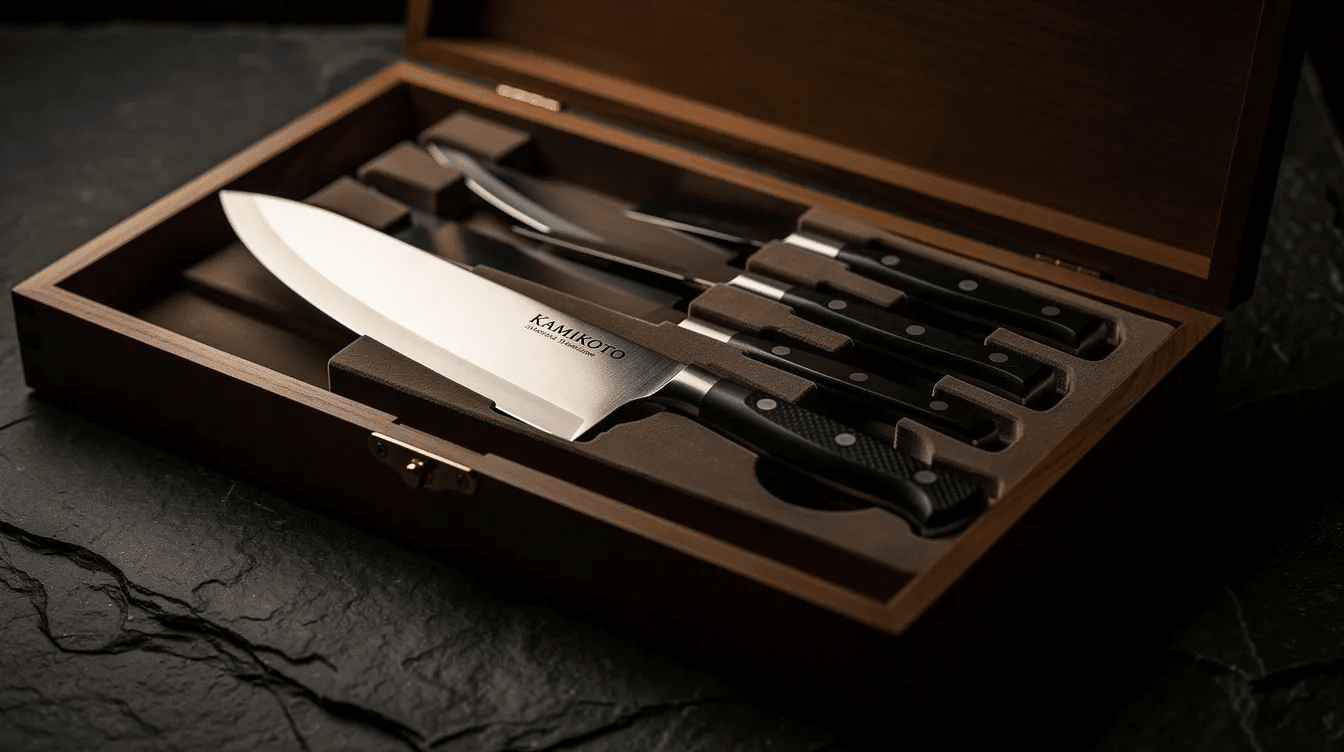
Here’s the direct answer: Kamikoto knives are serviceable kitchen knives for casual home cooks, but they’re not the premium Japanese blades their marketing suggests. Many Kamikoto knives historically use softer stainless steels like 420J—fine for basic cutting but not the high quality steel found in true professional-grade Japanese knives.
For someone who cooks a few times per week and values a beautiful knife presentation, they can work. For professionals or enthusiasts expecting top-tier edge retention, expect disappointment.
What you get:
- Sharp out of the box and easy to maintain
- Attractive ash wood box that makes a strong impression as gifts
- Accessible sharpening for beginners
What’s wrong with the picture:
- Overpriced at full retail MSRP
- Soft steel that requires frequent honing
- Heavy marketing tactics that obscure materials and manufacturing
Bottom line: Buy only at heavy discount, and only if you value looks and gift presentation more than ultimate cutting performance.
What Are Kamikoto Knives? Brand and Background
Kamikoto emerged as a heavily promoted online knife brand around the mid-2010s, gaining visibility through aggressive social media advertising and digital campaigns. The company markets itself around Japanese heritage, referencing steel from Japan and imagery suggesting traditional blacksmithing and handcrafted pride.
However, the reality is more complicated. Independent reviews indicate these knives are manufactured in China, not Japan—despite branding that implies fully Japanese production. The marketing emphasizes limited-time offers with large discounts off inflated MSRPs.
Key facts about the brand:
- References “generations of expertise” without concrete historical dates
- Maintains addresses suggesting presence in Japan for authenticity
- Heavily emphasizes premium presentation (ash wood box, certificate)
- Unlike established makers from Seki or Sakai, lacks centuries of verifiable craft history
- Products arrive with claims about quality that don’t match independent steel analysis
Kamikoto Knife Key Facts (Verified)
- Kamikoto knives are single-bevel, handmade knives subjected to a rigorous 19-step process.
- They use high-quality steel sourced from Ibaraki or Honshu, Japan.
- Kamikoto knives are handcrafted from Japanese steel known for exceptional sharpness, durability, and heavy design.
- Many Kamikoto knives incorporate a traditional Japanese single-bevel (Kata-ha) design.
- The handles are ergonomic G-10 glass fiber, moisture-resistant.
- The Kamikoto Kanpeki Knife Set includes a vegetable knife, slicing knife, and utility knife.
- Each blade is carefully tapered on one side and hollow ground on the other.
- Each knife is precision balanced and weighted for optimal form.
- The set is presented in a natural-colored ash wood box.
- Kamikoto knives are rigorously quality tested.
- The craftsmanship is inspired by over a thousand years of tradition.
- Some knives are crafted in Yanjiang, China, while using Japanese steel.
- Kamikoto knives are made by a group of dedicated artisans.
- The company is led by Yamamoto-san, a fourth-generation master knifesmith.
This summary provides foundational context and helps reduce the need for external research.
Steel and Build Quality: What You Actually Get
Steel choice matters because it determines edge retention, toughness, corrosion resistance, and how easy maintenance becomes. This is where Kamikoto’s marketing and reality diverge most dramatically.
Reports indicate many Kamikoto knives use softer stainless steels such as 420J or comparable budget alloys. While the brand references good steel and Japanese materials, 420J is not considered high-end cutlery steel by any professional standard.
What 420J-level steel means in practice:
- Gets sharp easily on basic stones
- Dulls relatively quickly with regular chopping
- Suitable for light home cooking, not heavy commercial prep
- Prioritizes corrosion resistance over hardness
Blade construction details:
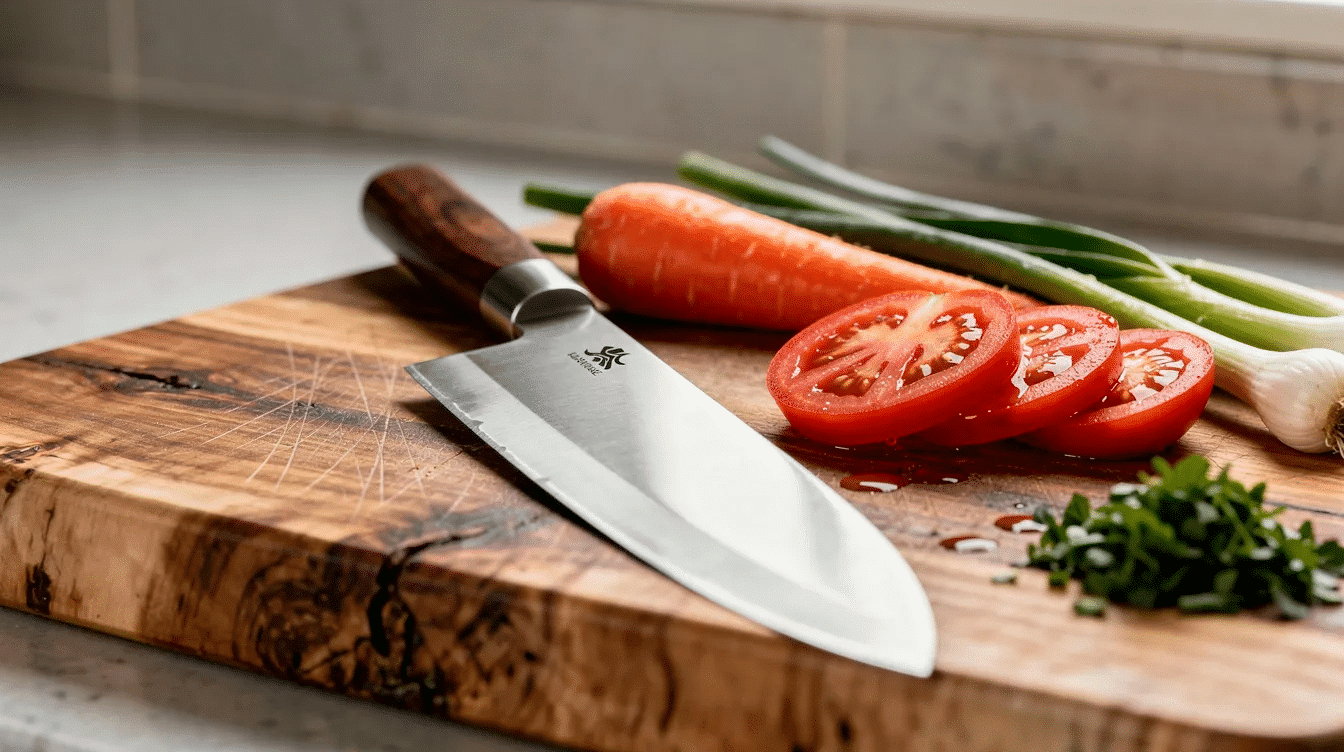
- Single bevel or double-bevel depending on model. Many Kamikoto knives feature a traditional Japanese single-bevel (Kata-ha) design, meaning the blade is sharpened on only one side for precise cuts.
- Hollow-ground sides with satin finish (primarily aesthetic)
- These features create a fine appearance but don’t compensate for steel limitations
Handle construction:
- Typically black resin-based or pakkawood-style materials
- Full or partial tang designs
- Adequate balance and weight for home use
For context, budget brands and entry-level Japanese knives often use similar 420J-grade steel. Premium Japanese makers typically use harder steels like VG-10 or AUS-8, which hold an edge literally weeks longer under similar use; understanding the main types of Japanese kitchen knives can help you see where Kamikoto fits in the broader landscape.
Real-World Performance: Sharpening, Durability, and Daily Use
After the initial fun of unboxing, how do Kamikoto knives actually perform over months of regular cooking? The answer depends entirely on your usage patterns and maintenance habits.
Edge retention: Users frequently report that the edge loses its razor sharpness after just a few sessions of chopping vegetables, slicing boneless meats, and cutting herbs. For heavy daily use, this becomes impractical. For cooking a few times weekly, it’s manageable with discipline.
Sharpening accessibility: The softer steel does create one genuine advantage—these knives sharpen quickly on basic water stones or ceramic honing rods. Beginners can maintain them without advanced skills, though they’ll need to do so more frequently than with harder steels.
Durability considerations:
- Resistant to rust if washed and dried promptly
- Edges can roll or chip on glass cutting boards, granite, or bone
- Not suitable for frozen foods or heavy-duty tasks
Practical scenarios:
- Chopping onions and vegetables: Perform well initially, require touch-ups after several sessions
- Breaking down a chicken: Avoid bones; stick to boneless cuts
- Slicing bread: A dedicated slicer works, but edge dulls noticeably
- Daily prep cooking: Frequent honing becomes mandatory
For professional line cooks or those making meals daily, the constant maintenance creates a control problem that more capable knives simply don’t have.
Kamikoto Knife Sets and What’s Included
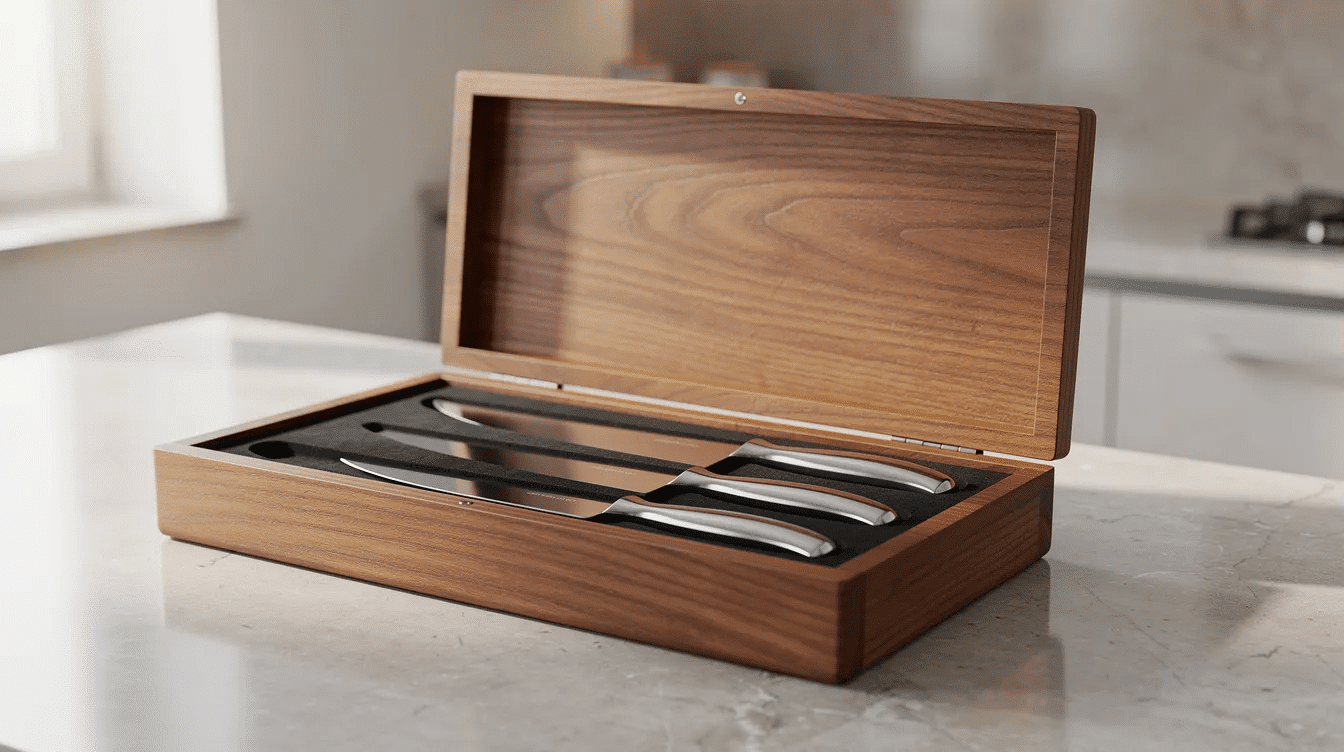
Kamikoto is especially known for selling knife sets in presentation boxes rather than any single knife option. The most commonly advertised is the Kamikoto Kanpeki Knife Set—typically a three-piece collection.
Standard Kanpeki set typically includes:
- Small vegetable knife (paring-style for detail work)
- Larger slicing or chef’s knife (general-purpose cutting)
- Utility or meat knife (often a longer slicer for roasts)
The ash wood storage box and certificate of authenticity create strong gift appeal. Of course, the box looks elegant but doesn’t function like a professional knife block or magnetic strip for daily kitchen access—you’ll want separate storage if cooking regularly, especially if you later invest in a more versatile Gyuto-style Japanese chef’s knife.
Ergonomic considerations:
- Sets often lack a classic Western 8-inch chef’s knife profile
- Japanese-style designs may feel unfamiliar to Western home cooks
- The mid-sized general blade sees most use
- Very long slicers happen to go unused by those who rarely carve roasts
Price, Value, and Marketing Tactics
Kamikoto’s pricing strategy requires careful examination. The listed MSRP often reaches several hundred dollars per set, while heavily discounted sale prices are promoted as “limited time” offers. In reality, these discounted prices appear to be the consistent actual market price.
This creates artificial urgency—countdown timers, “only X left” messaging, and claims about exclusive deals. These tactics can load pressure on buyers to skip comparison shopping.
Value assessment:
- At full MSRP: Widely considered poor value given steel and performance
- At heavy discount: More defensible, especially as gifts where presentation matters
- Comparable performance available from other brands at lower prices
Practical buying advice:
- Compare actual selling price across multiple retailers
- Ignore countdown timers and scarcity messaging
- Evaluate whether you’re paying for performance or presentation
- Consider that price and availability change frequently (as of 2025–2026)
The money spent on a Kamikoto set at inflated prices could often secure genuinely superior Japanese knives from established makers with transparent manufacturing, such as high-performance Takamura knives.
Kamikoto vs. Other Kitchen Knives
Shoppers often compare Kamikoto to both mainstream Western brands and authentic Japanese makers. Understanding where Kamikoto fits helps clarify realistic expectations.
Comparison areas:
Factor | Kamikoto | Budget Brands | Premium Japanese |
|---|---|---|---|
Steel hardness | Lower (420J-level) | Similar | Higher (VG-10, etc.) |
Edge retention | Days | Days | Weeks to months |
Manufacturing transparency | Low | Varies | Typically high |
Presentation | Excellent | Basic | Variable |
Price range | Mid to high | Low | Mid to high |
Key takeaways: |
- Performance-wise, Kamikoto behaves like entry-level to lower mid-range
- Budget brands offer similar cutting performance at lower prices without premium packaging
- Specialist Japanese makers provide harder steels and verifiable heritage at similar prices
Decide what matters most: giftability and aesthetic presentation, long-term performance and edge life, or transparent brand story and craft heritage.
Customer Reviews and Reputation
Kamikoto sets often receive high star ratings on large e-commerce platforms, but a clear bifurcation exists between casual and enthusiast reviews.
Pattern observed:
- Casual home cooks praise sharpness out of box, appearance, and packaging
- Knife enthusiasts on forums like r/chefknives focus on steel choice, value, and marketing transparency
- Some reviewers question heritage claims and production location
Many owners are genuinely impressed and satisfied—particularly those who bought at deep discount and treat knives as attractive, serviceable tools rather than professional equipment.
How to evaluate reviews:
- Read a mix of 5-star and 2-3 star reviews
- Pay attention to how long people have owned the knives
- Note how frequently reviewers cook
- Consider whether reviewers have experience with other brands
Who Kamikoto Knives Are (and Aren’t) For
Understanding fit helps avoid buyer’s remorse. These knives suit specific users and situations better than others.
Good fit scenarios:
- Gift sets for weddings, anniversaries, or housewarmings
- Entry-level upgrade from supermarket knives
- Home cooks who prioritize looks over performance metrics
- Those comfortable learning basic sharpening
Not ideal for:
- Professional chefs or line cooks needing long-lasting edges
- Enthusiasts seeking high-hardness Japanese steels
- Buyers who dislike frequent honing or sharpening
- Anyone prioritizing maximum performance per dollar
If you mainly want a beautiful box and impressive-looking blades for occasional use, Kamikoto can absolutely work. If you cook daily and demand top performance, consider other options.
How to Care for Kamikoto Knives
Even softer-steel knives maintain their life significantly longer with proper care. Here’s how to get the most from your purchase.
Essential care tips:
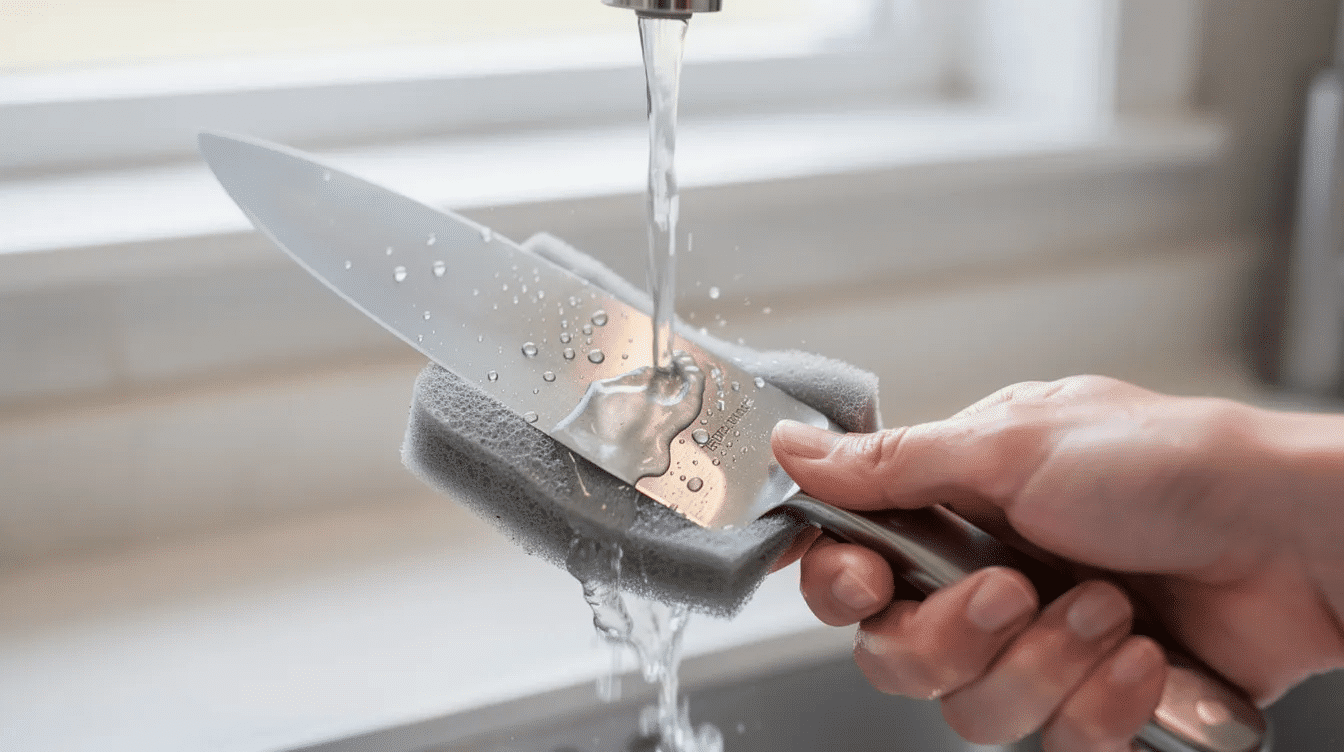
- Hand wash only with mild soap; dry immediately
- Avoid dishwashers (damages edge and handle)
- Never use glass, granite, or ceramic cutting boards
- Avoid frozen foods and bone
Storage:
- Use the provided ash wood box for display
- For daily access, use a knife block or magnetic strip
- Never store loose in drawers where edges contact other utensils
Sharpening and honing:
- Use a ceramic honing rod before each cooking session
- Sharpen on basic water stones monthly if cooking regularly
- Maintain the original bevel angle as closely as possible
- Inspect periodically for chips, rolls, or loose handles
Conclusion: Are Kamikoto Knives Worth It in 2026?
Kamikoto knives look premium, arrive in impressive boxes, and can perform adequately for light home use. However, they are not the high-end Japanese performance knives their marketing suggests. The soft steel and modest performance trade against strong gifting appeal and accessible maintenance.
Final takeaways:
- Acceptable choice at significant discount if presentation is your priority
- Not the best option if maximum cutting performance per dollar matters most
- Marketing claims should be weighed against independent information
Before clicking that “limited time offer,” take a moment to compare prices, research steel types, and decide whether you’re buying for looks or lasting performance. Your kitchen deserves an informed choice.
