
When you hear “Suzuki knife,” you’re entering the world of master Japanese smiths who blend traditional techniques with modern performance demands. These aren’t mass-produced blades—they’re the result of decades of dedicated craft, often forged by artisans whose skills trace back through generations.
This article covers the key makers behind the Suzuki name (Hiroshi and Tsukasa Suzuki), the types of knives they produce, how these blades are made, practical tips for choosing and caring for them, and where they fit in today’s culinary world.
- Quick Answer: What Is a Suzuki Knife?
- Hiroshi Suzuki: Beauty Without Compromise
- Tsukasa Suzuki: Unconventional Kitchen Knives from a Master Sickle-maker
- Bob Loveless and the “Japanese Loveless School”
- Types of Suzuki Knives: Kitchen, Hunting & Collectible
- How to Choose a Japanese Suzuki Kitchen Knife
- Caring for a Suzuki Knife: Sharpening, Storage & Longevity
- Events, Community & Where Suzuki Knives Fit Today
Quick Answer: What Is a Suzuki Knife?
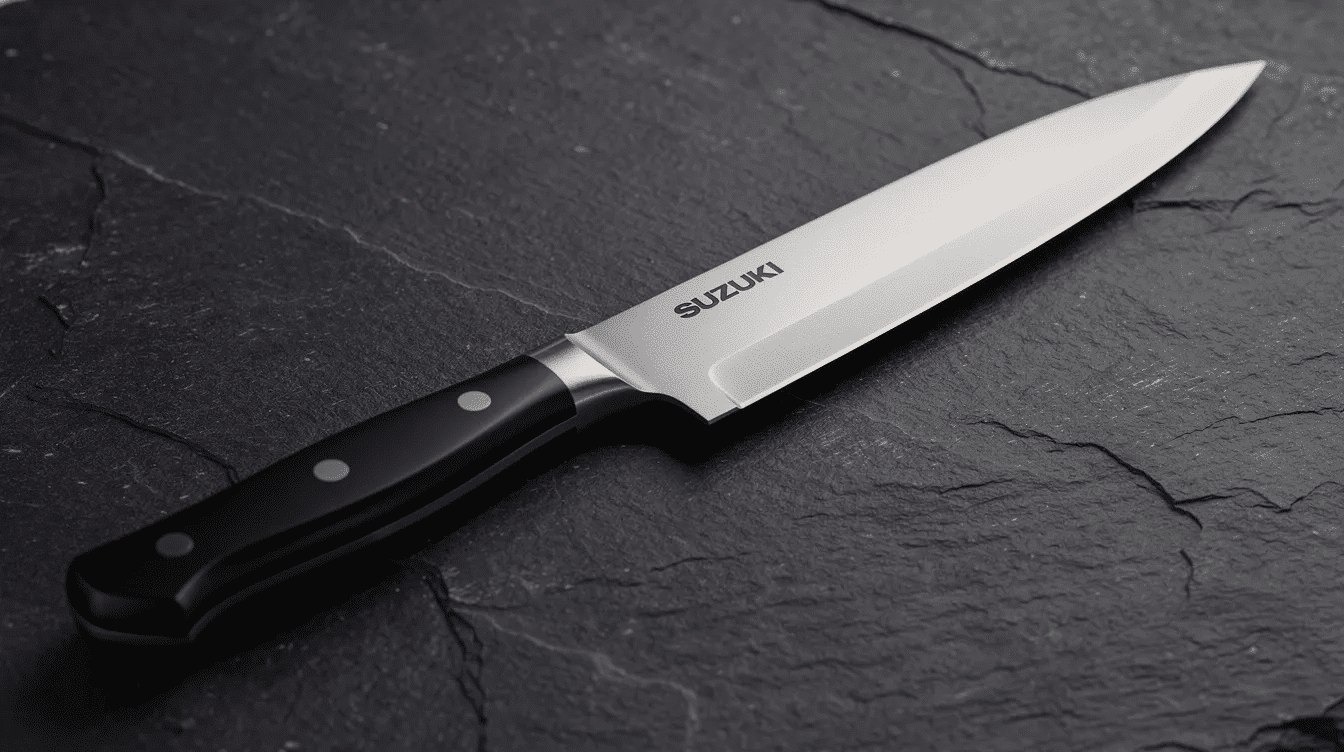
A Suzuki knife typically refers to high-end, hand-forged blades crafted by Japanese smiths bearing the Suzuki name. These makers are known for combining traditional blacksmithing methods with the demands of professional kitchen and outdoor use.
- High-end Japanese kitchen knives or hunting blades, often custom or semi-custom
- Typically made in regions like Saitama and Yamagata Prefecture, areas with rich knife making heritage
- Known for mirror-polished or pear skin finish blades with exceptional edge retention
- Crafted using steels like VG-10, Damascus, or high carbon steel for performance and sharpness
- Prized by professional chefs and collectors for their balance of art and function
Suzuki knives stand out for their unorthodox aesthetics and performance, immaculate finishes and flawless ergonomics, and specialized single-bevel designs with thick, rigid spines and flat backs. Many feature a kurouchi finish for rust protection and a rustic look, and the ‘ear’ ridge along the spine helps push food away for exceptional separation. The ultra-thin blade, often around 1mm thick, is achieved using traditional sickle-forging techniques, blending high-performance design with traditional craftsmanship. Some Suzuki knives are designed specifically for right-handed users with a single-bevel edge.
The Suzuki knife legacy connects to Japan’s broader knife history, which stretches back over 800 years to regions like Seki in Gifu Prefecture. After the 1876 Haitōrei Edict banned civilian sword-carrying, master swordsmiths redirected their skills toward kitchen knives and tools—a trade that continues today.
Hiroshi Suzuki: Beauty Without Compromise
Hiroshi Suzuki stands as one of Japan’s most respected custom knifemakers, with more than 35 years of experience blending American-inspired designs with Japanese precision.
Background and Training:
- Raised around his father’s factory in Saitama Prefecture during the 1970s and 1980s
- Learned shaping, sharpening, and heat treatment of tool steels from a young age
- Started making custom knives in the late 1980s or early 1990s
Signature Style:
- His philosophy centers on “beauty without compromise” in fit and finish
- Creates mirror-polished blades with tapered tangs and flawlessly blended guards
- Prefers steels like VG-10 and Damascus for both performance and visual appeal
- Handles feature exotic hardwoods, stag horn, or stabilized woods
Role as Mentor:
- Teaches younger Japanese makers about design, market expectations, and finishing techniques
- Contributed to the custom knife scene that emerged strongly in the 1990s and 2000s
Hiroshi’s work often draws from American drop-point hunter designs but executes them with sub-millimeter tolerances that define Japanese craftsmanship. Collectors worldwide seek his pieces for this unique fusion of Western form and Eastern precision.

Tsukasa Suzuki: Unconventional Kitchen Knives from a Master Sickle-maker
Tsukasa Suzuki from Yamagata Prefecture represents a distinct lineage in Japanese blade making. His journey began not with kitchen knives but with sickles—a heritage that shapes his unconventional approach today.
Heritage and Experience:
- Learned blacksmithing from his father, a sickle-maker active in the mid-20th century
- Over 40 years of forging experience, with much of that time refining single bevel blades
- Adapted traditional sickle-making methods for kitchen use
Forging Techniques:
- Combines hot and cold forging to refine grain structure and edge stability
- Works primarily with high carbon steel that takes a razor-sharp edge
- His knives demand care to avoid rust but reward proper maintenance with exceptional sharpness
The “Ear” (Mimi) Feature:
- A thick, ridged spine reinforcement unique to his single bevel knives
- Adds strength and prevents flexing during use
- Helps separate food from the flat blade face while cutting
- Creates a bold, sculpted profile that’s instantly recognizable
Performance Characteristics:
- Extremely thin, aggressive edges prized by professional chefs
- Excellent food release and control, especially for vegetables and fine prep
- Cutting is typically done on only one side of the blade, requiring specific technique
- Single bevel design demands skill to sharpen correctly but delivers superior results
Bob Loveless and the “Japanese Loveless School”
The legendary American knifemaker Bob Loveless fundamentally reshaped Japan’s custom knife scene through his visits during the 1970s and 1980s. His influence created what collectors now call the “Japanese Loveless School.”
Loveless’s Impact on Japan:
- Introduced the modern drop-point hunter design to Japanese craftsmen
- Helped inspire the formation of the Japan Knife Guild, the country’s first custom knifemaker organization
- Shared his philosophy of functionality-first design and clean, uncluttered lines
Connection to Hiroshi Suzuki:
- Hiroshi is a core figure of the Japanese Loveless School
- His knives often follow Loveless silhouettes—drop-point hunters, fighters, utility patterns
- Executed with Japanese-level polish and tolerances far exceeding American norms
- Emphasis on ergonomics, balance, and seamless transitions between guard, tang, and handle
The legacy lives on as collectors worldwide seek Loveless-inspired pieces that carry both American functional ideals and Suzuki’s aesthetic refinements. These knives represent a meaningful cross-cultural exchange in the craft world.
Types of Suzuki Knives: Kitchen, Hunting & Collectible
Suzuki kitchen knives are known for their highly specialized, single-bevel designs with thick, rigid spines and flat backs. They feature unorthodox aesthetics and performance, immaculate finishes and flawless ergonomics, and ultra-thin blades, typically around 1mm thick, achieved through traditional sickle-forging techniques. Many have a kurouchi finish for rust protection and a rustic appearance, and the unique ‘ear’ ridge along the spine helps push food away for exceptional separation. These knives blend high-performance design with traditional craftsmanship, and some are designed specifically for right-handed users with a single-bevel edge.
The Suzuki name appears across different knife categories depending on the maker and intended use. Understanding these categories helps you discover which type fits your needs, especially when you compare them with essential Japanese knife types.
Kitchen Knives:
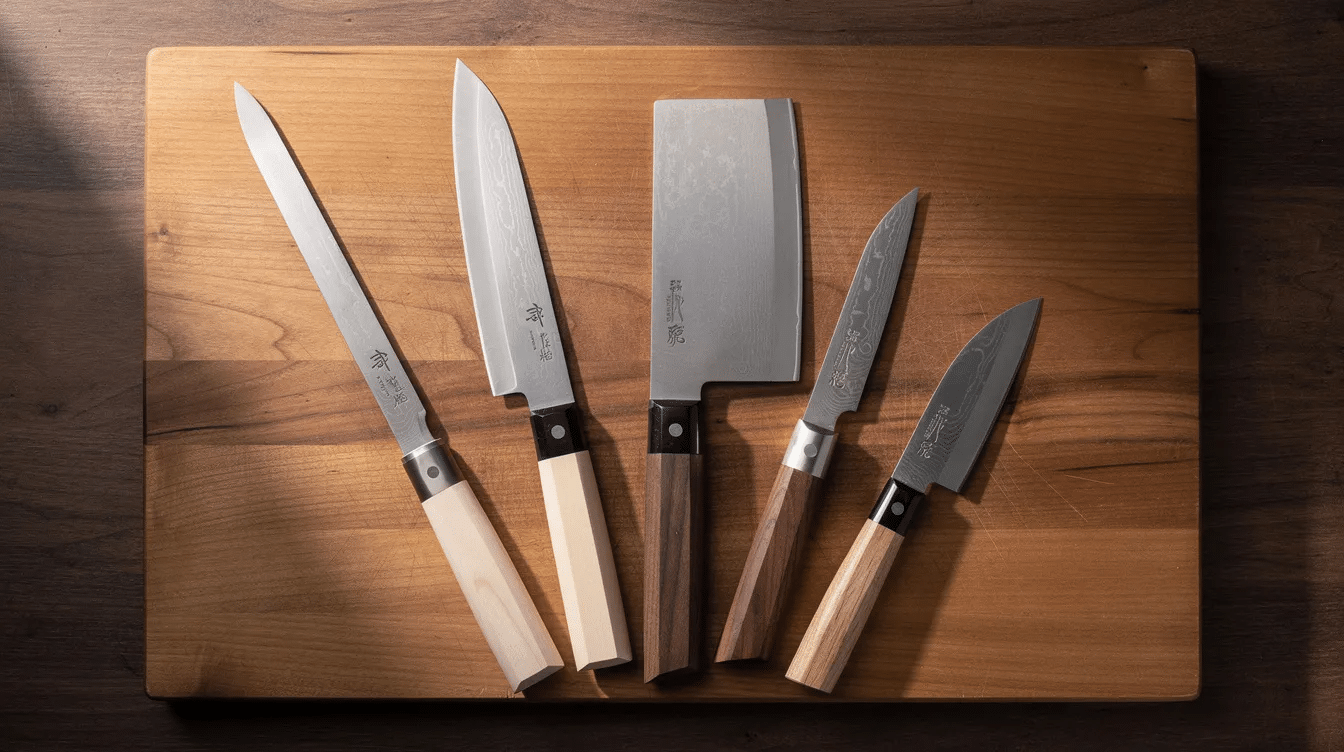
- Santoku: Flat, thin blade with a gently rounded tip—ideal for everyday chopping of vegetables, meat, and fish
- Gyuto: Japanese chef’s knife with a curved edge, versatile for slicing meat, mincing herbs, and general prep (typically 180-210mm)
- Nakiri: Rectangular vegetable knife designed to cut straight down without splitting produce
- Ko Nakiri: Smaller version for detailed vegetable work
- Petty: Small utility knife for precision tasks
Tsukasa Suzuki often focuses on single bevel, carbon steel kitchen blades featuring thick spines and very thin edges.
Hunting and Outdoor Knives:
- Hiroshi Suzuki’s drop-point hunters and field knives inspired by Loveless
- Full tang construction with mirror-polished or satin-finished blades
- Comfortable contoured handles for secure grip during hard use
Collectible and Custom Pieces:
- Limited production runs with unique handle materials
- Engraved or etched blades with Damascus patterns
- Themed pieces (like “bear hunt” models) that sell out quickly and appreciate over time
How to Choose a Japanese Suzuki Kitchen Knife
Selecting the right Suzuki-style knife requires matching blade characteristics to your cooking habits and skill level. Looking at other high-performance Japanese makers like Takamura knives for precision and performance can also help you understand what to expect from top-tier blades. Here’s a practical guide to making that decision.
Blade Type and Profile
- Home cooks typically start with a gyuto or santoku around 180-210mm
- Choose nakiri if you prepare vegetables frequently and want easy straight-down cuts
- Single bevel specialist blades suit those interested in traditional Japanese techniques
Steel and Maintenance
- Stainless and semi-stainless steels resist rust and are easier to maintain
- High carbon steel delivers superior sharpness but forms patina and requires dry storage
- Many Suzuki makers favor performance steels that reward good maintenance
Edge Style and Skill Level
- Double-bevel knives: easier to use and sharpen for most users
- Single bevel knives (Tsukasa Suzuki’s specialty): excel at precision but require compatible technique
- Imagine your daily prep work—choose accordingly
Handle and Ergonomics
- Western handles offer full tang construction and pinch grip comfort
- Wa (Japanese) handles provide lighter balance and fingertip control
- Prioritize comfort over looks for knives you’ll use daily
Budget and Value
- Custom Suzuki knives command premium prices ($300-$3000+) but offer exceptional longevity
- Order one high-quality primary knife before expanding into specialized shapes
- Consider that quality blades can last decades versus 1-2 years for cheap steel
Caring for a Suzuki Knife: Sharpening, Storage & Longevity
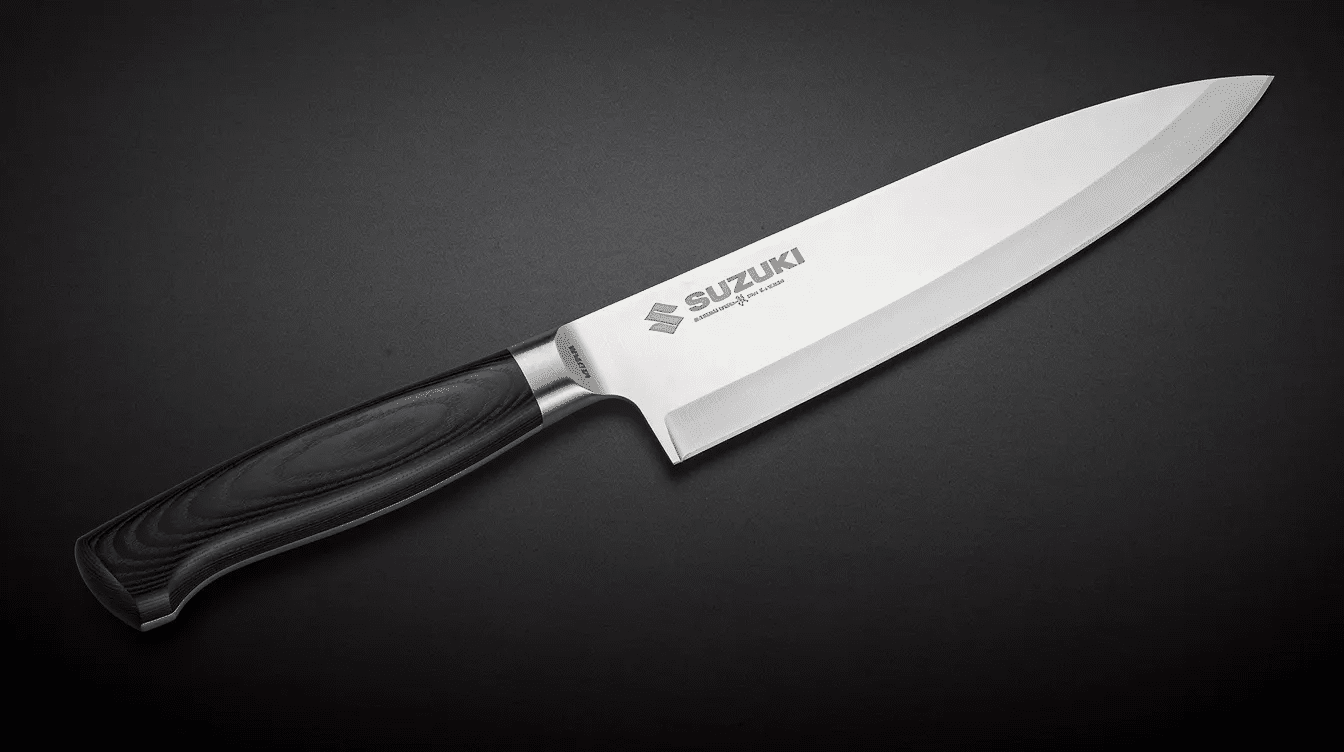
Proper care protects both the edge and the handcrafted work that defines a Suzuki knife. These practices ensure your investment performs for years.
Sharpening
- Use water stones (1000/3000 or 1000/6000 grit) for regular maintenance
- Maintain the original bevel angle—especially critical on single bevel Tsukasa Suzuki blades
- Seek professional sharpening if you’re not confident, particularly with expensive custom pieces
- Check your technique periodically; poor sharpening habits bring diminishing results
Cleaning and Rust Prevention
- Hand-wash immediately after use with mild soap
- Dry thoroughly—never leave wet or air dry
- Avoid dishwashers, soaking, or leaving acidic food on the blade
- For high carbon blades, apply light camellia oil before longer storage
Storage
- Use magnetic strips, wooden blocks, or individual sayas (sheaths) to protect the edge
- Never store loose in drawers where edges can chip or bend
- Keep separate from other metal utensils
Everyday Best Practices
- Use soft cutting boards (end-grain wood or quality plastic)
- Avoid glass or stone surfaces—they destroy edges quickly
- Never twist or pry with the tip
- Don’t cut frozen food or hit bones with thin-edged kitchen blades
Events, Community & Where Suzuki Knives Fit Today
Suzuki knives sit at the intersection of tradition, community, and modern culinary culture. They’re not just tools—they represent a commitment to serious cooking and craftsmanship.
Workshops and Education:
- Events like “Cut Like a Chef” classes (e.g., March 27, 2026, in Ottawa) connect knife culture to food education
- Such gatherings often feature Japanese knives and teach safe, efficient cutting techniques
- Many benefit local food centers and charitable causes
Seasonal Sales and Trade-Ups:
- Specialized knife shops run spring sales (May 9-15, 2026) with discounts on premium Japanese knives
- Trade-up programs (March 5-15, 2026) let customers bring old knives and receive credit toward upgrades
- Add quality pieces to your cart during these windows for better value
Position in Today’s World:
- Japanese kitchen knives hold approximately 90% market share among professional Japanese chefs
- Suzuki knives appeal to chefs, enthusiasts, and collectors who attend these events or follow specialty retailers
- Whether in a professional kitchen or home setting, they represent a future-focused investment in craft
The meaning behind owning a Suzuki knife extends beyond utility. Each blade carries a bio of its maker, a region’s legacy, and generations of learned skills—things that bring lasting value to anyone who loves cooking.
