If you’ve ever watched a sushi chef slice through a block of tuna with effortless precision, you’ve likely witnessed a sashimi bocho in action. This specialized Japanese knife is the secret behind those paper-thin, glistening slices that define quality sashimi and sushi presentations.
In this comprehensive guide, we’ll explore every aspect of the sashimi bocho knife—its design, blade geometry, steel types, handle ergonomics, sharpening, care, and how to choose the right one for your needs. Whether you’re a home cook, a professional chef, or a passionate enthusiast, understanding the unique features and proper use of a sashimi bocho is essential for preparing sashimi that rivals the best sushi bars. Mastering this knife not only elevates the texture, flavor, and visual appeal of your sashimi, but also ensures you get the most out of your ingredients and tools.
A sashimi bocho knife is a long, thin, single-edged knife specifically designed for slicing raw fish into thin, even slices. Typically crafted from high-quality carbon steel or stainless steel, these knives are engineered to be incredibly sharp and durable, making them indispensable for anyone serious about Japanese cuisine.
- Quick Overview: What Is a Sashimi Bocho Knife?
- Sashimi Bocho vs Yanagiba and Other Japanese Sashimi Knives
- Blade Design and Geometry of a Sashimi Bocho
- Steel Types and Construction
- Handle, Balance, and Ergonomics
- Using a Sashimi Bocho Knife Properly
- Sharpening and Daily Care
- Storage, Safety, and Longevity
- Choosing the Right Sashimi Bocho for Your Kitchen
Quick Overview: What Is a Sashimi Bocho Knife?
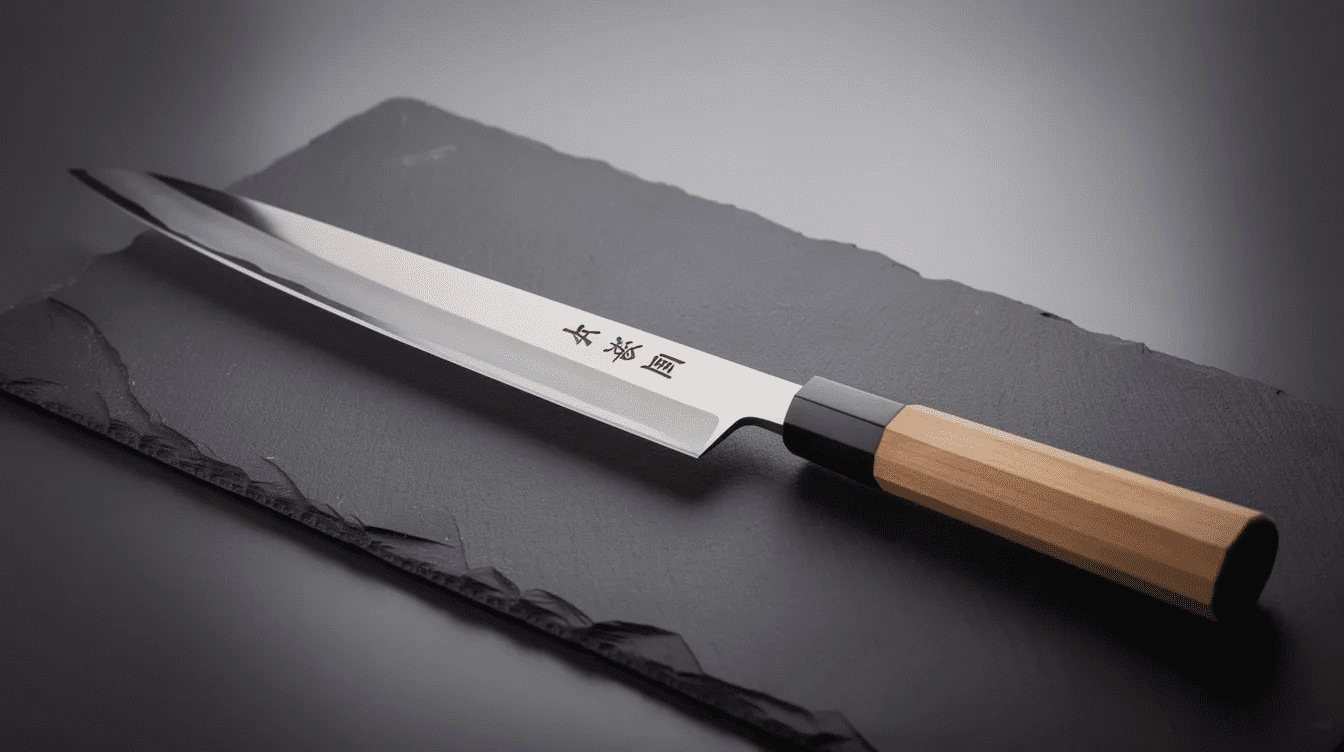
The term sashimi bocho refers to a category of long, thin, single-edged knives designed explicitly for slicing raw fish into ultra-clean, thin, and even pieces. In Japan, these knives are essential tools for anyone serious about preparing sashimi, where the quality of each slice directly affects texture, flavor, and visual appeal.
A sashimi bocho knife is defined by its long, slender blade—typically ranging from 240 to 300 millimeters (approximately 9.5 to 11.8 inches)—and its single-bevel edge, which is usually ground on the right side for right-handed users. The blade is made from high-quality carbon steel or stainless steel, ensuring it is both incredibly sharp and durable. Unlike a standard Gyuto chef’s knife, the sashimi bocho uses a single-bevel design that enables one-stroke pull cuts, minimizing cellular damage that would otherwise release enzymes and degrade the fish’s delicate umami.
Key traits of sashimi knives:
- Single-bevel edge (kata-ba), typically ground on the right side
- Long, narrow blade for full-length cuts
- High-hardness steel achieving 58-62+ HRC
- Lightweight wood handle for extended prep sessions
- Right-hand bias by default (left-handed versions available)
Sashimi Bocho vs Yanagiba and Other Japanese Sashimi Knives
Understanding that sashimi bocho is a category name helps clarify common confusion. The yanagiba knife is the most prevalent specific style within this category, originating from Osaka traditions.
The yanagiba features an elegant willow blade profile with a curved, pointed tip. Available in lengths from 240 to 400 millimeters, it’s optimized for single pull cuts on sushi-grade fish like tuna or salmon. Most people outside Japan who own a sashimi knife are actually using a yanagiba.
The takohiki, favored around Tokyo, offers a straighter spine and squared tip with a rectangular silhouette. This knife type excels at slicing octopus and dense proteins where the rigid profile prevents sticking.
The fuguhiki is a niche, thinner variant reserved for professional fugu (pufferfish) preparation, enabling paper-thin slices that require extreme precision tempered with years of training.
Which knife suits which task:
- Yanagiba: General finfish, tuna, salmon—ideal for most sashimi work
- Takohiki: Octopus, squid, and denser meat requiring straight cuts
- Fuguhiki: Licensed specialists only for toxic pufferfish preparation
Blade Design and Geometry of a Sashimi Bocho
The geometry of a sashimi bocho fundamentally prioritizes clean cuts that preserve the fish’s cellular integrity. Every design element serves to reduce friction and shear forces during slicing.
The single-bevel blade edge is ground exclusively on one side, typically the right for right-handed users. The flat or slightly concave back, known as urasuki, reduces blade-to-food adhesion, allowing for thinner slices than double-bevel knives can achieve.
Geometry features and performance impact:
- Edge angle of 12-15 degrees delivers razor sharpness
- Long, narrow blade (240-300mm) enables full-length pull cuts without tearing
- Spine thickness tapers from 2-3mm near handle to fine tip
- Urasuki (concave back) reduces slice sticking by up to 30%
- Pointed tip allows precise trimming of sinew and bloodlines
Steel Types and Construction
Traditional sashimi bocho knives favor high carbon steel for its purity and exceptional edge retention, while modern iterations offer stainless steel and hybrid constructions for easier maintenance.
Classic materials like shirogami (white steel) and aogami (blue steel) reach hardness levels of 58-62+ HRC. These hardened steels hold an edge through hundreds of cuts but require vigilant care to prevent rust. VG10 high carbon stainless steel offers similar sharpness with improved corrosion resistance—ideal for busy or humid kitchens.
Steel and construction essentials:
- Shirogami/Aogami: Peak sharpness, requires immediate drying and oiling
- VG10 stainless: Balanced performance with rust resistance
- Damascus-clad (69-layer): Visual beauty plus corrosion protection
- San-mai lamination: Hard core between softer layers adds toughness
- Mono-steel: Purest cutting feel but higher brittleness risk
Handle, Balance, and Ergonomics
Traditional sashimi bocho knives use lightweight wa-handles designed for long prep sessions without wrist fatigue. These handles are typically octagonal, D-shaped, or oval, crafted from magnolia, ho wood, or rosewood.
A buffalo horn ferrule often caps the handle for water resistance and stability. The light handle paired with a heavier blade creates forward balance—the knife’s center of gravity sits 2-4 centimeters ahead of the handle, helping the blade glide through fish with minimal downward force.
Handle considerations:
- Wa-handles weigh 100-150 grams, significantly lighter than Western styles
- Right-handed bevels require matching right-hand technique
- Left-handed variants are available but typically add 20-50% to cost
- Larger grip circumference (30-40mm) suits bigger hands
- Compare to denser Western handles before purchasing
Using a Sashimi Bocho Knife Properly
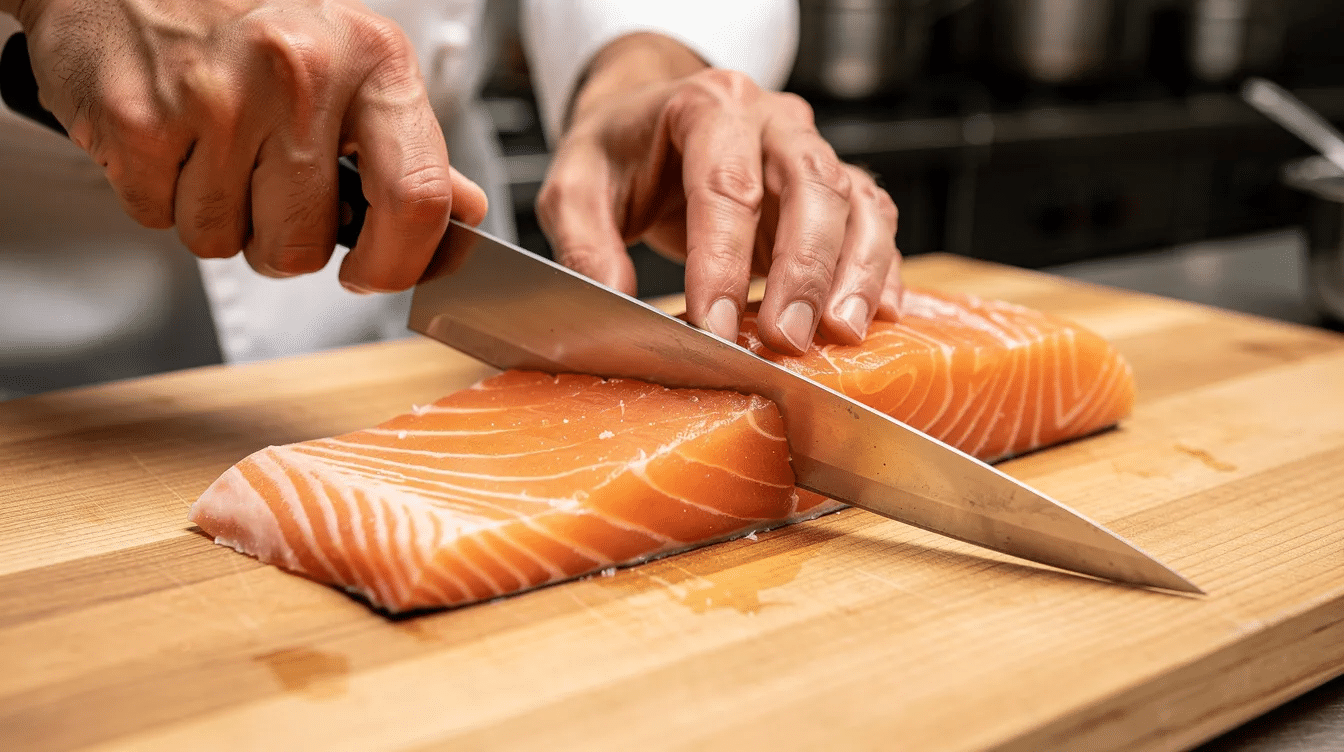
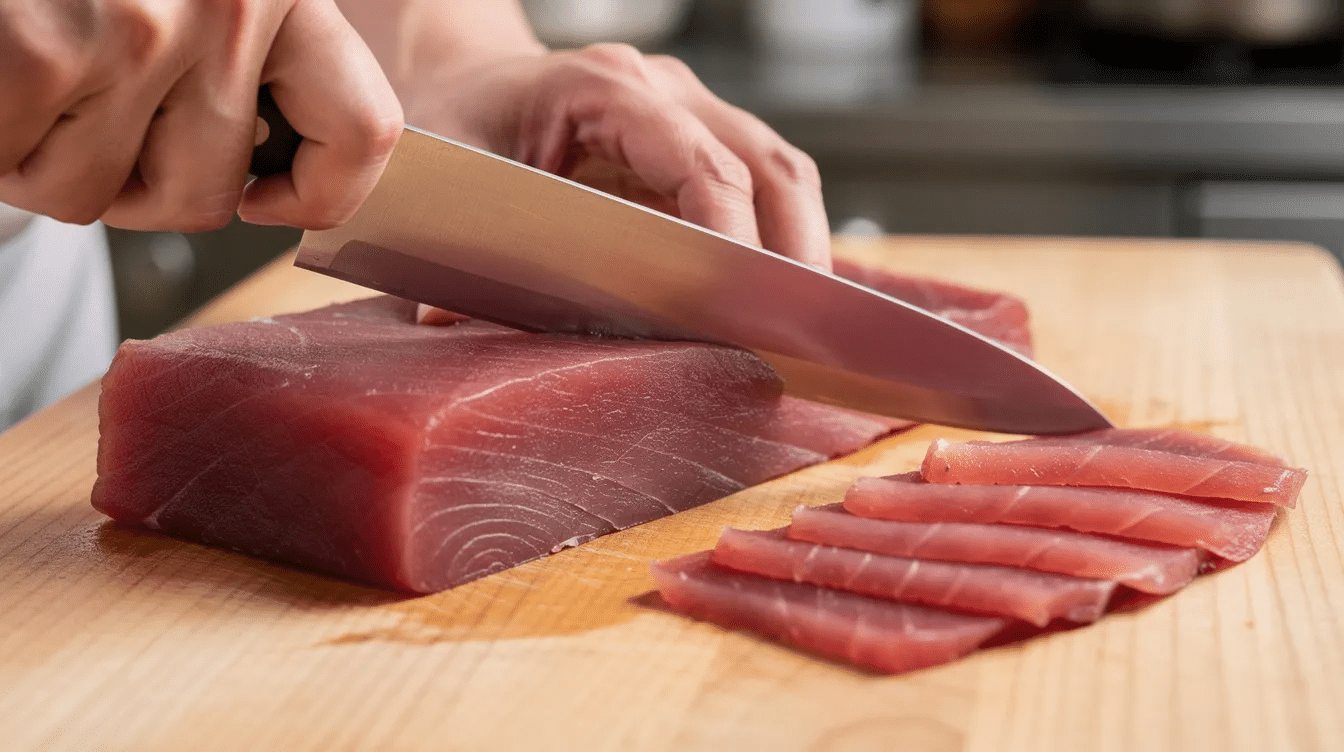
The sashimi bocho excels when used with long, smooth pull cuts rather than chopping or sawing. This technique preserves the delicate texture that makes quality sashimi special.
Basic cutting technique:
- Position the blade’s heel near the far edge of the fish block
- Apply gentle thumb pressure on the spine
- Pull toward your body in one smooth motion at a 15-30 degree diagonal
- Let the blade’s weight do the work—avoid pressing down
Additional tips for perfect slices:
- Use a soft wood board (hinoki or paulownia) to protect the blade edge
- Square off the fish block before portioning
- Trim dark bloodlines with tip flicks before slicing fish
- Slice at a slight diagonal to maximize surface area
- Keep fish chilled at 0-4°C for optimal glide
Avoid cutting bones, frozen items, or hard shells—the thin edge chips under lateral force exceeding 10kg.
Sharpening and Daily Care
Single-bevel sashimi knives require whetstone sharpening and cannot be properly maintained with pull-through sharpeners or honing steels. This is where hand sharpened expertise becomes essential.
Sharpening basics:
- Use Japanese water stones: 1000-grit for setting, 3000-6000 for refinement
- Maintain the 12-15 degree bevel angle consistently
- Lightly lap the flat back to remove burrs
- Progress to 8000+ grit for mirror polishing (optional)
Daily care checklist:
- Rinse immediately after use under cool water
- Wipe with a lightly soapy sponge (pH-neutral)
- Rinse again and dry completely with a soft cloth
- Never use dishwashers or leave soaking in sink
- Apply food-safe mineral oil to carbon steel in humid environments
Storage, Safety, and Longevity
Proper storage and handling protect both the user and the knife’s fine edge. A well-maintained sashimi bocho can serve you for decades.
Storage recommendations:
- Use a wooden saya (sheath) fitted to 0.1mm tolerance
- Magnetic strips work if the edge doesn’t slam against metal
- Avoid leather sheaths—tannins cause corrosion on carbon steel
- Store in a dedicated knife block or roll for travel
Safety essentials:
- Always cover the blade when transporting
- Keep out of children’s reach
- Never leave in a sink under other items
- Store edge-up or in protective sheath
Quality pieces develop a unique patina over time, retaining 90% functionality after a decade of daily professional use.
Choosing the Right Sashimi Bocho for Your Kitchen
Whether you’re a home cook or professional, selecting the right sashimi bocho requires matching the knife to your specific needs and workflow.
Blade length selection:
User Type | Recommended Length | Typical Use |
|---|---|---|
Home cook | 240mm | Salmon portions, small fish |
Enthusiast | 270mm | Medium fish, entertaining |
Professional | 300mm+ | Tuna loins, high-volume prep |
Purchase decision checklist:
- Match blade length to counter space and typical fish size
- Choose carbon for peak performance or stainless-clad for easier care
- Confirm handle orientation matches your dominant hand
- Test balance—blade-heavy is ideal for sashimi work
- Budget for a quality whetstone (1000/6000 combination stone)
- Shop from reputable sources and study essential Japanese knife types to understand how a sashimi bocho fits into your overall kit
Investing in proper sharpening tools and developing basic maintenance skills is as important as the knife itself. With the right sashimi bocho and technique, you’ll prepare sushi-quality fish that rivals what you’d find in Tokyo.
