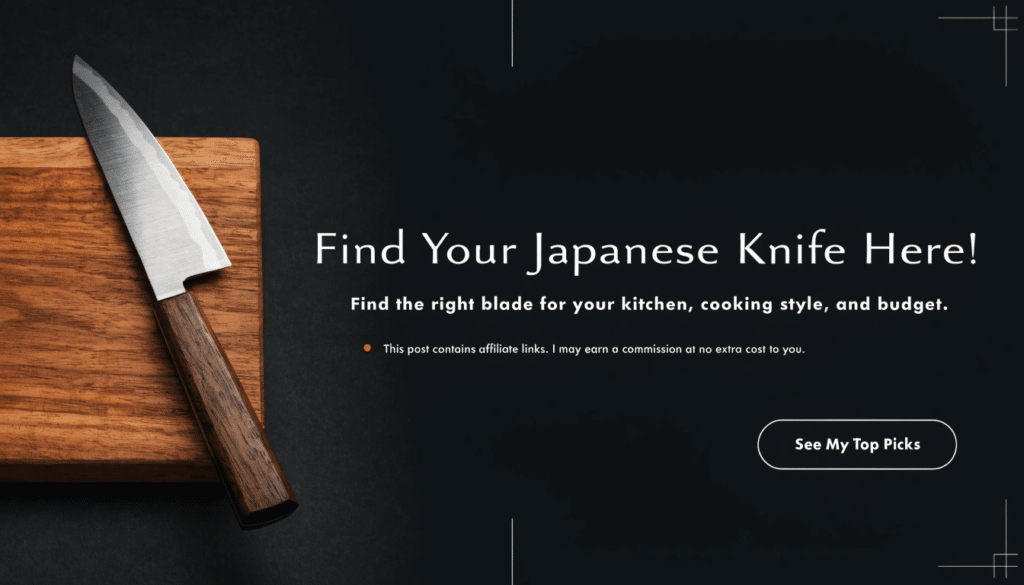
Ishizuchi knives represent a distinctive collection of hand-forged japanese knives originating from the tosa region in kochi prefecture on Shikoku Island. Unlike polished, machine-made counterparts, these blades embrace rugged aesthetics—visible hammer marks, slightly irregular grinds, and exceptional sharpness crafted through techniques passed down over a century. Whether you are a professional chef or a home cook, Ishizuchi knives are known for their practical and cost-effective design, making them suitable for a wide range of users. They are considered affordable entry-level high-quality Japanese knives, providing a good price-to-performance ratio. This article covers the history, forging traditions, steels like ZDP-189 and vg10 damascus, handle construction, and how to choose the right Ishizuchi knife for your kitchen.
- From Mountain Peak to Workshop: The Ishizuchi Heritage
- Tosa Hamono: The Soul Behind Ishizuchi Blades
- The Beauty of Imperfection in Ishizuchi Knives
- Ishizuchi Steels & Core Materials
- Handles & Construction: Visible Craftsmanship
- Key Ishizuchi Knife Types & Their Uses
- Caring for Ishizuchi Knives: Performance Over a Lifetime
- Choosing the Right Ishizuchi Knife for You
From Mountain Peak to Workshop: The Ishizuchi Heritage

The brand takes its name from Mount Ishizuchi, the highest peak in western japan, symbolizing excellence and enduring spirit in local culture. This mountain connection reflects a philosophy of unyielding quality that defines every blade.
Knife-making in the wider Tosa area has roots stretching back over 400 years, influenced by Kamakura-period sword-forging. The founder Tomika Kajiura established Ishizuchi-related workshops during the Taisho era around 1920, initially producing agricultural tools for farming and forestry communities before pivoting to kitchen cutlery.
Today, generations of skilled artisans continue multi-generational transmission of techniques:
- Hot forging with hammer and anvil
- Cladding hard steel with soft iron (warikomi)
- Hand-polishing and finish work
This heritage positions Ishizuchi at the intersection of farm blades, forestry tools, and refined kitchen knives—carrying a “work tool first” DNA into the modern world.
Tosa Hamono: The Soul Behind Ishizuchi Blades
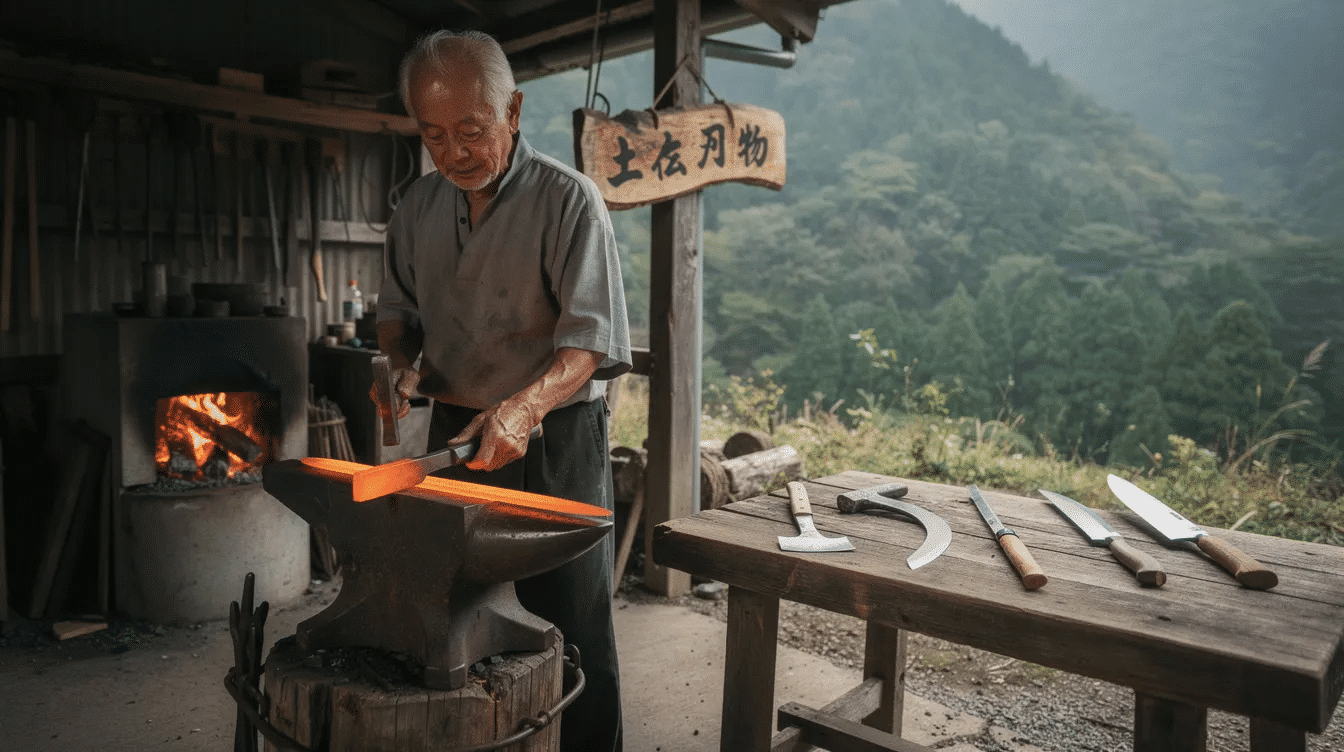
“Tosa Hamono” refers to free-forged tools made in ehime prefecture and Kochi for forestry, agriculture, hunting, and cooking. The term embodies a utilitarian philosophy honed in Japan’s rugged Shikoku region.
Ishizuchi knives are crafted using traditional Tosa free-forging techniques, which prioritize functionality over aesthetic perfection and allow for individual shaping of each blade. Free forging means each blade is individually shaped by blacksmiths using hammer and eye rather than rigid molds. This creates unique variations that manufacture practical tools with honest character.
Typical Tosa characteristics include:
- Spine thickness: 2–3mm at heel for durability
- Edge hardness: Up to 64–67 HRC
- Finish: Kurouchi (forge scale) or rustic polish
- Focus: Function over decorative perfection
The same workshops often produce nata hatchets, axes, and outdoor equipment, reinforcing the tool-focused DNA that distinguishes Tosa knives from purely decorative blades.
The Beauty of Imperfection in Ishizuchi Knives
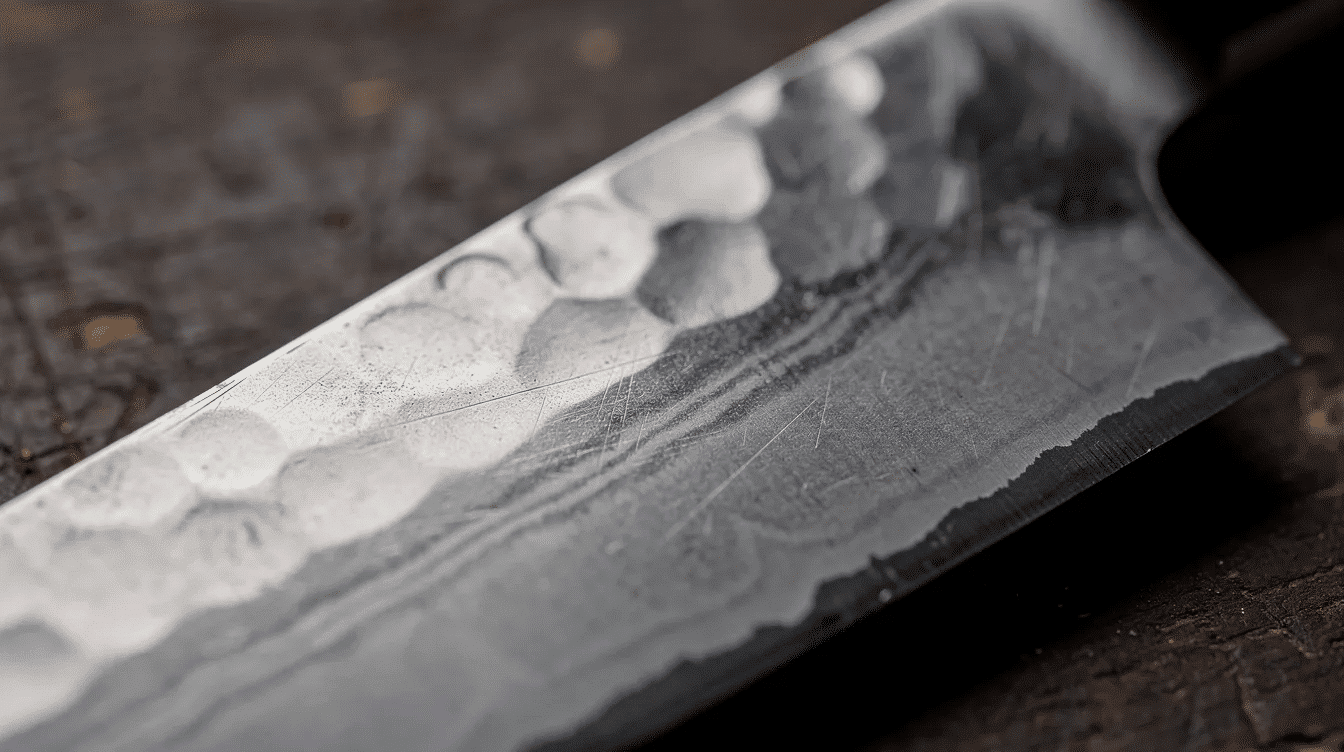
While glossy, machine-perfect knives dominate mainstream stock, Ishizuchi blades deliberately embrace visible imperfection. Ishizuchi knives are known for their raw, honest character, often featuring visible hammer marks and subtle irregularities. The craftsman techniques may leave minor imperfections in the finish that are seen as signs of authentic craftsmanship. These visible irregularities and gaps are considered intentional marks of craftsmanship rather than flaws. Hammer marks, subtle waviness along the spine, and slightly irregular grinds are not defects—they’re traces of hands-on craftsmanship.
Small gaps at the handle ferrule or where tang meets wood result from traditional Tosa assembly methods designed for ease of future rehandling. These gaps enable long lasting use through repair and replacement.
Performance comes first: steel quality, heat treatment, and edge geometry take priority over showpiece finish. Owners who respect wabi-sabi—the Japanese aesthetic celebrating imperfection—find these knives especially compelling as working tools with personality that develops over time.
Ishizuchi Steels & Core Materials
Ishizuchi knives appear in several steel types, each suited to different users. Understanding these options helps you add the right blade to your collection.
ZDP-189: Powder metallurgy stainless steel reaching 64–67 HRC. Offers unmatched edge retention but demands careful sharpening skill with diamond or ceramic stones. Best for chefs and enthusiasts wanting long-lasting edges.
VG10: Popular stainless core at 60–62 HRC with balanced sharpness and corrosion resistance. Easy maintenance on standard waterstones makes it ideal for home cooks.
Aogami/Shirogami (Blue/White Steel): Traditional carbon steels offering superb sharpness but requiring diligent care—they patina and can rust if not dried immediately.
Most blades feature san-mai (three-layer) construction: a hard core sandwiched between softer cladding for toughness. This refined approach reduces wedging during slicing while maintaining edge performance.
Handles & Construction: Visible Craftsmanship
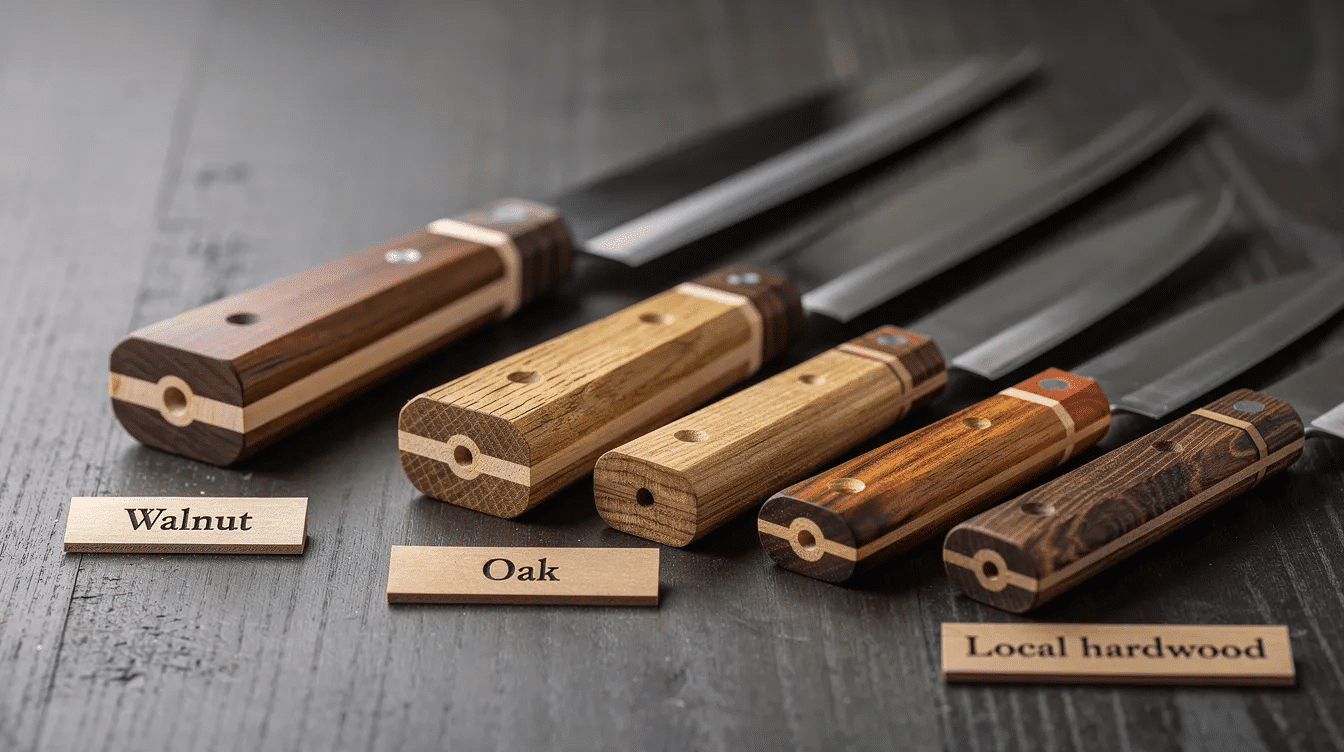
Ishizuchi handles reveal as much character as the blades themselves. The traditional Tosa method inserts a tang into a hand-drilled handle with minimal adhesive, allowing future rehandling—a design built for generations of use.
Construction often layers softwood cores (magnolia for shock absorption) with harder outer woods. Common materials include:
- Walnut handle for dense, warm feel
- Oak for rugged durability
- Local hardwoods with unique grain
Octagonal or D-shaped profiles enhance pinch-grip control, with balance points typically 50–60% from the heel. This ergonomic approach supports all-day use in professional kitchens without fatigue.
Key Ishizuchi Knife Types & Their Uses
Ishizuchi blades follow classic Japanese profiles, each designed for specific tasks, fitting neatly into the broader landscape of essential Japanese knife types for cooks. Here’s what you can expect from the main offerings sold today:
Knife Type | Length | Best For |
|---|---|---|
Chef knife (Gyuto) | 210–240mm | All-purpose: meat slicing, vegetable chopping, herbs |
Santoku knife | 165–180mm | Home cooks needing one do-it-all blade |
Petty knife | 120–150mm | Trimming, peeling, detailed cuts |
Kiritsuke knife | 240–270mm | Versatile profile combining gyuto and yanagiba |
Kiritsuke petty knife | 150mm | Precision work with kiritsuke aesthetics |
The same workshops also create nata, axes, and outdoor blades—extending their forging ethos beyond the cutting board, and many users pair an Ishizuchi with one of the best gyuto knives for all-purpose chef work to round out their kit.
Caring for Ishizuchi Knives: Performance Over a Lifetime
Even the hardest steels like ZDP-189 benefit from proper care. Your investment deserves attention:
- Hand wash with neutral soap; dry immediately
- Store on magnetic racks or in sheaths
- Avoid dishwashers—alkaline detergents damage edges
- Wipe carbon steel blades during acidic prep to prevent rust
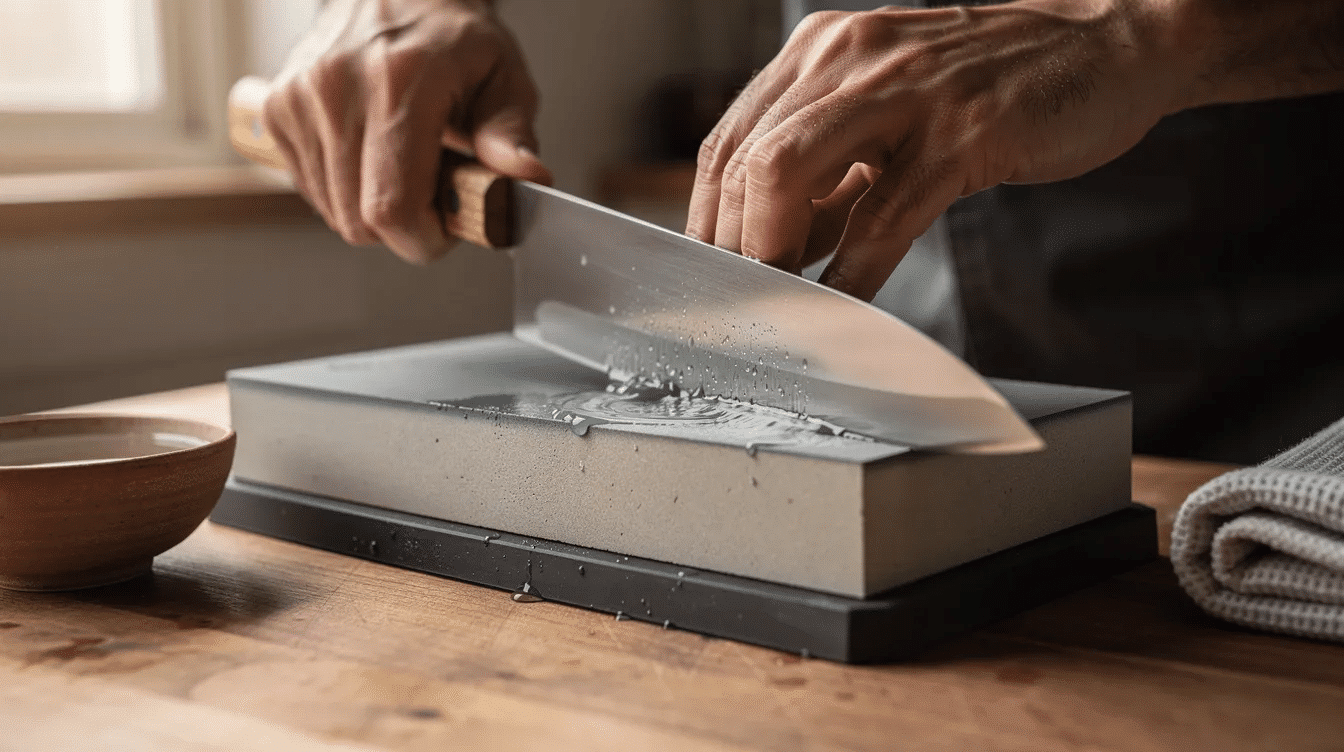
For sharpening, use waterstones in 1000–3000 grit for reprofiling and 3000–6000+ for polish. Tosa-style edges arrive sharp but improve with thinning and refinement over the years. Routine light maintenance beats waiting until the blade goes dull.
Choosing the Right Ishizuchi Knife for You
The best Ishizuchi knife depends on your experience level, cutting style, and maintenance tolerance. Here’s a quick guide:
Many enthusiasts also compare Ishizuchi to other performance-focused makers such as Takamura knives known for precision and balance.
By experience:
- Beginners: VG10 gyuto or santoku for easy care
- Advanced users: ZDP-189 for maximum edge retention
By workspace:
- Large cutting boards/professional kitchens: 210–240mm blades
- Compact home kitchens: 165–180mm profiles
Choosing between rustic, visibly hand-forged finishes and slightly refined versions comes down to aesthetic preference and willingness to embrace patina. Either way, think of your Ishizuchi as a long-term tool that will age with you and reward learning proper technique.
Owning an Ishizuchi knife means carrying a tangible link to Tosa’s free-forging heritage and the enduring beauty of imperfection. Share your experience once you feel that first cut—comment below or reach out to fellow enthusiasts who understand why these blades matter.
