Keeping your Japanese chef knife sharp isn’t just about cutting better—it’s about making cooking easier and safer. The Japanese chef’s knife is a type of kitchen knife known for its delicate edge, and learning to sharpen knives properly is essential for maintaining its performance. A sharp blade slices through food cleanly, so you don’t have to force it. That means less strain on your hands and a lower chance of slipping and cutting yourself. A dull Japanese knife is more difficult to control, increasing the risk of kitchen accidents.
Introduction to Sharpening
Sharpening is a dead important skill for anyone who’s after top performance from their kitchen knives, especially when it comes to Japanese knives. These blades are absolutely cracking for their razor-sharp cutting edge and spot-on craftsmanship, but they also need a bit of careful attention during the sharpening process. Unlike western style knives, which can often take a right beating with all sorts of sharpening methods and tools, Japanese knives need a more gentle approach to keep their fine blade edge and unique geometry in tip-top shape. Japanese knives are designed for straight, smooth, and precise slicing or push-cutting motions, which makes maintaining their sharpness even more critical.
Getting your head round the basics of knife sharpening is the first job for keeping your knives’ cutting ability at its best. The sharpening angle is dead important—using the right angle makes sure that the blade stays sharp without mucking up its structure. Most Japanese style knives do brilliant with a lower sharpening angle compared to western style knives, which helps you get that signature razor-sharp edge that’s light as a feather. For double-beveled Japanese knives, the appropriate sharpening angle is 10–15 degrees per side.
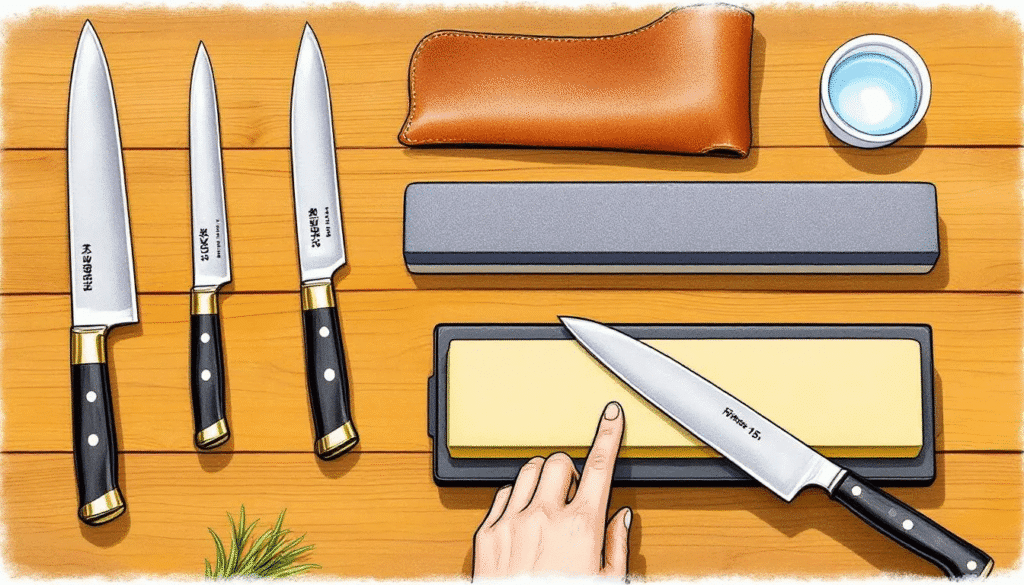
To get going with sharpening, you’ll need to gather round the right sharpening stone or sharpening stones, and its important to use a method that matches your knife’s design. Putting on the right amount of pressure and keeping a consistent angle throughout the sharpening process will help you knock up a sharp, durable edge. Whetstones come in different grits: Medium grit (1000–3000) for general sharpening, fine grit (4000–6000) for refining edges, and coarse grit (under 1000) for repairing chips. After sharpening, a leather strop can be used to get rid of any burrs and give the blade a bit of extra polish, making sure your knife is as sharp as possible. Whether you’re using a honing steel for quick touch-ups or a sharpening stone for a proper edge restoration, mastering these techniques will keep your knives performing like a dream.
Tools You’ll Need
Before you start sharpening, gather a few things:
- A good sharpening stone (whetstone) with coarse and fine sides
- A stable surface or stand to hold the stone steady
- A wet cloth to keep everything in place
- Some water for soaking the stone
While you can use a knife sharpener or other sharpeners, traditional sharpening stones are preferred for Japanese chef knives. Sharpeners, especially powered ones, may not provide the precise angle or gentle touch needed for harder Japanese steel. A whetstone allows for better control and helps maintain the blade’s optimal edge quality, preserving the knife’s performance and longevity.
Japanese knives are often made with harder steel than western knives, so using the right tools matters.
Getting Ready to Sharpen
Start by soaking your whetstone in water for about 10 to 15 minutes. This helps the stone work better and keeps metal shavings from clogging it. Before sharpening, make sure the stone surface is flat and stable, as a level stone surface is essential for precise sharpening. While the stone soaks, clean and dry your knife. Find a sturdy spot where you can sharpen without the stone slipping—placing a wet cloth under the stone usually does the trick.
Finding the Right Angle
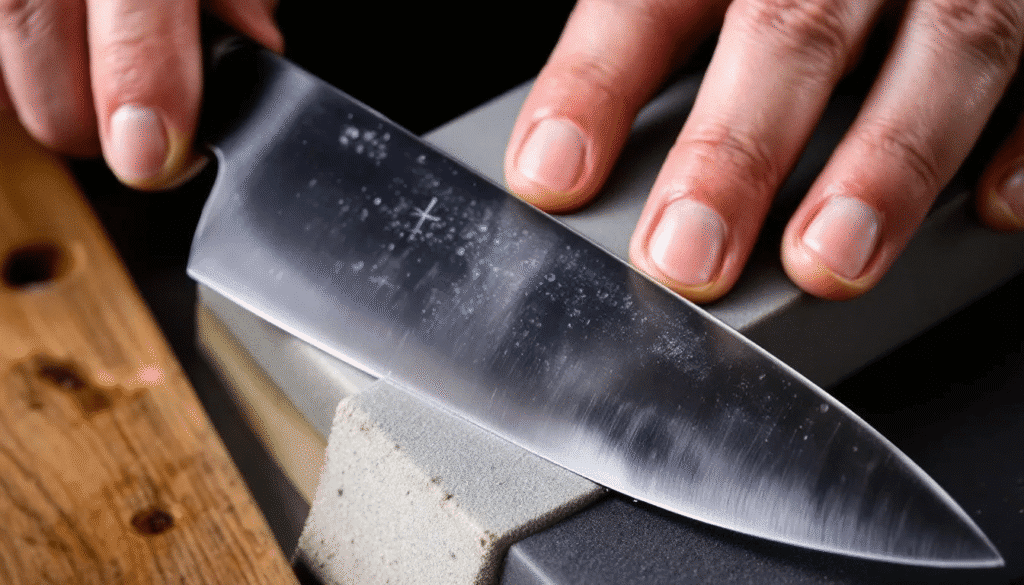
Holding the knife at the right angle is key. Maintaining consistent angles is crucial for effective sharpening. For most Japanese chef knives, aim for about 10 to 20 degrees. Think of this as the angle between the blade edge and the stone. You can use the spine of the knife as a reference point to help maintain the correct angle throughout the process. Pressing the knife edge against the whetstone with two or three fingers while sharpening provides better control and precision. Keeping the same angle while sharpening makes sure the edge stays even and sharp. Proper sharpening technique is essential for achieving a sharp, even edge.
How to Sharpen Your Knife
- Start with the coarse side of the stone. Hold the knife firmly with a good grip. Place the blade’s edge against the stone at your chosen angle.
- Push the blade forward along the stone using a controlled pushing motion, applying gentle pressure. If the blade is very dull, apply more pressure during the initial strokes. Then pull it back to the start. This back-and-forth motion is one stroke.
- Keep your fingers close to the blade edge to help guide and maintain the angle, refining the edges as you move along the stone.
- Work from the tip to the base of the blade, moving your fingers as you go to cover the whole edge. Ensure the blade flat is in contact with the stone for even sharpening. Pay special attention to the point (tip) of the blade to achieve a consistent finish.
- Feel for a burr—a slight rough edge on the opposite side of the blade—which means you’re removing metal and sharpening properly. There will be a moment when you feel the burr, indicating the edge is set.
- Flip the knife and repeat on the other side to remove the burr and sharpen the reverse side.
With proper technique, you will achieve a sharp working edge that enhances your knife’s performance.
Moving to the Fine Side
Once the edge feels sharp, flip the stone to the finer side or use a finer grit stone. Repeat the same strokes with lighter pressure. This polishes the edge and makes it sharper and longer-lasting.
If you are sharpening a single edged knife, you may need to adjust your technique on the finer stone to maintain the correct edge geometry.
Finishing Touches
After sharpening, wipe your knife clean and dry it well. Different steels may require slightly different finishing techniques to achieve the best sharpness, as the hardness and composition of the steel can affect how the edge responds to stropping or polishing. You can use a leather strop or even a piece of newspaper to remove any tiny burrs left on the edge. This step helps make the blade razor sharp. After washing, dry a Japanese knife thoroughly with a soft towel to prevent rust.
Advanced Sharpening Methods
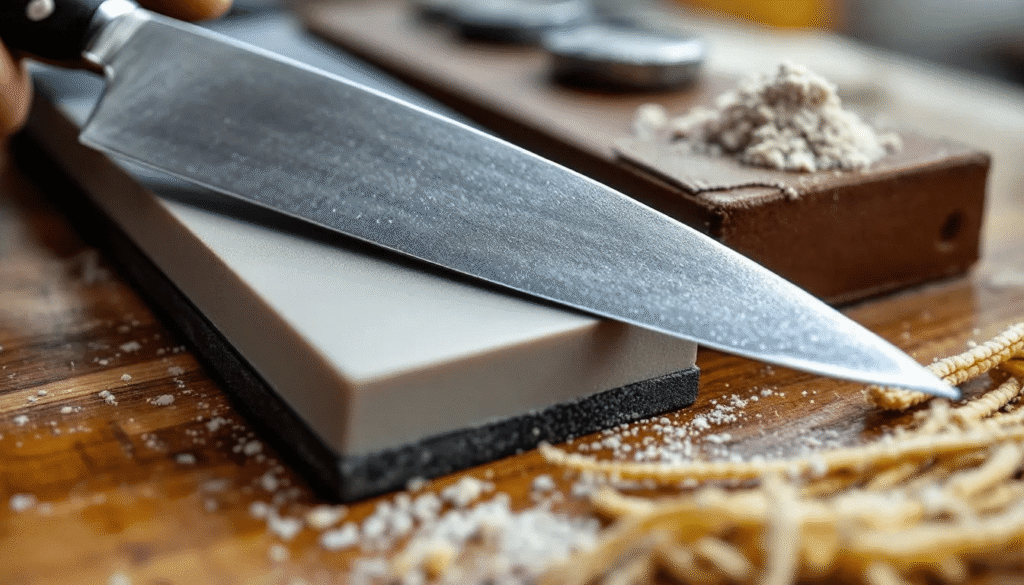
Once you’re comfortable with the basics, you can have a crack at some advanced sharpening methods to get your Japanese chef knife sharp as anything. One dead-simple technique thats a real winner is to use a progression of Japanese whetstones – start off with a coarse grit to sort out a dull edge, move on to a medium grit for tidying things up, and finish with a fine stone to polish the blade until its sharp as a tack. This multi-step approach is a cracking way to create a smoother, longer-lasting cutting edge that’ll do you proud.
For those mucking about with single bevel edge knives, like the traditional Japanese style ones, its important to focus on sharpening the face side while keeping the correct angle spot on, then give the reverse side a light deburring. This keeps the unique geometry and slicing ability of the blade just right. Double bevel edge knives, which are more common in western style, can be sharpened evenly on both sides, but keeping the same angle on each stroke is the key to getting a straight, sharp edge thats top notch. The sharpening technique varies slightly between single-bevel and double-bevel Japanese kitchen knives, requiring careful attention to the bevel’s angle.
Advanced users might also want to have a go with a leather strop loaded up with fine abrasive compounds to get a mirror-polished edge and knock off any remaining burrs. For extra precision, some chefs use ceramic rods or ultra-fine stones to touch up the edge between full sharpening sessions – its a brilliant way to keep things sharp. Paying attention to the tip and heel of the blade makes sure the entire edge is uniformly sharp as anything.
Having a play around with different sharpening techniques and tools, like mixing up your stroke pattern or adjusting pressure at different points along the blade, can help you find the method that suits your style knives and cutting needs perfectly. With a bit of practice, you’ll be able to keep an extremely sharp, professional-quality edge on all your kitchen knives – and sit back and enjoy watching your handiwork come to life under your own two hands!
Tips for Different Knife Types
Japanese knives come in single bevel and double bevel styles. Single bevel knives have one sharpened side and need careful attention to keep their shape. Double bevel knives are sharpened on both sides and are easier to handle for beginners. Knowing your knife type helps you sharpen it correctly.
Keep Your Knife Sharp Longer
Use a honing steel regularly to keep the edge aligned between sharpenings. Store your knives properly—avoid tossing them in a drawer where they can get nicked. A knife block or magnetic strip works well.
When to Sharpen Again
If your knife struggles to slice through paper or food cleanly, it’s time to sharpen. Don’t wait until it’s very dull; sharpening while the blade still cuts well saves time and effort.
Sharpening your Japanese chef knife at home doesn’t have to be tricky. With the right tools, a steady hand, and a bit of practice, you’ll keep your blade sharp and ready for anything in the kitchen. Japanese knives require frequent sharpening, sometimes every few days for professional use. Happy cooking!
