Japanese knives are celebrated worldwide for their exceptional sharpness, precision, and versatility. As a kitchen knife and essential tool, a Japanese knife plays a crucial role in any well-equipped kitchen, supporting efficient and precise cooking. Whether you’re a professional chef or a home cook, having the right japanese knife can transform your cooking experience. These knives stand out from western style knives thanks to their thin blades and straight edges, allowing for clean, precise cuts every time. From chopping vegetables to slicing meat and filleting fish, there’s a japanese knife designed to meet every culinary need. This versatile knife can handle a wide range of tasks, much like the classic chef’s knife or chef knife, making it indispensable for both general and detailed cooking.
Introduction to Japanese Knives
Japanese knives have been getting a load of love in both pro kitchens and home cooking setups, and it’s dead easy to see why – they’re absolutely cracking when it comes to precision, craftsmanship, and getting the job done. These beauties trace back centuries to the samurai days, and they’re built to handle the demanding standards of Japanese cooking. For over a thousand years, Japanese swordsmiths have perfected techniques that made katanas renowned for their sharpness and durability. Knife making in Japan is characterized by the application of traditional samurai sword techniques to kitchen tools, resulting in blades that are both functional and artistic. What makes a Japanese knife a real standout is its thin blade – often much thinner than you’ll find on Western style knives – which lets you make incredibly precise cuts and gives you a smoother, more controlled cutting technique that’s a joy to use.
Unlike Western knives, which tend to have thicker blades and are built for heavy-duty chopping tasks, Japanese knives are all about finesse and delicate work. That thinner blade and straight edge make them absolutely perfect for delicate slicing, chopping up vegetables, and creating those paper-thin slices of meat or fish that’ll impress your mates. Whether you’re using a Santoku knife for cutting vegetables and meat, a Gyuto knife for all-purpose kitchen tasks, or a Petty knife for mincing herbs and peeling vegetables, each type of Japanese knife is tailored to do a specific job in the kitchen – and they do it brilliantly.
Choosing the right Japanese knife really depends on your cooking style, the types of food you’re preparing, and how you like to get your cutting technique sorted. For instance, a Deba knife is absolutely perfect for filleting fish and cutting through soft bones, while a pointed carving knife like the Yanagiba excels at slicing raw fish for sashimi – it’s a proper game-changer if you’re into making your own. Specialty knives such as the Japanese boning knife (Honesuki) are designed for deboning poultry and fish, featuring a pointed tip that gives you the precision work you need to get the job done right.
Japanese knives are typically crafted from top-quality materials like carbon steel, which gives you a sharper edge and loads more durability compared to many Western knives you’ll come across. Blade length and shape vary by knife type, with some featuring a straight edge for push cutting and others a curved edge for those rocking motions. The handle is another cracking feature, with options ranging from traditional Japanese style handles to Western style handles, so you can choose what feels most comfortable in your hand and suits your cutting style.
Beyond their functional excellence, Japanese knives are also admired for their absolute beauty – they’re proper works of art. Many feature intricate patterns and hand-forged details that make them as visually striking as they are effective in the kitchen. Whether you’re a seasoned chef or a passionate home cook who loves getting stuck into new techniques, adding a Japanese knife to your collection is a brilliant step toward mastering new cooking skills and experiencing the artistry of Japanese cuisine. Give it a go – you’ll be amazed at the difference a quality Japanese knife can make to your cooking!
History and Craftsmanship
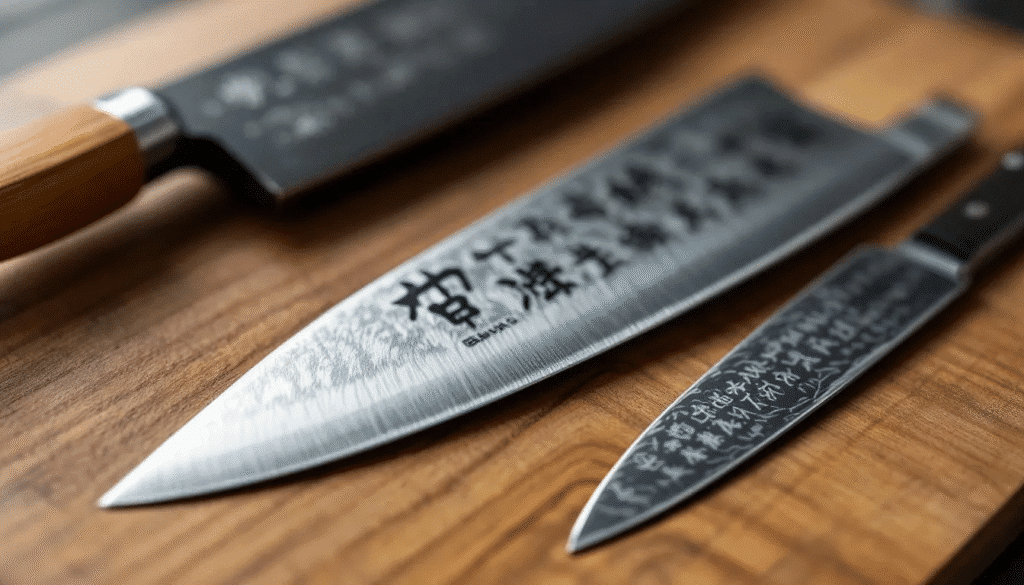
Japanese knife making has a rich history that stretches back centuries, its roots firmly planted in Japan’s vibrant cultural heritage. Over generations, skilled craftsmen have refined their techniques, pouring their hearts and souls into every single blade. The decline in sword demand during the Meiji Restoration and World War II forced Japanese craftsmen to adapt their skills to making kitchen knives, ensuring the continuation of their craft. As Japan modernized, the focus of artisans shifted from swords to kitchen knives, applying centuries of expertise to this new craft. Each Japanese knife is more than just a tool – it’s a work of art that embodies a tradition of quality and durability. A traditional Japanese knife is renowned for its unique knife features, such as specialized blade shapes, high-quality materials, and precise handling, all reflecting the artistry and cultural significance of Japanese culinary tools. Classic knives like the Deba and Gyuto showcase this craftsmanship and Japan’s dedication to culinary excellence, with deba knives being especially valued by professional chefs for their effectiveness in fish filleting and butchery tasks.
Understanding Japanese Knife Types
There are many types of Japanese kitchen knives, each designed for a specific purpose and offering unique features to suit different culinary needs.
Japanese knives come in a variety of types, each one tailored for a specific job in the kitchen. The Gyuto knife – often affectionately called the “Cow Sword” – is a very versatile chefs knife that lots of people swear by for its ability to handle just about any ingredient with ease. The Gyuto is a Japanese style knife with a long blade, typically ranging from 210mm to 300mm, making it a larger knife well-suited for slicing, rocking, and handling bigger cuts or ingredients efficiently. Gyuto knives are usually made of harder steel and are double-bevel, which enhances their durability and versatility. Some Gyuto knives can even range between 150-390mm in length, offering options for different preferences and tasks.
Other types include the Petty knife, perfect for delicate work, and the Bunka knife, known for its straight edge and pointed tip – ideal for slicing veggies and thin cuts of meat. The Petty is often considered a utility knife, serving as a versatile, multi-purpose blade for a variety of everyday kitchen tasks. Nakiri knives, on the other hand, typically have a rectangular thin blade designed for cutting vegetables, making them a go-to choice for precise and efficient vegetable preparation. Nakiri knives have a square, thin blade specifically designed for a straight-down chopping motion, which makes them especially effective for vegetable preparation.
And then there are specialty knives like the Yanagiba and Usuba, made for particular tasks like sashimi prep or cutting greens – reflecting the refined nature of Japanese cuisine. Specialty knives are designed for specific functions, such as the Tokyo Usuba, which features a square tip for intricate vegetable work, and often have a flatter edge to enable precise push-cutting techniques. Usuba knives are specifically crafted for cutting and peeling vegetables, showcasing their precision and versatility. Usuba knives are also designed for katsuramuki, a complex Japanese cutting technique for preparing vegetables, showcasing their precision and versatility.
Many Japanese style knives feature a double bevel edge, allowing for balanced use by both right- and left-handed cooks. The variety of blade shapes and profiles across these types of Japanese knives enables a wide range of cutting techniques, from rocking motions to specialized methods like katsuramuki.
Chef’s Essentials
A reliable chef’s knife is a must-have in any kitchen, and Japanese chef knives are among the best available. The Santoku knife, with its flat edge and balanced design, is a joy to use and offers a great deal of versatility, making it a popular choice among pros. The Japanese Gyuto knife is often compared to the western chef’s knife, which is a classic, all-purpose kitchen tool known for its traditional handle and design, making it a staple in Western culinary settings.
Meanwhile, the Gyuto knife is a real workhorse – chopping vegetables, slicing meat, and filleting fish a breeze thanks to its thin blade and ergonomic design. Its curved edge also allows for a rocking motion, which is especially useful for efficiently chopping vegetables and mastering traditional knife skills. These knives make even the most demanding kitchen tasks feel like a breeze.
Japanese chef knives are also popular among home cooks for their versatility and ease of use.
Paring and Precision
When it comes to precision work, Japanese paring knives are a godsend. The Petty knife is a standout example – perfect for peeling veggies, cutting herbs, and just about any other detailed task that comes up. Its thin blade and pointed tip give you super control, allowing for super delicate slicing and intricate cuts. The Petty knife excels at cutting thin slices of fruits and vegetables with precision, making it ideal for tasks that require accuracy and finesse. Whether you’re mincing herbs or prepping garnishes, a Japanese paring knife has got your back.
Specialty Knives
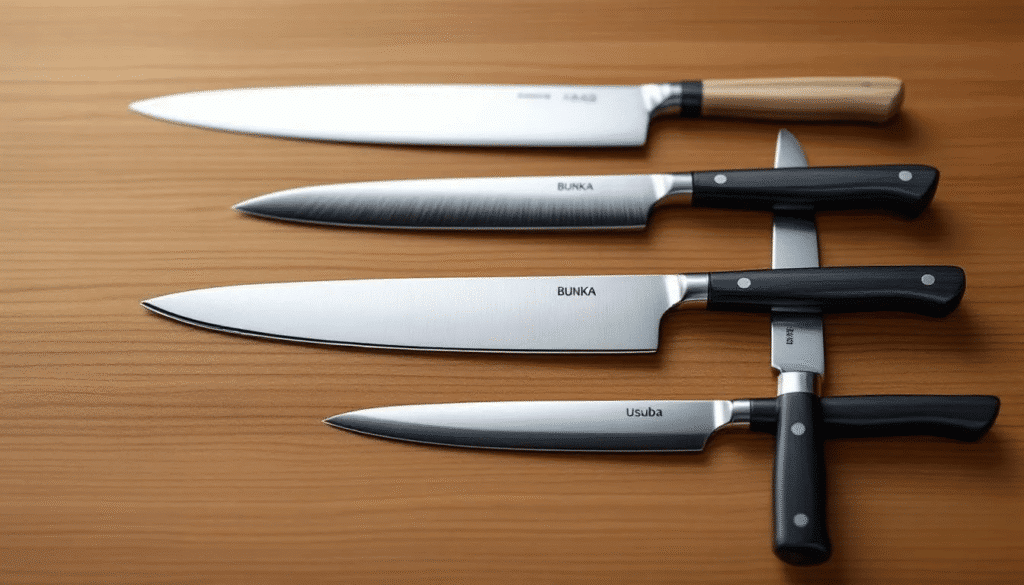
Japanese cuisine often calls for specialized tools, and Japanese knives reflect that with a range of specialty blades. The Deba knife, originally designed for filleting fish and cutting through soft bones, is a heavyweight tool that balances strength with precision. It is especially valued for cutting fish, offering control and accuracy that differs from the heavy-duty meat cleaver, which is typically used in Western kitchens for splitting large cuts of meat and bones.
The Bunka knife is another great example – its straight edge and pointed tip make it perfect for slicing veggies and fine cuts of meat. And then there are knives like the Yanagiba and Usuba – essential for tasks like sashimi preparation and rotary peeling. These knives are crucial for sushi chefs, who rely on their precision for expertly slicing raw fish and achieving the perfect presentation. These knives really show the depth of Japanese culinary tradition.
Additionally, there are specialty knives designed for carving roasts, which excel at slicing large, cooked meats with clean, precise cuts, offering a different utility compared to both Japanese fish knives and Western meat cleavers.
Materials and Construction
At the heart of every Japanese knife are quality materials – Carbon steel and stainless steel are the most common options, each with its own unique benefits. Carbon steel blades are prized for their sharpness and how easy they are to sharpen, while stainless steel blades resist rust and need a lot less maintenance. The blade length and shape are thoughtfully designed to optimize cutting performance, and the balance and ergonomics of each knife are designed to keep your hand comfortable during use. Distinctive knife features, such as a Japanese style handle, not only enhance the aesthetic appeal but also provide a unique grip and improved cutting experience, increasing kitchen versatility. Japanese knives typically feature a traditional “wa” handle made of wood, which adds to their authenticity and functionality. With the right care and regular sharpening, a Japanese knife can be your trusted kitchen companion for years to come. Certain Japanese knives are also specifically designed for working around soft joints, making them ideal for specialized butchery tasks.
Kitchen Essentials
Whether you’re a seasoned pro or just a home cook who loves to experiment, a Japanese knife is a must-have in your kitchen arsenal. Designed for use on a cutting board, these knives are perfect for chopping veggies, slicing meat, and filleting fish with ease. Their thin blades and balanced design make them super efficient and a joy to use. From the versatile Santoku knife to the all-purpose Gyuto, to the Yanagiba with its distinctive willow leaf blade shape—ideal for precise slicing—incorporating Japanese knives into your kitchen takes your cooking to new heights.
Japanese knives like the Gyuto and Bunka have also been adapted for use in western cuisine, making them versatile additions to any kitchen.
Cooking Skills and Techniques
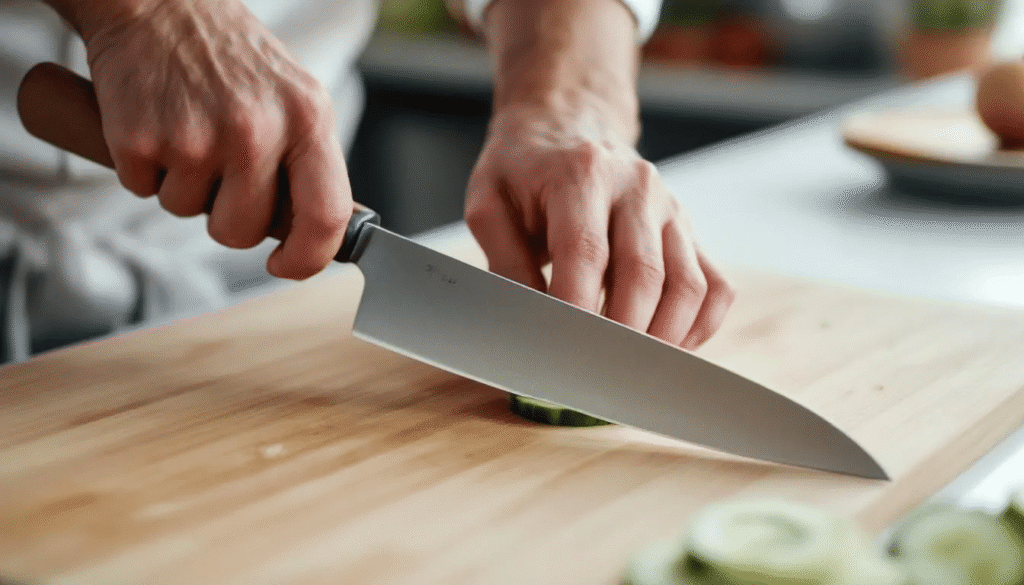
Using Japanese knives effectively is all about mastering specific cooking skills and techniques. Their thin blades and straight edges lend themselves to cutting methods like push cutting and rocking motions. Japanese knives excel at slicing vegetables with precision and ease, making everyday vegetable prep effortless and efficient. This may be a bit different from what you’re used to with Western-style knives. With practice and patience, anyone can learn to use a Japanese knife with confidence – achieving clean slices, perfect dices, and finely minced herbs. These knives are designed to enhance your cooking skills and make food prep a pleasure.
Conclusion
Japanese knife designs offer an incredible blend of tradition, craftsmanship, and practicality. Whether you’re choosing a versatile all-purpose knife or a specialty blade for precision work, these knives bring unmatched quality and performance to your kitchen. Embracing Japanese knives isn’t just about getting a great tool – it’s about connecting with a centuries-old heritage of culinary artistry. Explore the world of Japanese knives and discover how the right blade can take your cooking experience to the next level.
